Thomas E.S. Kelly’s SILENCE has been well travelled since its premiere at the Brisbane Festival in 2020. That’s a measure of how well it’s been received, which is excellent, and the enduring nature of its theme, which is not so good. SILENCE comes out swinging at the fact that Australia’s First Nations people are still waiting for a treaty between the original inhabitants and the continent’s newcomers. It doesn’t look like happening any time soon, which might give SILENCE a longer life than Kelly thinks ideal.
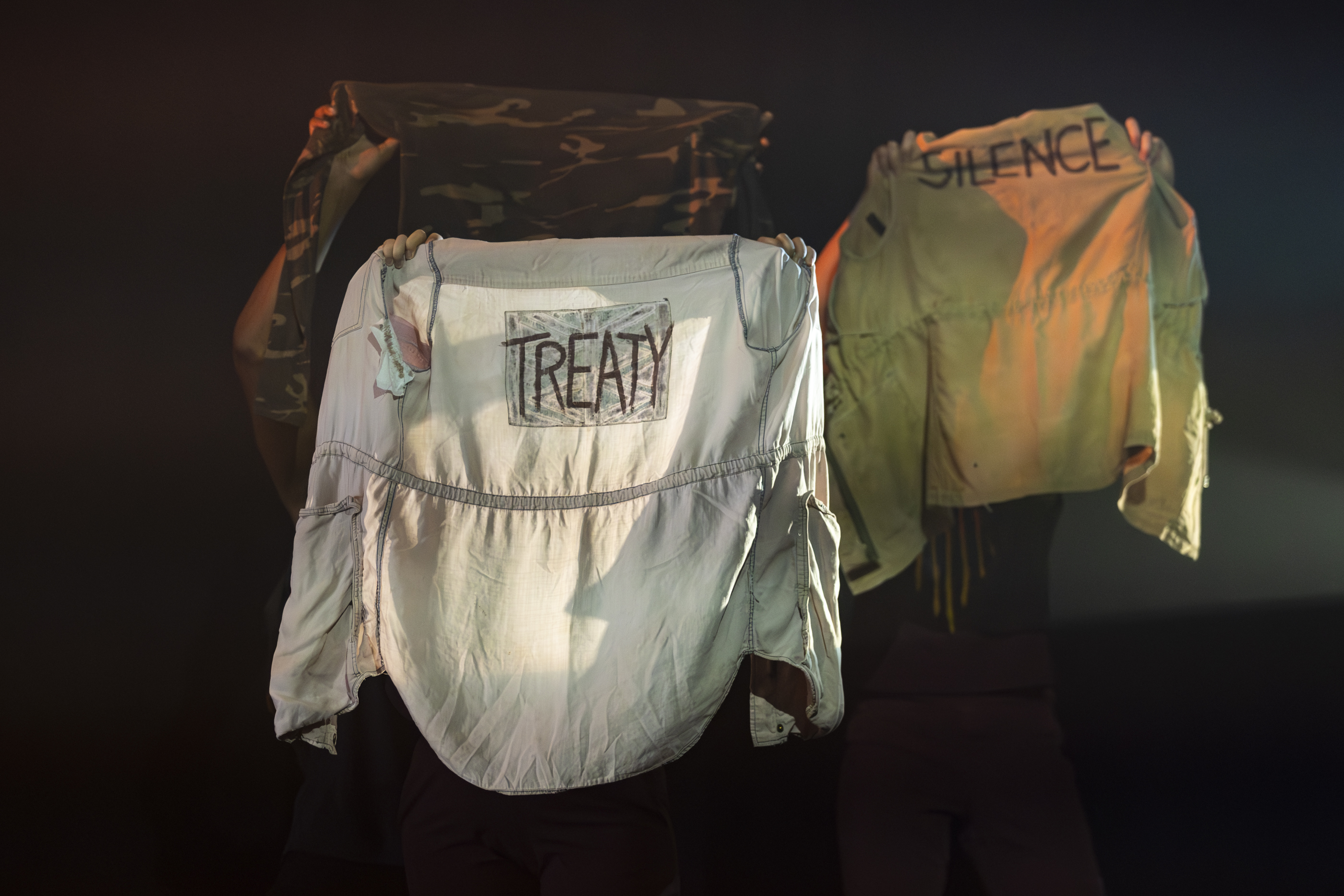
The hour-long piece is a smartly crafted mix of music, satire, humour, polemic and dance, the latter slipping powerfully between strong contemporary moves and shapes that evoke traditional ceremony. There is extremely effective support from Sam Pankhurst’s soundscape, which includes natural sounds, and Karen Norris’s spare lighting.
Kelly – who wrote, choreographed and directed SILENCE – chooses his imagery with a keen eye to impact.
Several times the dancers, all dressed casually, lift their shirts in homage to former AFL footballer Nicky Winmar’s gesture of pride and defiance 30 years ago in the face of public abuse. It still has extraordinary resonance, as does the ever-increasing amount of dirt brought to the stage, dirt that is stamped on, spread, held and passed on to others. It is a mute – yes, silent – reminder of the primacy of country.
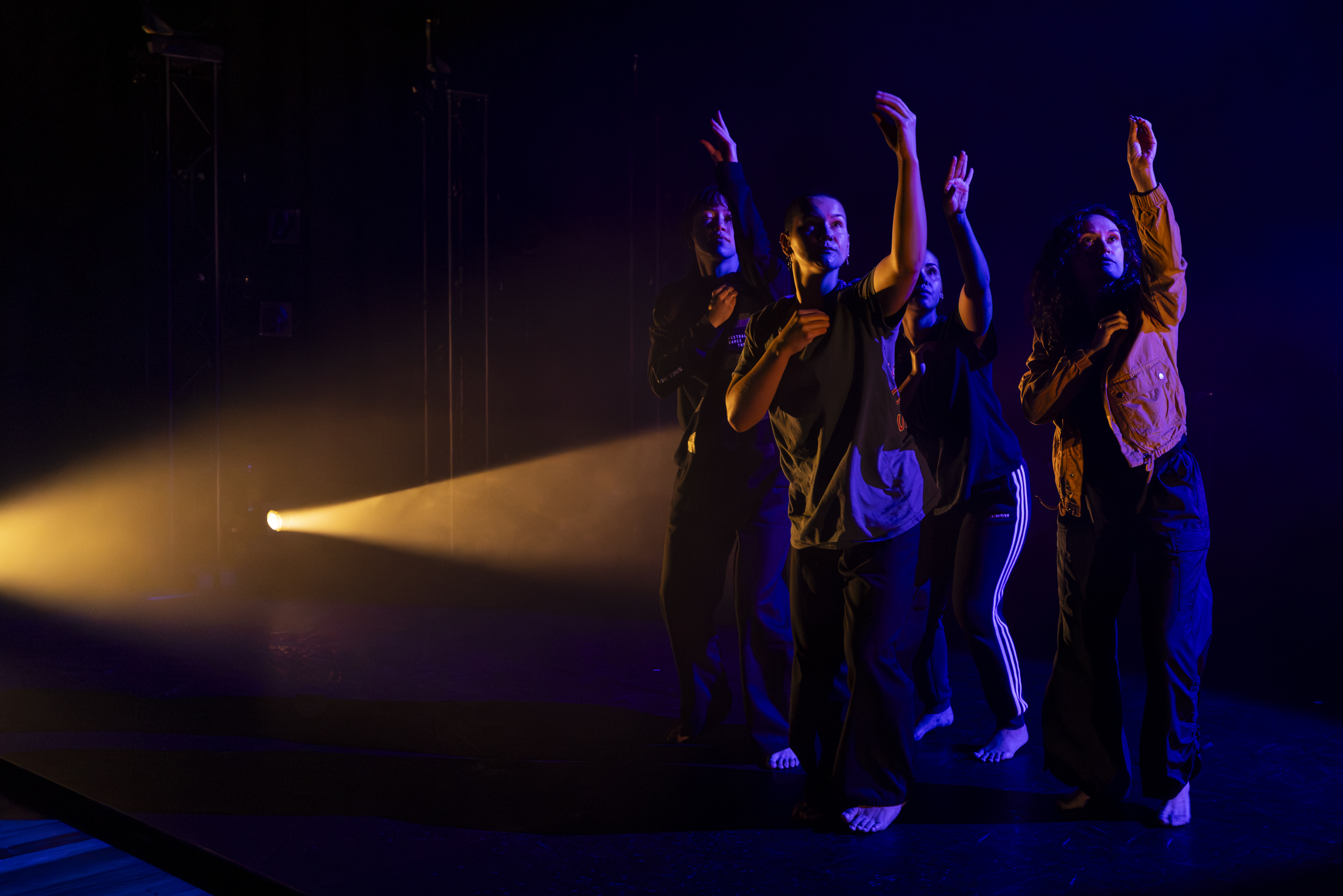
A repeated image is of a raised clenched fist that softens into fluttering fingers. Tough action melts into something that looks very much like reaching into time and space. The long view.
Near the end the cascading of soil from one hand to another brings to mind the meeting between Gough Whitlam, as prime minister, and Vincent Lingiari of Gurindji country when land was returned to its original custodians for the first time. That was nearly 50 years ago, in 1975. So if that was possible, why not a treaty is the question to hand.
A skit that treats colonisers as squatters who have failed dismally to fulfil their social obligations is sharp and funny, leavening the essential seriousness of SILENCE. Kelly, who is also a magisterial presence on stage in the group of seven fine performers, knows that laughter can be a good way to people’s hearts. Music too.
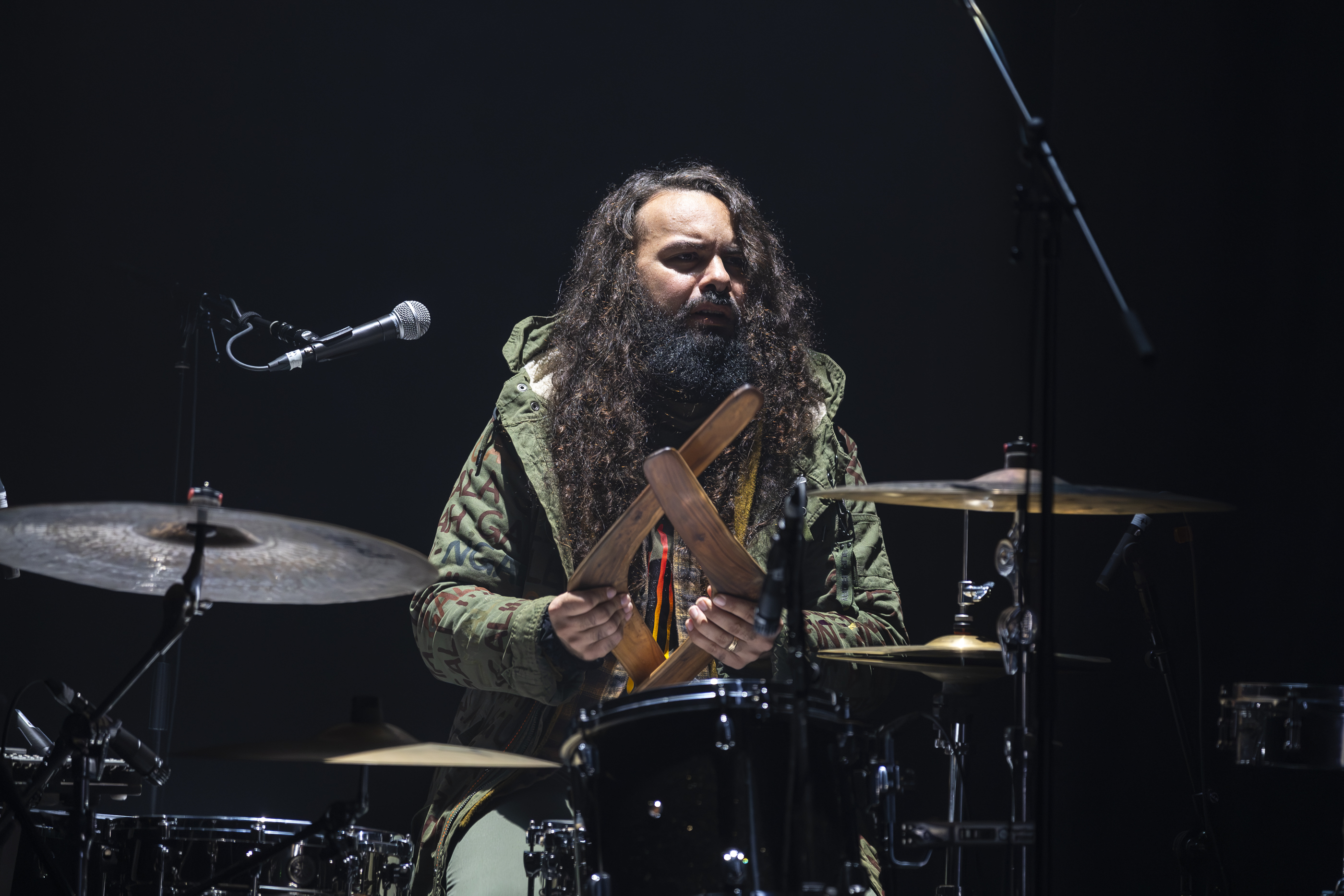
At the top of the show Jhindu-Pedro Lawrie ingratiatingly attempts to sell the audience a souvenir boomerang or two and then turns his hand to drumming, percussion and singing in a powerful reminder, if one were needed, of what live music brings to dance.
Other lasting memories of SILENCE are the shimmering beauties of First Nations culture: the love of country, the liquid sounds of language, the emu whose story lies in the dark spaces between the stars, the fierce determination to hold firm and carry on in the face of setbacks to recognition.
SILENCE is in the Studio of the Sydney Opera House until May 11 as part of the Sydney Opera House’s UnWrapped program.
 deborah jones: FollowSpot