Solace is a beautiful, onomatopoeic word. It sits softly in the mouth and the taste of its meaning lingers. It promises comfort, although has little to do with being comfortable. This is comfort that exists to alleviate sadness or distress. It is light in the darkness.
The three works in Royal New Zealand Ballet’s 2024 mixed contemporary program – two of them brand new – shone very different lights on this tender quality as they connected the audience to the overarching theme.
Solace opened with Wayne McGregor’s Infra, made for The Royal Ballet in 2008. Infra is “simply about people”, according to the choreographer, but of course there’s nothing simple about that subject. Infra is deceptive in its appearance too. The setting is elegantly streamlined and the colour palette monochrome: cool in both senses of the word.
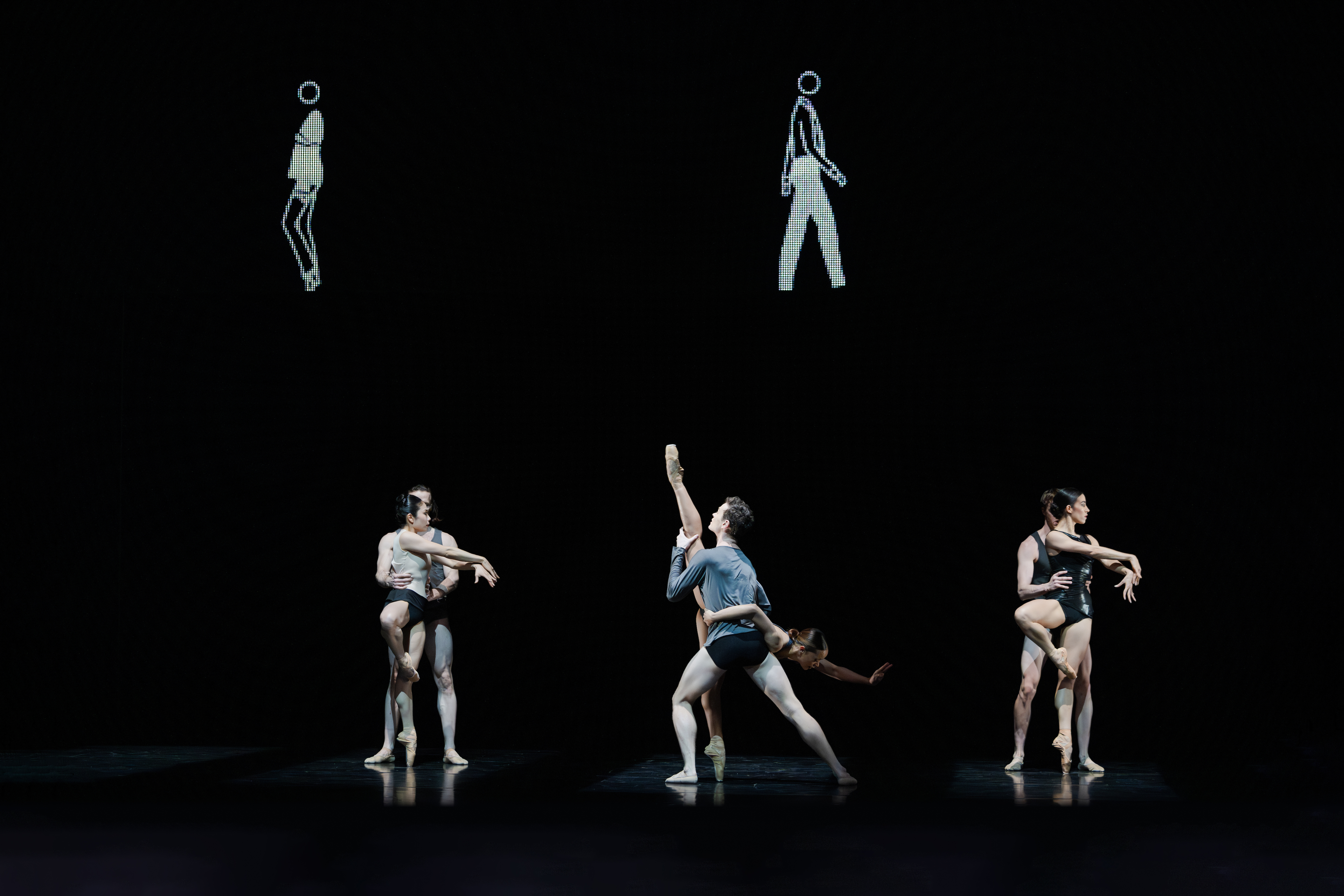
Underneath that sleek exterior is a work of deep emotions. A stream of LED figures strides above the stage (the work of artist Julian Opie) as below flesh-and-blood women and men seek purpose and meaning in themselves and each other. McGregor’s stretched and distorted classical lines make the dancers paradoxically powerful and vulnerable at the same time. The upright containment of ballet is turned into a kind of strictly controlled abandon – another paradox.
Infra is made mostly from a series of discrete duos – worlds that are side by side but separate. This picture of isolation is disrupted and then extended by the appearance of a weeping woman around whom an anonymous crowd walks as if she weren’t there. The people are as impassive as the LED figures above. There has been a glimpse of a place full of people and empty of humanity. A final duo, though, restores one’s faith in the power and possibility of connection. Infra really is extraordinary, as is Max Richter’s music.
Infra is something you could see again and again, which is why I took the opportunity to see the Saturday matinee performance of it after the Friday opening in Christchurch. The cast was substantially different – a lucky circumstance as this second cast had only a couple of shows during the whole Solace season.
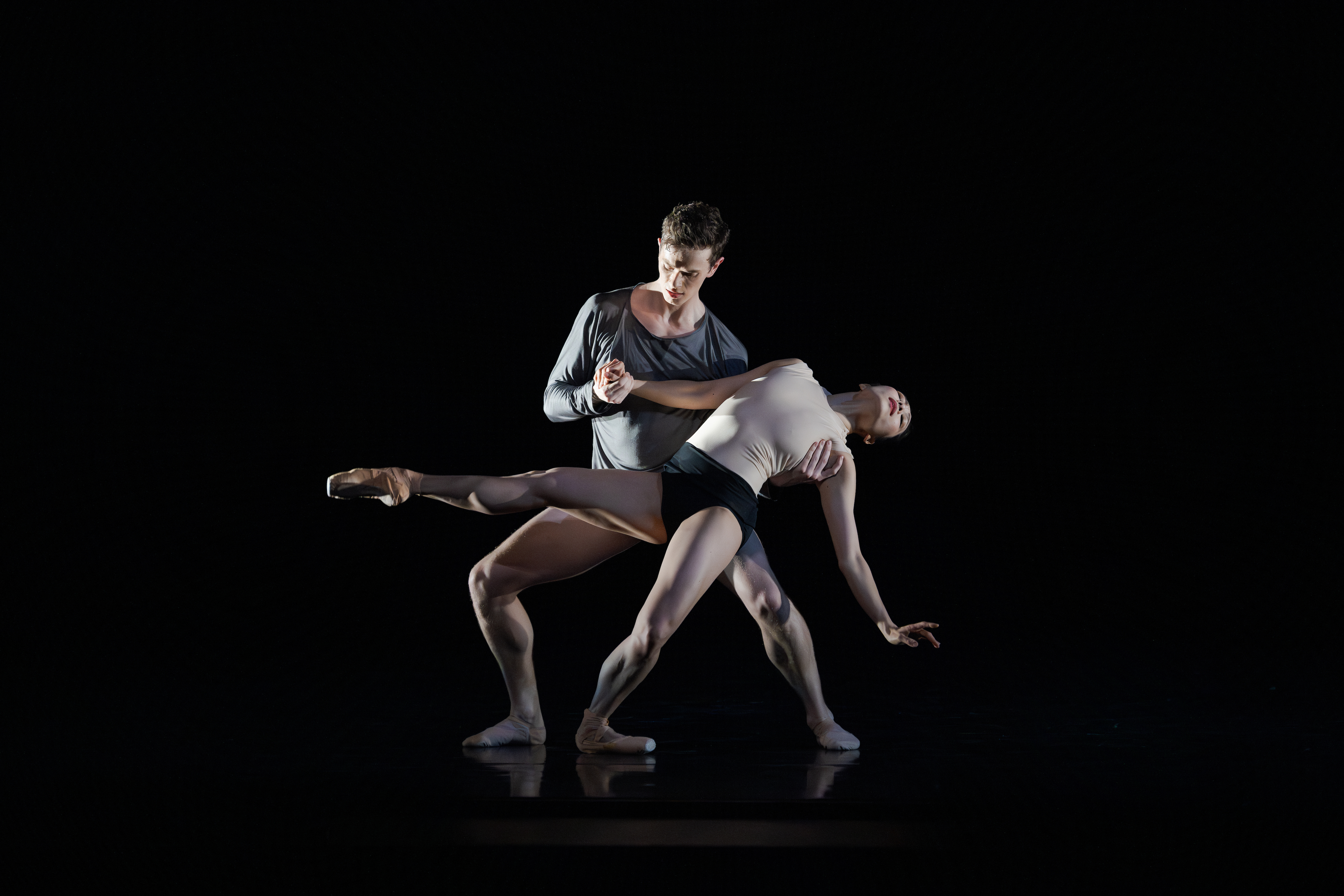
The first cast included the powerhouse principal women Ana Gallardo Lobaina, Mayu Tanigaito and Kate Kadow; the women in the matinee cast were a touch less glossy but somehow more open. Soloist Katherine Minor was the heart-piercing weeping woman.
Infra is the first McGregor work to be staged at RNZB and they picked a beauty.
A vocal in Eden Mulholland’s pacy score for Sarah Foster-Sproull’s To Hold says this: “Less is more”. It’s not a message Foster-Sproull took to heart. The theme of holding was seen in any number of ways but most frequently in structures, patterns and gestures focusing on the hands of the dancers. Many, many hands. It was a repeated motif often expressed ingeniously but did little more than state the obvious. Hands, holding.
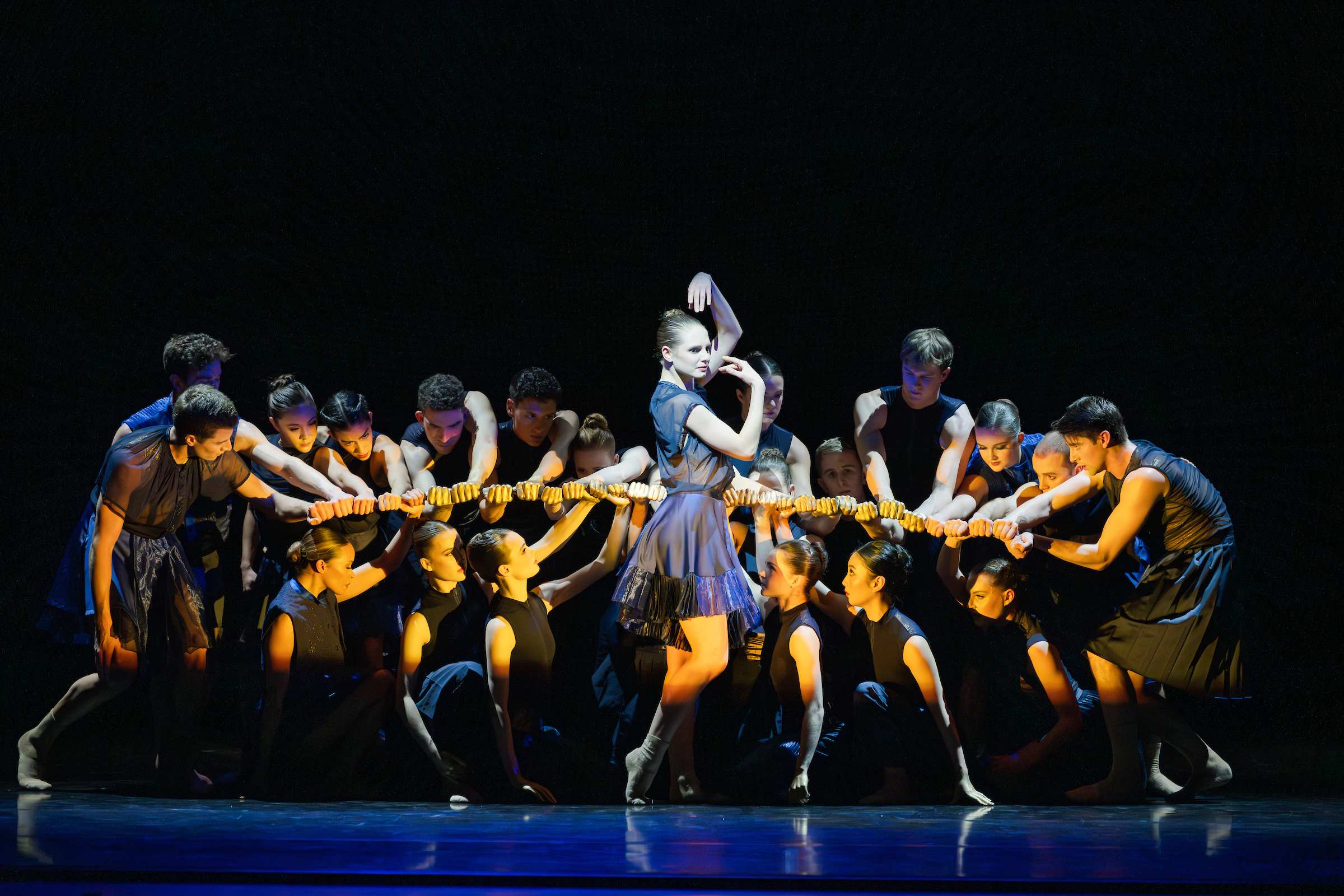
The strong formations were theatricality effective, bringing to mind the rigorous architecture seen in Busby Berkley musicals. There was an echo, too, of Bronislava Nijinska’s Les Noces. This is some fierce energy and the large cast, dressed in attractive draperies by Donna Jefferis, committed whole-heartedly to it to the audience’s great pleasure. The long-limbed, glamorous Jemima Scott looked spectacular, especially when picked out by Jon Buswell’s spot-on, if you’ll forgive the pun, lighting design.
Alice Topp described High Tide as emerging from fear but there was ultimately a warming sense of connection and community. Mystery, too, as High Tide opened in silence to reveal a lone figure dwarfed by a huge orb. There was a hovering atmosphere of things unknown and challenges delivered by things not understood or unable to be controlled. These were given considerable force and dimension by Buswell’s set and lighting: the vast sphere which the dancers touched in awe and which reflected them spoke volumes.
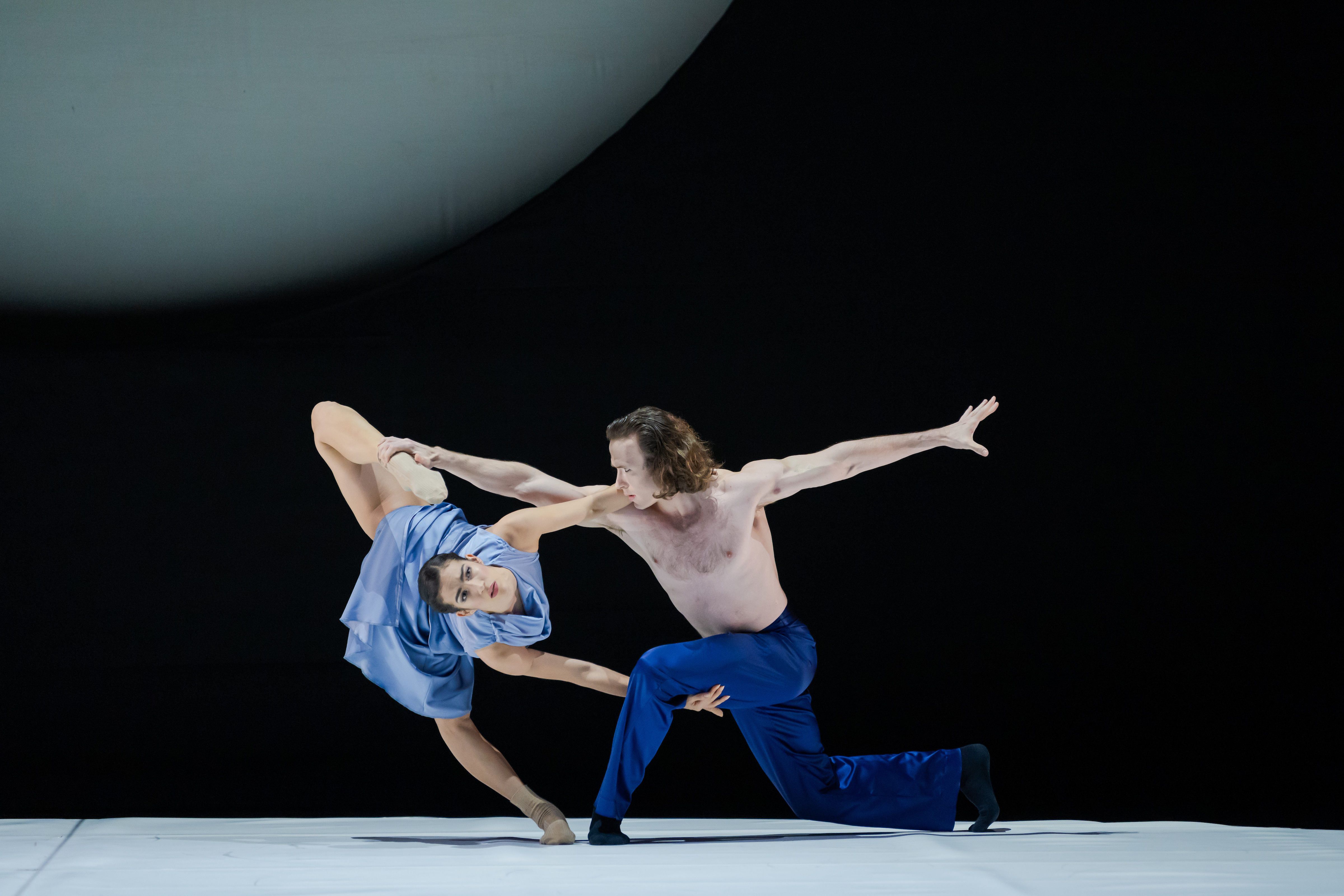
Topp designed the costumes for her cast of 21 and the clothing had a delightfully effortless air – kind of casual, but chic too as the dancers negotiated Topp’s intricate partnering to the music of Icelandic composer Ólafur Arnolds. On more than one occasion I have found Topp’s choreography over-complicated and, as a result, overwrought and even perilous. In High Tide there was a pleasing sense of ease despite the complexities, the movement an expression of ideas rather than a search for sensation.
The company is clearly in good form. Apart from those already mentioned there were eye-catching performances from Rose Xu, Kirby Selchow, Jennifer Ulloa, Caterina Estévez-Collins, Damani Campbell Williams, Levi Teachout and Branden Reiners.
Having a plane to catch meant I wasn’t able to see the matinee performances of To Hold or High Tide. Too often new work doesn’t get a second outing. A chance to see both of these again would be welcome.
 deborah jones: FollowSpot