Can something be simultaneously too much and not enough? That was the case for Oscar Wilde in his tumultuous, ill-fated, on-off relationship with the mercurial Lord Alfred Douglas and it’s the case with Oscar, Christopher Wheeldon’s new full-length work for The Australian Ballet.
The extraordinarily rich score by Joby Talbot and Wheeldon’s abundant storytelling gifts join forces for a dazzling night in the theatre, even as this wonderful subject hasn’t quite achieved its ideal form.
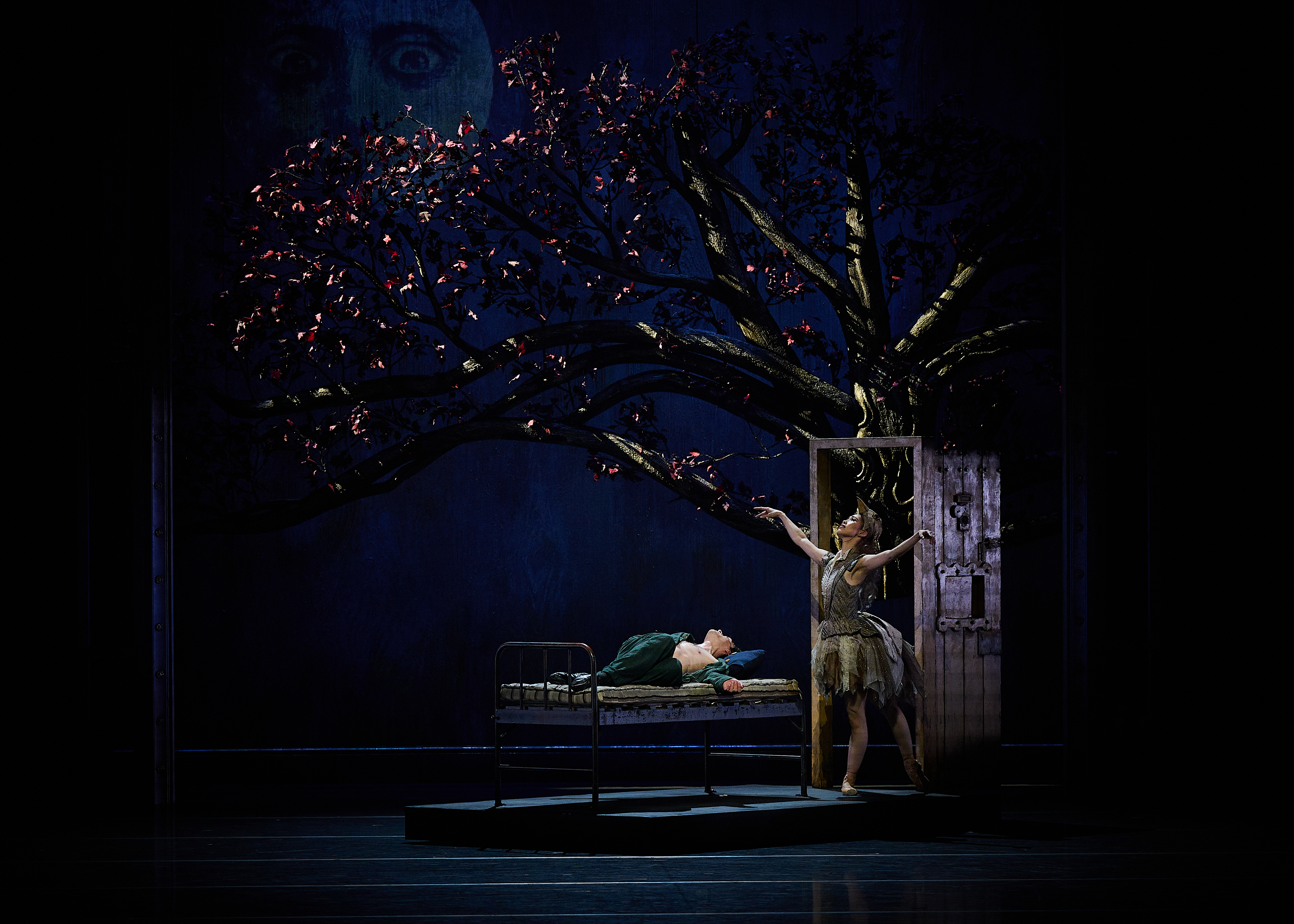
It’s mostly a question of balance. The scenario, written by Wheeldon and Talbot, is a series of stories within stories and an intricate interplay of connections between and allusions to Wilde’s life and art. There are 20 named characters, multiple layers of reality, a fractured approach to narrative and free intertwining of elements of Wilde’s life and two of his stories, the fable The Nightingale and the Rose and Wilde’s only novel, The Picture of Dorian Gray.
It’s a lot to juggle and the first act suffers from over-extended layering and plaiting as it co-opts The Nightingale’s theme of fruitless sacrifice in the name of love and gives the darting, fluttering Nightingale (Ako Kondo, sublime) a little too much solo stage time. The darker, shorter, hallucinatory second act is thrilling as it takes Dorian Gray as its guide, rushing headlong into the world of illicit desires and their consequences.

Wilde was far from being the only man in Victorian London to have a deep attachment to his own sex but chose the wrong battle to fight. He was convicted of gross indecency and jailed for two hard years.
Wilde’s imprisonment gives the ballet its outer framework. Oscar opens in a courtroom where narrator Seán O’Shea gives a brief outline of the Irish playwright and wit’s situation and key players in Wilde’s life are introduced in a brisk, modernist flurry of bobbing and weaving.
Soon confined to a prison cell this now tortured soul (Callum Linnane on opening night in Melbourne, Jarryd Madden in Sydney) conjures fragmented images of life, family and friends.

Jean-Marc Puissant’s fluid set matches the speed and magpie quality of memory as it races from home to theatre to prison to gay haunts to imagined worlds and back to prison. It also, in the appearance of a giant moon that weeps blood, gives a magnificent nod to Salome, another Wilde work dedicated to forbidden sexual desires and death.
That comes at the end of the first act, in which we have touching glimpses of Wilde as upright husband and father and less effective vignettes of him as lion of brittle society types and admirer of famous theatrical divas, three of whom are seen emoting, well, wildly as Wilde looks on.
Wilde was a man who didn’t so much flirt with danger as take it out for a slap-up meal and a show; he feels too recessive a figure here for a man who was nothing if not a big, transgressive personality. It’s a lovely touch, though, to have the three actresses (Sarah Bernhardt, Lille Langtry and Ellen Terry) absorbed into the Nightingale’s story in the style of modern dance pioneer Loie Fuller, who was a Wilde contemporary.
As I say, there is a lot going on in Oscar.
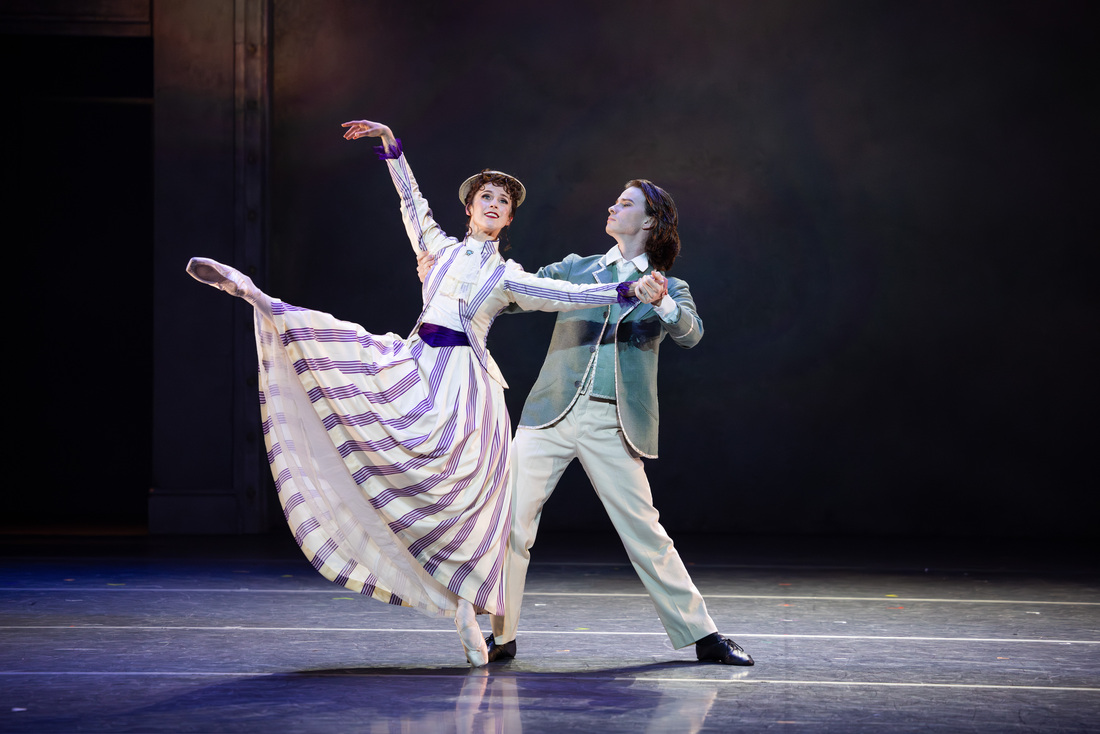
Things really come to life and into sharp focus when Oscar’s friend and early lover Robbie Ross enters the picture (Joseph Caley, memorable despite his limited stage time). Wheeldon’s dance-making really sings here as Ross elegantly fans the embers of desire and brings erotic spark to the show. The game is on with Wilde’s wife Constance (Sharni Spencer, gravely and classically beautiful) as a touchingly innocent observer to whom Talbot gives a delicate recurring theme.
Oscar is then introduced to hijinks in low dives, where Talbot lets loose with boozy brass and rousing music-hall tunes and Wheeldon with gloriously scenery-chewing dance. Fatefully, Oscar falls under the spell of the unworthy Douglas, or Bosie as he was known (Benjamin Garrett in Melbourne, Adam Elmes in Sydney). The downward spiral begins.
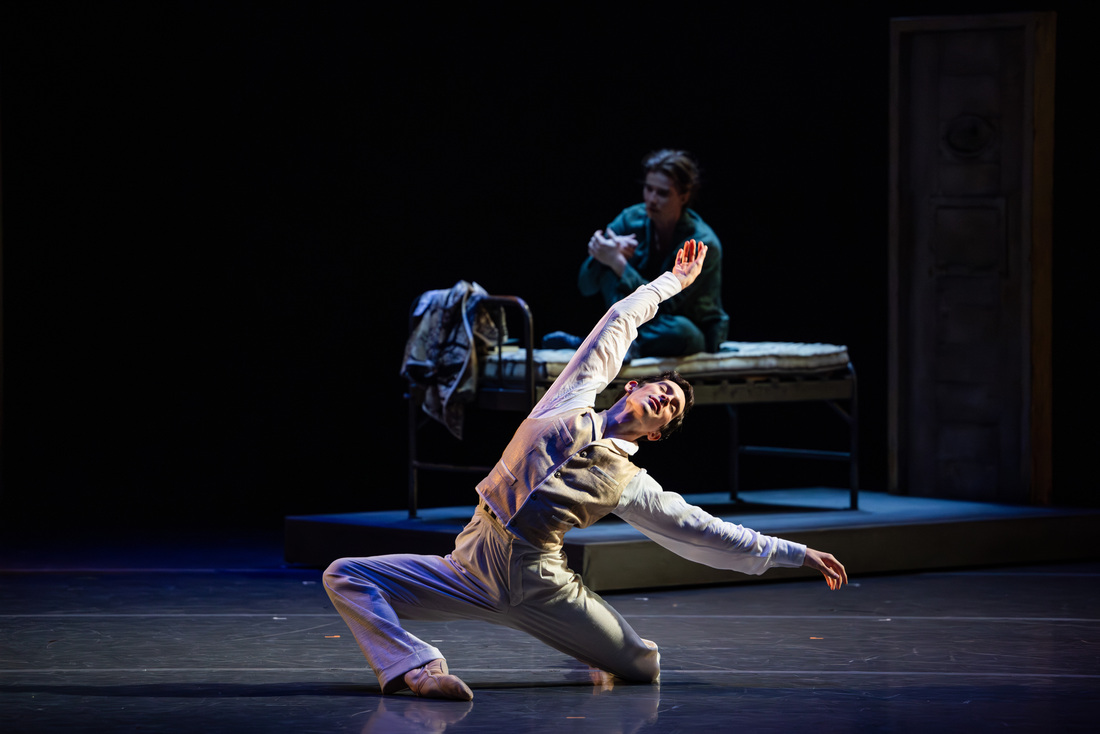
Sprinting to the finish, the second act pulsates with seductive energy while also getting to the heart of the matter, the love between Oscar and Bosie that led to Wilde’s ruin. Aspects of Dorian Gray fruitfully play a pivotal role as Wilde engages in debauches with slinky rent boys that are fairly tame, but this is the ballet. They do, however, throw into relief the heart-stopping pas de deux for Oscar and Bosie – the ballet’s reason for being – and Wheeldon’s gift to Bosie of a sensual solo that makes much of his youth and beauty.
Talbot’s romantic music for the pair, individually and together, makes striking use of piano and flute, putting it into stark contrast with the industrial sounds that accompany Wilde’s confinement and physical collapse.

One of Wilde’s many aphorisms was this: Be yourself – everyone else is taken. TAB principal artist Linnane, a poetic artist with an intriguing veil of mystery, danced Wilde at the ballet’s world premiere in Melbourne. Senior artist Madden was given opening-night honours in Sydney and revealed his emotions more directly. Both were exceptionally moving, with Madden ahead by a short half-head.
Wheeldon, along with TAB artistic director David Hallberg, had the bold idea of staging a classical ballet that puts a homosexual relationship in the place always given to a woman and a man. That mission, to give centrality to a same-sex love story on a stage from which it’s long been excluded, is fulfilled in Oscar with much tenderness.
Is it nit-picking to argue that Wheeldon and Talbot go too easy on Alfred Douglas? Possibly. But while Bosie was indisputably the great passion of Wilde’s life he was also extraordinarily careless and difficult. In Oscar Bosie has only a couple of short bursts of petulance and then is given the role of mourner-in-chief near the end of the ballet as O’Shea recites Bosie’s sentimental poem on the subject of Wilde’s death. Wilde and Douglas had an incredibly complex relationship that Wheeldon’s ballet, for all its glories, doesn’t fully capture.
At both the Melbourne and Sydney openings Hallberg proudly announced that Oscar was the first full-length narrative ballet to be commissioned by The Australian Ballet in more than 20 years. He is right to be proud it happened on his watch.
Oscar ends in Sydney on November 23.
This is an extended version of a review that first appeared in The Australian on September 15.
 deborah jones: FollowSpot
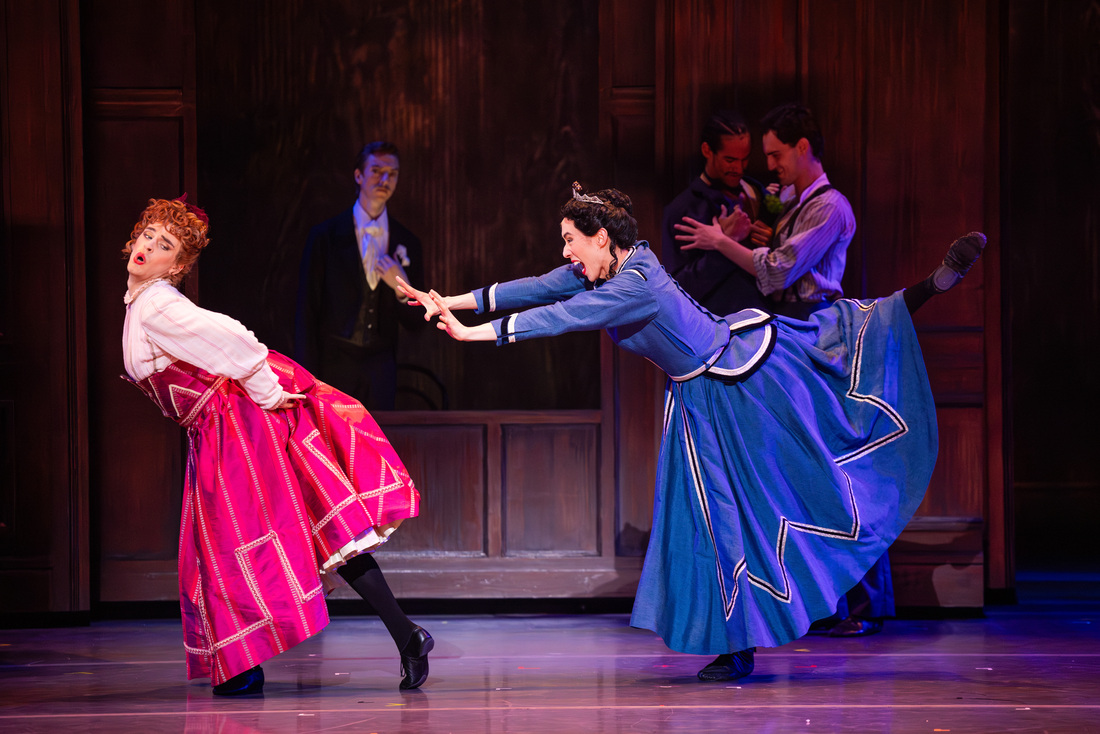
Great review, thank you. I certainly agree with you on most of your points. I would like to point out however that the picture of the drag queens is of Elijah and Lucien Xu not Marcus Morelli. Elisabeth Pidd
Thanks Elizabeth! Not sure about that being Lucien. I know he is cast wth Elijah at some performance but the images were taken of the first Sydney cast and Marcus was on with Elijah.
And of course you were right. TAB confirms Marcus was a late replacement for Xu on opening night, hence Xu in the pix. As I’ve mentioned elsewhere, I blame the wig!!
Hi Deborah! Yes, that’s Xu, not Morelli, in that photo, I’m pretty sure.
I’m so pleased to have my opinion (that Madden had it by a short half-head) backed by such a competent authority 😉 – I saw both he and Linnane in Melbourne.
I’m going to have to go to TAB for an adjudication on the photo. Obviously the images sent didn’t identify the dancers, otherwise there would be no argument. It was clearly Trevitt in the image and not Holmes, who was so fabulous in Melbourne on opening night. But Morelli performed on opening night in Sydney, and all images sent were from the shoot of the first Sydney cast. Which was Trevitt and Morelli. Hard to tell with the make-up and all, so … I will ask.
I also went to the dress rehearsal in Melbourne so saw Madden twice. So wonderful. It was brilliant to see him get opening night in Sydney.
Typical of them not to name the dancers. I’m basing my “pretty sure” on the nose and eyes.
Ah yes, Madden – the Miwako Kubota of this generation. I was very thrilled at his wrenching performance, and it’s been such a journey following him all these years.
I would have loved to have seen Joseph Caley and Brodie James as Oscar, purely for compare and contrast purposes of course!
By process of elimination James is he who was quoted by Wheeldon in Roslyn Sulcas’ piece in the NYT (October 25) and I really do wish I’d had the chance to see him.
Looking forward to my four Nutcracker shows – the one production for which I booked multiples when arranging this year’s subscription because I lurve it so. Also the very limited Melbourne “season” this year.
Ok. The ruling is in. My sharpest-eyed readers are correct. it is Lucien Xu in the photo with Elijah Trevitt – last-minute cast change for opening night, when Marcus went on. I blame the wig. On the subject of main casting, I too would have liked to compete the set with Caley and James but I have no possibility for various reasons.
very complex but riveting ballet so well reviewed and explained. Rosie
Thanks!