If you want to sum up the thrust of Karen Pearlman’s witty new short film in one piece of advice it’s this: women, whatever you do, do not gaze wistfully through a window. This passive act of watching and waiting is anathema to Pearlman, as it should be. She simply will not allow it in anything she directs and it’s advice that should have wide currency.
Well, it is seen here, briefly, as Violette Ayad re-enacts a scene from an old silent movie. That Ayad is under Pearlman’s direction when she does her wistful gazing, and is chided for it, is one of the many meta-theatrical devices in Breaking Plates, a film that revels in breaking rules as well as plates. (Violating realism is a victimless crime is the unimpeachable title of the film’s second, realism-violating act.)
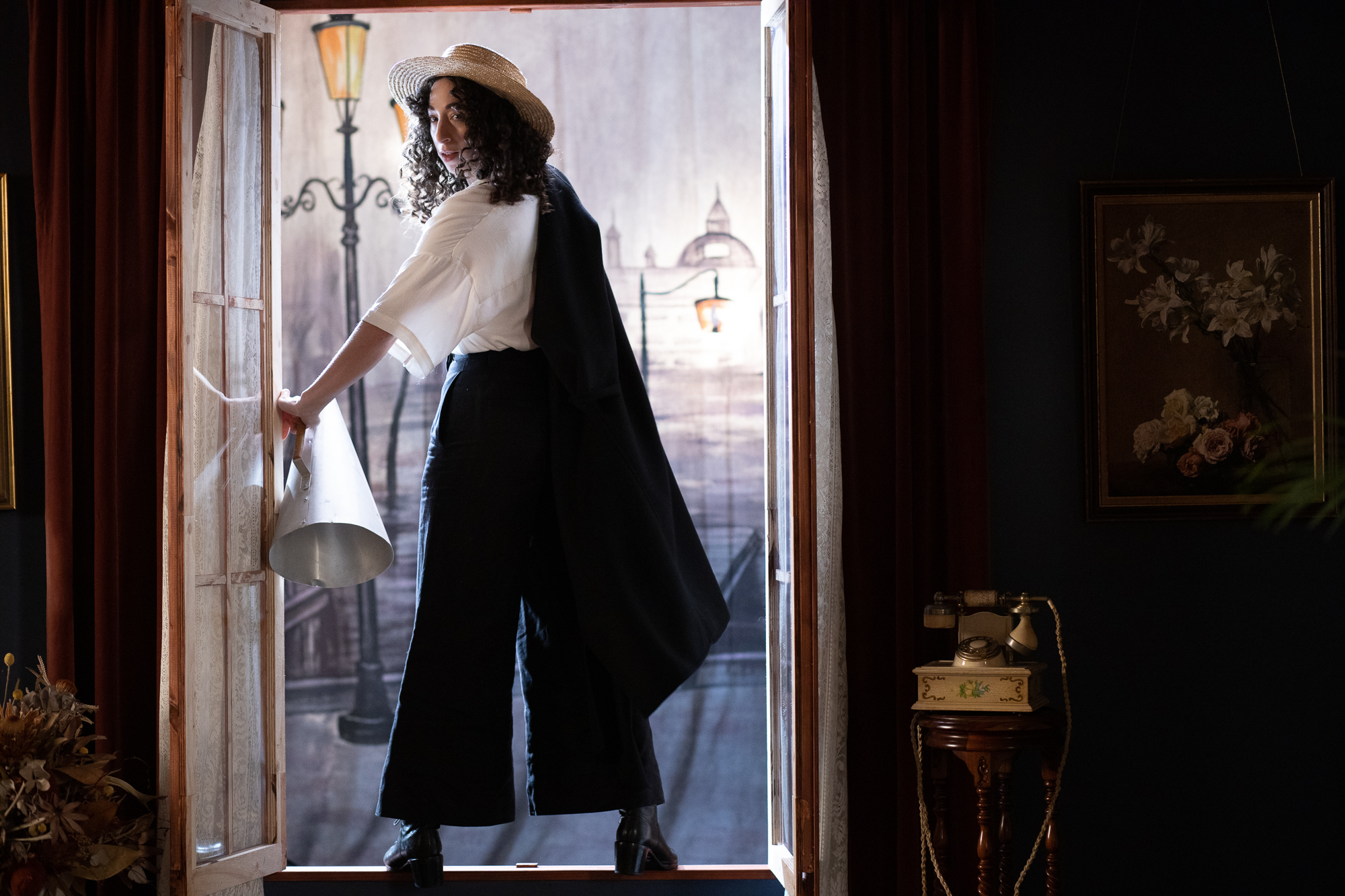
The question at hand is why today’s women appear to be far more careful, contained and constrained than those depicted in the pioneering cinema of a century ago. Or, as Breaking Plates asks, what happened to the revolution? Is it still possible? What might it look like? And, delightfully, what might those formidably high-spirited women of the late 19th and early 20th centuries have to say to someone at this very moment?
Breaking Plates, which premieres in Sydney on February 8, has its genesis in Donald Trump’s 2016 dismissal of Hillary Clinton as a “nasty woman”. A few years later a group of American scholars curated a collection of silent films made in the US and Europe between 1896 and 1926 that featured women behaving riotously. The domestic sphere was treated as a battleground. The women confronted authority and came away triumphant. Sometimes they put on a suit and tie. They were rude, funny, boisterous and in charge. Even though the films were silent you could tell these women were loud. The scholars called their collection Cinema’s First Nasty Women.
Saying what you think? Taking up as much space as you want and deserve? Declining to be subservient? Go for it.
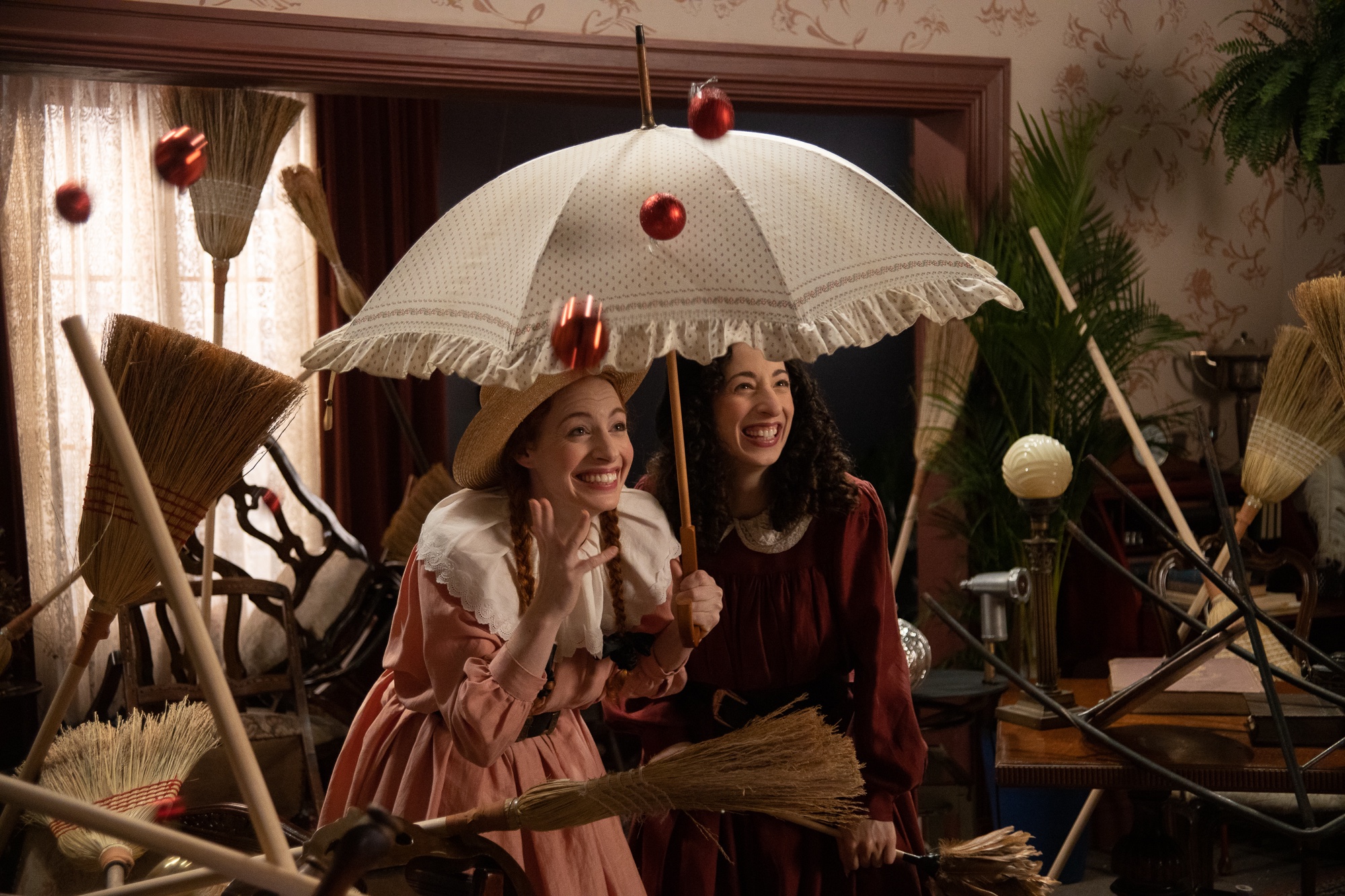
Pearlman co-opts some cracking footage from Cinema’s First Nasty Women and interweaves it with her own scenarios, inserting herself into the film as she orchestrates re-enactments and challenges the status quo. Entertaining snippets from movies made a century ago become teachable moments for Ayad, who finds herself taking phone calls from heroines of yesteryear and, with the help of a few gal pals, starting to raise a bit of hell herself.
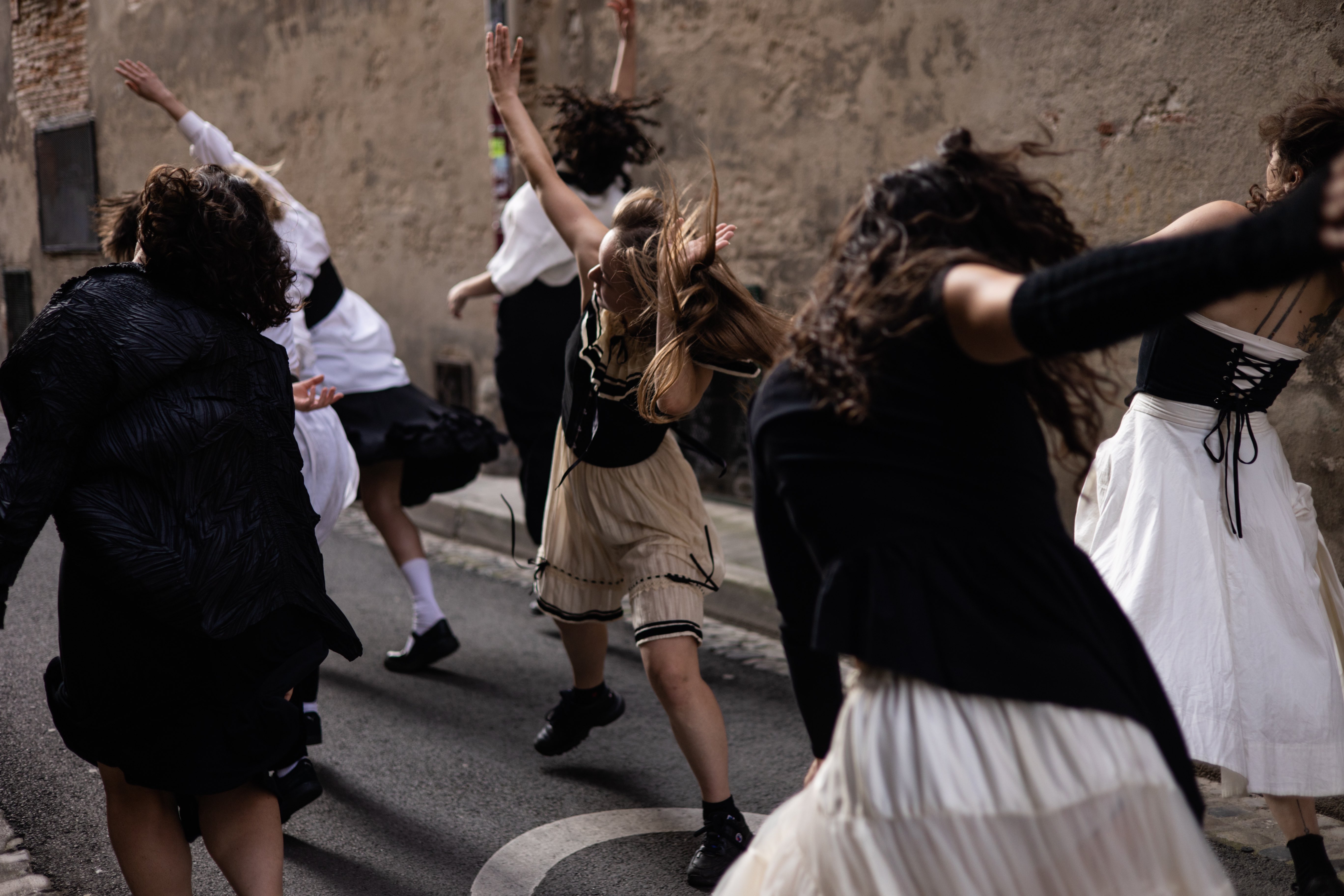
Breaking Plates reminds us that silent movies were powered by outsized physicality and brilliantly vivid faces (Emma Watkins nails it in a scene-stealing appearance). They crackle with life-enhancing energy. It’s telling to realise how much the silent-movie actors look like dancers as exuberant women pile down stairs, whirl around rooms and engage in robust slapstick. Pearlman was a dancer and dance company director back in the day before turning to film as a writer, director, editor and academic and she understands the eloquence and strength of the body in motion.
It’s perhaps limiting to describe Breaking Plates as a dance film but it does communicate in the language of dance. The take-away from Breaking Plates is to keep moving, metaphorically and physically. Be steadfast in your thinking and don’t forget what the past can teach. And also this: have fun; be bold; find joy.
In silent films title cards offered a few words of dialogue or exposition but mostly story and intent came from action. Perhaps another take-away from Broken Plates is that it’s not what you say but what you do that ultimately counts. Pearlman, by the way, does quite a lot, given that as well as directing Broken Plates she wrote, choregraphed and edited along with one or two other things.
In keeping with the brevity of early silent films Pearlman keeps Breaking Plates moving as quickly as a smash-and-grab raid and brings it in at under 30 minutes. As a bonus, a great earworm of a song, Volatile, by the film’s composer Angela Little, brings Breaking Plates to a foot-twitchingly upbeat conclusion. And yes, plates are satisfyingly broken.
Breaking Plates (The Physical TV Company) has its Australian premiere as part of the Antenna Documentary Film Festival. February 8, 1pm, Dendy Cinemas Newtown.
Breaking Plates will be screened during Kennington Bioscope’s Silent Film Weekend at the Cinema Museum (London), April 5 and 6.
Pearlman will introduce a screening of Breaking Plates and participate in a Q&A session in the Trylon Cinema, Minneapolis, April 17.
Cinema’s First Nasty Women is available as a four-disc box set (Kino Lorber).
 deborah jones: FollowSpot