There’s a vibrant spirit of renewal at Canada’s Alberta Ballet, the Calgary-based company that next year celebrates its 60th anniversary. Artistic director Francesco Ventriglia has been in place for only 18 months but is moving rapidly on multiple fronts. He has already increased the size of the company, is putting the classical tradition front and centre and is positioning Alberta Ballet as a nimble player in the wider dance world.

Alberta Ballet’s just-concluded 24/25 season laid a firm foundation. Ventriglia’s 25/26 season is a bold and undeniably ambitious statement of intent.
Exhibit A is that next season there will be fewer – as in zero – visiting companies as part of the performing year. “It’s the first year it’s been all Alberta Ballet for I don’t know how long,” says Chris George, Alberta Ballet’s President and CEO. “Pre-Covid we planned to have three guest companies each year.”
The spotlight will now be entirely on the company, which is growing in anticipation. Next season there will be more than 40 dancers, including trainees from the Alberta Ballet School, an increase of five from when Ventriglia started. A second power move is the new, separate summer contract that gives dancers eight weeks of work in addition to their current 40-week contract, should they choose to take it up.
The main season, starting in September, will include Ventriglia’s Romeo & Juliet, made when he was at Royal New Zealand Ballet; Swan Lake in a production created in 2018 by former Paris Opera Ballet étoile Benjamin Pech; a triple bill honouring Nijinsky with new works by three female Canadian choreographers, each of a different generation; and the North American premiere of Roland Petit’s Notre Dame de Paris, based on the Victor Hugo novel known in English as The Hunchback of Notre-Dame. Ventriglia danced the bell-ringer Quasimodo early in his dance career with La Scala Ballet, chosen by Petit himself.
The Nutcracker, an annual staple of all North American ballet companies, will be seen in a new production by Ventriglia.
These are serious commitments at a time when Alberta Ballet, like countless other performing arts organisations worldwide, is still recovering from the body-blow that was the pandemic. The company had gone through a rocky time internally, too, after the departure of its veteran artistic director Jean Grand-Maître, whose 20-year leadership of the company had meant stability. His successor, Christopher Anderson, had only a brief tenure and left at the end of December 2023.
Ventriglia arrived slap-bang in the middle of the 23/24 season (and the depths of a Calgary winter) and had only two months in which to curate a 24/25 program. Despite the astonishingly short deadline Ventriglia says he had time “to talk and listen a lot, to question, to learn”.
A certain expectation had been created by Grand-Maître’s series of highly successful “portrait” ballets danced to popular music. Ventriglia wanted to draw on his classically informed background first as a dancer then an artistic leader and choreographer in Italy, New Zealand, Uruguay and Australia.
His opening salvo – the first work in his first Alberta Ballet season – was La Sylphide, the oldest still-performed ballet in the classical repertoire and the work that introduced the pointe shoe as a fundamental aspect of ballet artistry. It embodied the company’s new direction and, despite being a somewhat risky choice, was a shrewd one. The ballet has a Scottish setting and Calgary and Edmonton, the two cities in which Alberta Ballet performs, have strong Scottish connections.
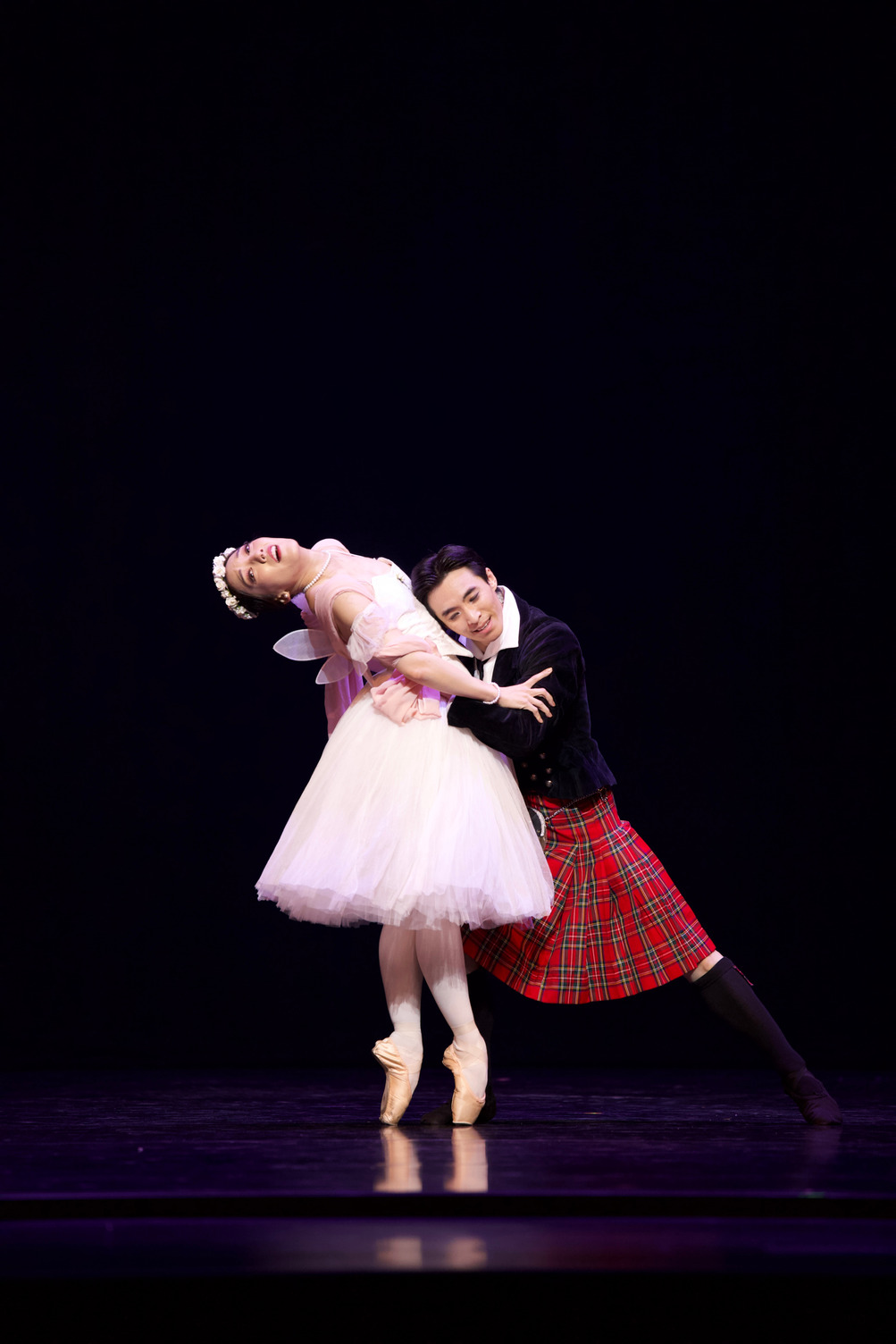
Ventriglia admits “everyone was worried” about how La Sylphide would be received but the presence of audience members in kilts went some way to soothing the nerves. “I dressed up in a kilt for my pre-show speech and people loved that. It was fun and it was successful.”
With Ventriglia wanting to implement change quickly he needed to forge a good relationship with the Alberta Ballet audience just as speedily. “I think about my public, who they are and where I am,” Ventriglia says of his approach to programming and presentation. “I am building trust with my public.”
The ”where I am” is important. Having a pipe band play on stage before performances of La Sylphide was one way of connecting the ballet with the community. Another example is his spotting of miniature horses at last year’s Calgary Stampede parade – the Stampede is crucial to Calgary identity – and deciding his upcoming production of Don Quixote must include one.
He has also added a distinctively personal touch, making himself highly visible with lively pre-performance chats and curtain speeches at every show.
Interestingly, Chris George says Ventriglia’s vision for the company was “almost secondary” during the recruitment process. “The Board was looking for the right person.” (During my May visit to Calgary another person familiar with the process separately said the same thing.)
“When Francesco came he was leaps and bounds in front of the other candidates,” George says. “I think it’s going extraordinarily well. I can’t walk through the theatre without people coming up to me and saying how excited they are with Francesco.”
There are, nevertheless, hurdles to be negotiated as Ventriglia forges ahead. The new summer contract means additional performing opportunities have to be found around the province and beyond (some are already in the bag) to support the extra salaries. “This summer is to tell everyone that we are here,” says Ventriglia.
The dance card might not be overflowing in this first summer season but Ventriglia does have a number of touring offers under discussion for later and was able earlier this year to take Alberta Ballet to Dubai Opera to perform his fairytale ballet A Thousand Tales, a work created in 2023 for an independent producer. A Thousand Tales will also be performed during the company’s 25/26 season.

In his swift reshaping of the Alberta Ballet repertoire Ventriglia has drawn on works he previously created (The Wizard of Oz last season; A Thousand Tales and Romeo & Juliet next season) and he choreographed new versions of La Sylphide and Don Quixote, the 24/25 season closer.
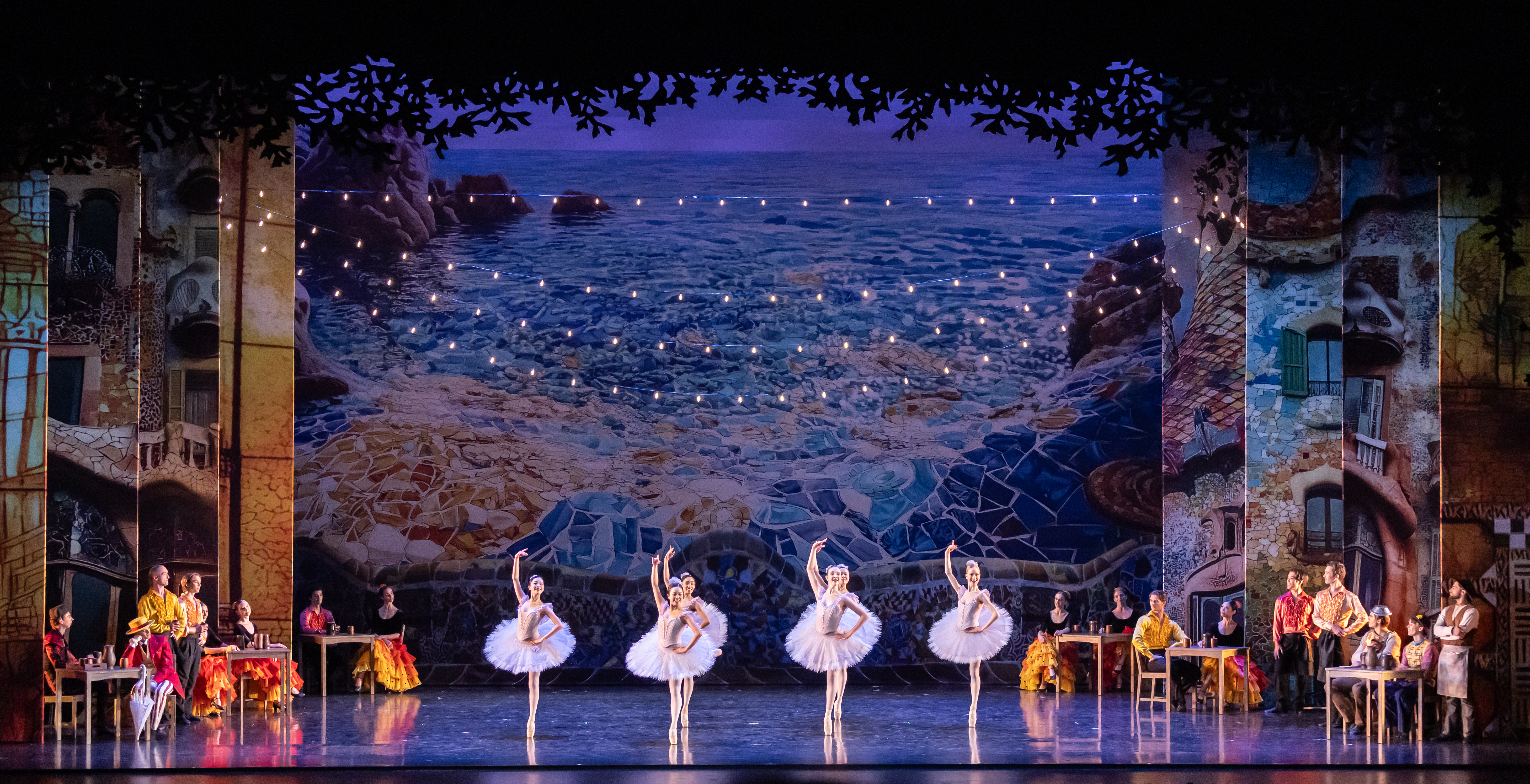
The look of Ventriglia’s fast-paced Don Q was inspired by the Barcelona of Gaudí and infused with warm Mediterranean tones. Gianluca Falaschi’s costumes summoned the 1950s in gelato colours and pretty, voluminous skirts for the women in the town square and tavern scenes. The company delivered sunshine and laughter, particularly in the spirited first act, as Kitri (Alexandra Hughes in the first cast, Luna Sasaki in the second) and Basilio (Aaron Anker, Mirko Milandri) flirted and plotted charmingly.
The whole thing went off with great good cheer, albeit with not every technical challenge conquered as Ventriglia sets about embedding classicism into the DNA of the entire company.

Ventriglia’s desire to have a miniature horse in Don Q found its audience-pleasing realisation in Jasmine, who combined calm demeanour (she is a therapy animal in real life) with impeccable behaviour as she pulled the ballet’s titular dreamer along. She was later spotted at Stage Door graciously accepting compliments.
It’s never ideal when a ballet is danced to recorded music, as Don Quixote was, but progress is being made in this important area. Next season The Nutcracker and Swan Lake will be accompanied by the Calgary Philharmonic and Edmonton Symphony orchestras. In 24/25 only The Nutcracker had that benefit. Talks are underway with a prospective donor for funding that would be specifically directed to the provision of live music.
As Ventriglia says, if you want to stage, say, John Cranko’s Onegin, “if you don’t have an orchestra you’d better forget it. They [the rights holders] will never say yes.” It’s a potent example to choose. Onegin is one of those ballets dancers the world over dream of performing. If you have the resources to put on a ballet of the size and stature of Onegin, and Ventriglia aims to have those, that opens the door to other desirable works.
The 25/26 season will introduce 11 new dancers as a result of the increase in numbers and several retirements and departures. “I want to make something of this opportunity,” Ventriglia says. “There is not a university to become an artistic director. You learn on the job. I started young and made my mistakes young. Now I’m 47. I really feel ready.”
Crucially, the Albert Ballet Board of Directors is happy. “This season has marked a bold new chapter for Alberta Ballet. Under Francesco’s leadership, we’re seeing fresh energy ripple through our organisation—from the stage to our studios and into the hearts of our patrons,” Chair Heather Rae says. “The Board is proud to stand behind his vision: Albertans deserve access to world-class artistic performance options, and we aim to provide that for our audiences.”
The writer was a guest of Alberta Ballet in Calgary.
 deborah jones: FollowSpot