Sydney Dance Company’s INDance, now in its fourth year, is a small festival that presents already existing – although relatively new – works in SDC’s black-box Neilson Studio. It’s a pick’n’mix program. Casts tend to be small, there’s not a lot in the way of fancy lighting or sets that knock your socks off. This is stripped-back dance with its ideas laid bare.
WEEK 1:
Amy Zhang’s [gameboy] was ostensibly about playing to win. About how you present yourself to the world. How you see yourself. It’s actually a lot more than that but Zhang cleverly offered it up as an entertainment that could be taken at face value. A lot of contemporary dance frightens the horses (it’s not necessarily a bad thing). [gameboy] was not in that category.
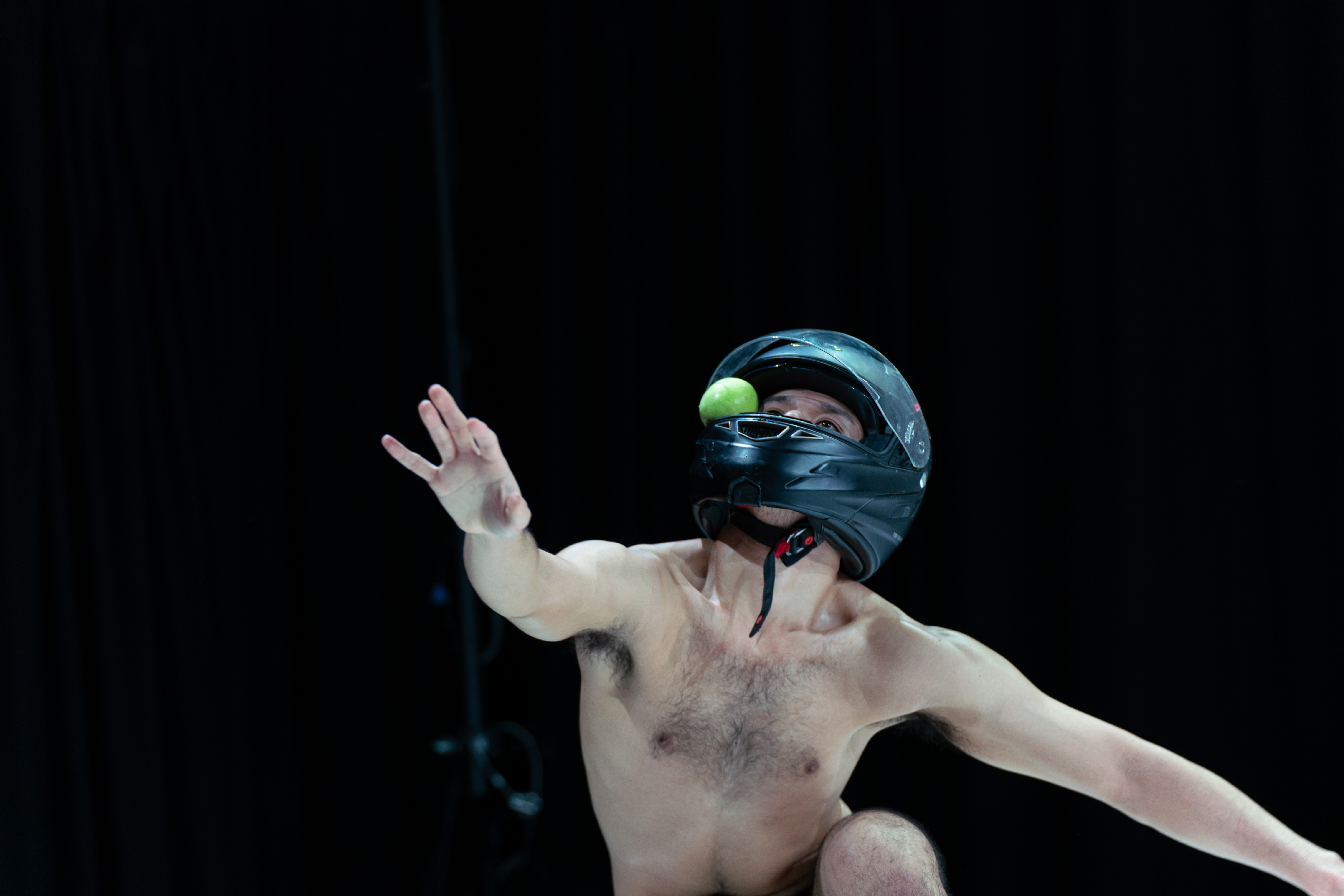
In a promo video for INDance 2025 Zhang said that if she had to describe [gameboy] in three words it would be “absurd, funny and competitive”. She was spot on. [gameboy] was indeed those things, and a lot more. But first a shoutout to Zhang, whose uncomplicated way of talking about contemporary dance, or at least this one, is a real tonic. Possibly this is because she had an unusual entry into dance and choreography, beginning as “an awkward, nervous adult in a beginner Hip Hop class”.
Zhang gave the audience a way into the world of her piece without telling people what they should think. Those in the audience could make up their own minds about meaning.
There was more than met the eye to [gameboy] but what did meet the eye was incredibly engaging. Two avatars in the sleek, hilariously impassive forms of dancers William “Billy” Keohavong and Ko Yamada (both also billed as collaborators in the piece) engaged in a set of challenges that were all the funnier for being so meaningless. Jumping jacks, picking up apples without using hands, cramming the body into a reusable shopping bag: that sort of thing. In between each challenge, performed to jaunty, bubbly music, the two cleaned their teeth (no, I don’t know either).
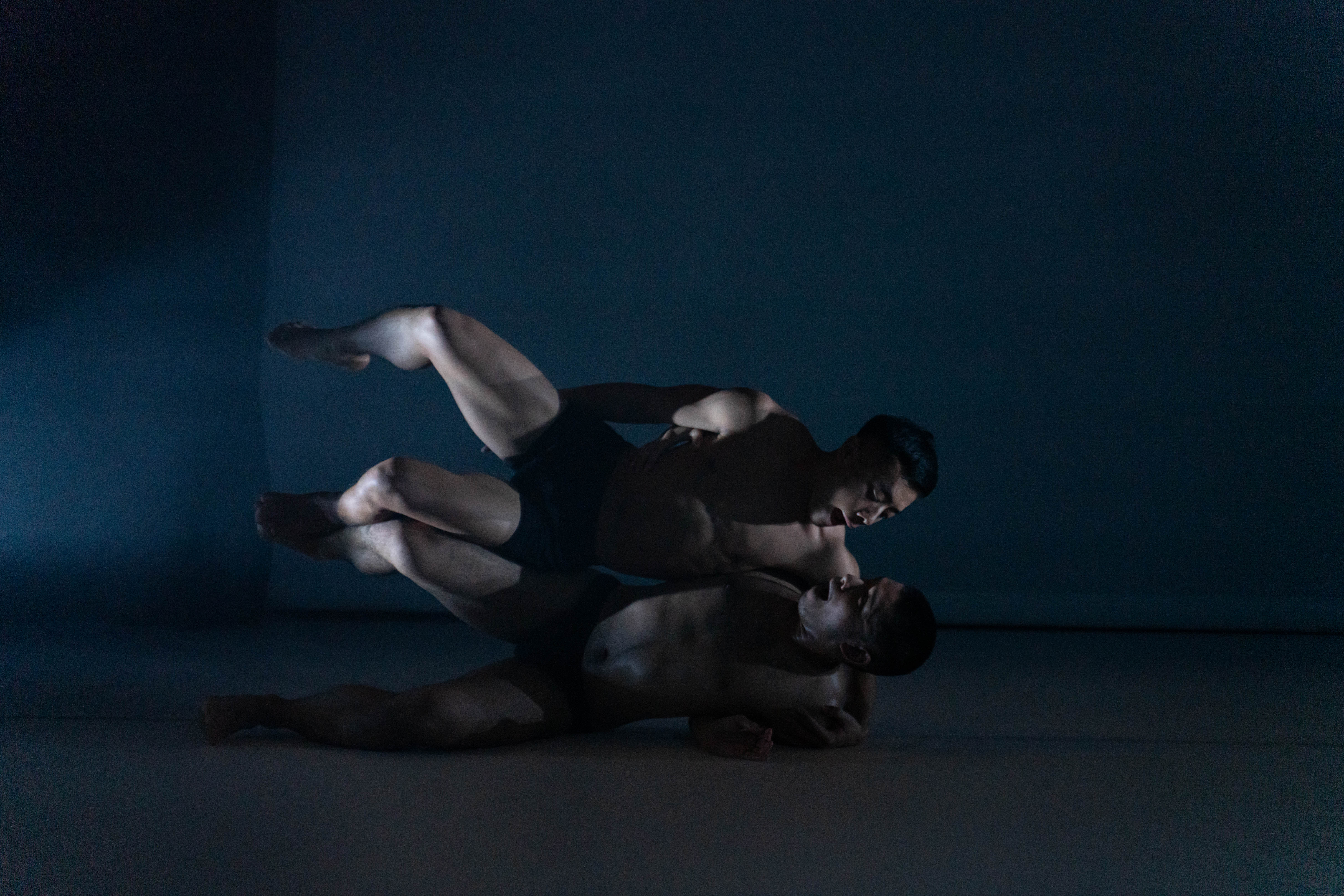
A stunning change of atmosphere brought a trance-like duo that conjured dark places of addiction. The dancers’ barely visible busy thumbs told that story. The intermingling of bodies that followed was extraordinarily beautiful and extremely disturbing in its implication of loss of self. In another context it might have been a true meeting of minds and bodies but not here.
Then it was back to bubbly music, cheesy dancing, fun times and fake smiles. Who was the winner here? The audience, certainly. Those endlessly playing online games not so much.
Zhang neatly encapsulated how technology deadens the relationships it was meant to facilitate. “The internet is like eating plastic,” we heard in voiceover early on. The words come from the 2022 album Asha’s Awakening by American singer-songwriter Raveena, who goes on: “The internet makes me feel far away from my friends.”
In those few phrases the ever-reaching tentacles of the internet were linked, at least for me, with the despoliation of the earth by microplastics as well as online loneliness. Genius. Not that Zhang was lecturing. She has a light hand and agile mind. The rest was up to you.
Rebecca Jensen’s Slip, performed with musician Aviva Endean, was also anchored in the idea of mediated experience. Things are not what they seem. They are a facsimile of a thing. The inspiration was cinema and the way sounds are created for maximum verisimilitude without actually being the real thing.
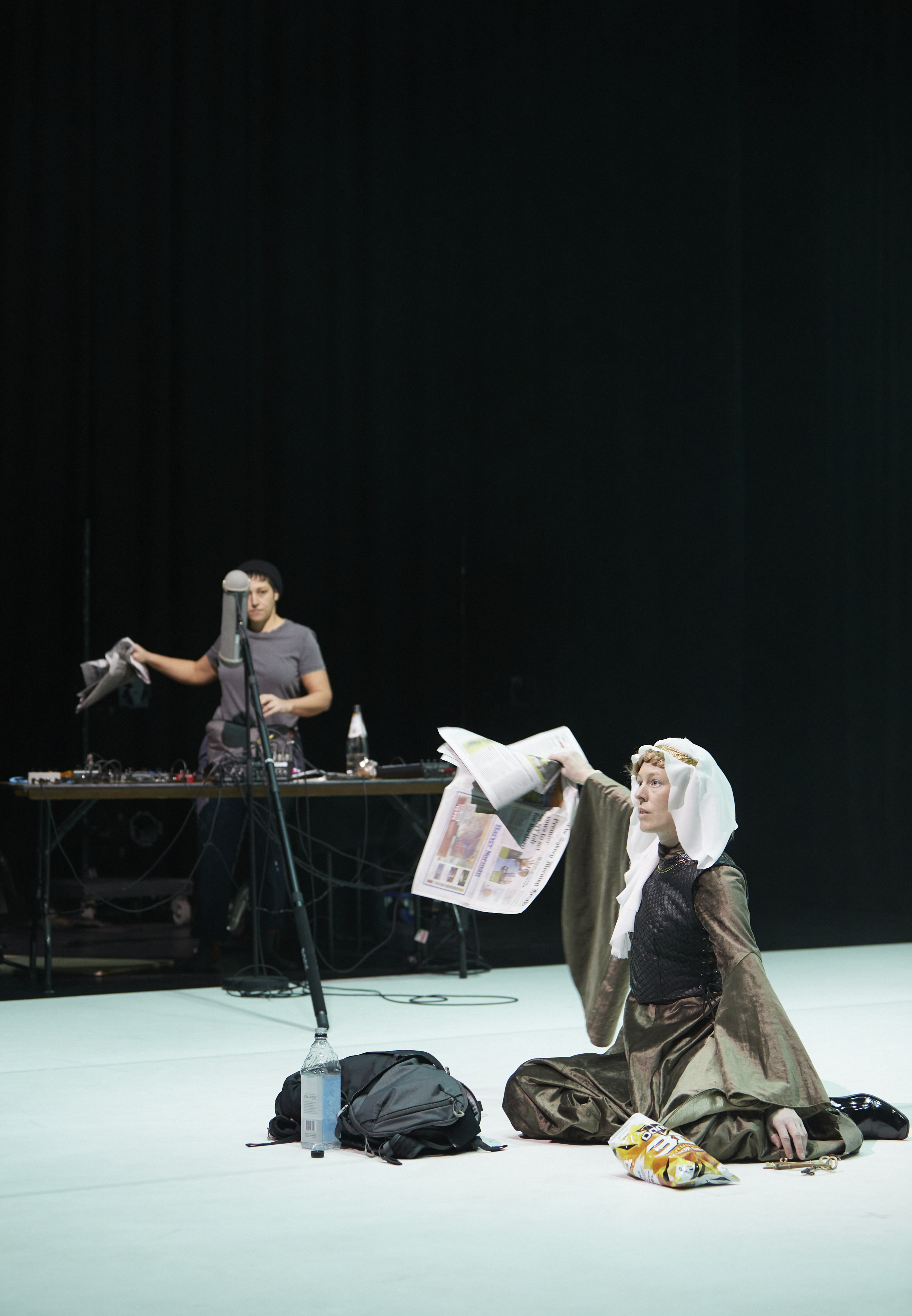
Jensen’s early appearance in medieval-style garb and later change into contemporary wear suggested this dislocation – the slip of the title – is nothing new. The idea was quickly established and was over-stretched in Slip’s 50-minute length. Nevertheless, Endean’s sound recreations, not exactly timed with Jensen’s actions, were aural proof of being out of sync with life. Jensen’s lovely dance in front of a screen of animated dancers made the point visually. Endean briefly sang beautifully and Jensen summoned the spirit of Anna Pavlova with ghostly slivers of the Dying Swan. There was slippage everywhere but for all the absorbing moments Slip eluded the grasp. That may have been Jensen’s intention but in the moment – the real-live moment – Slip didn’t always connect.
Jensen is a commanding performer, though, and at the end there was a sense of melancholy and possibly even defeat in the face of our increasingly fragmented world.
WEEK 2:
Alison Currie and Alisdair Macindoe’s Progress Report starts and finishes promisingly with imagery of the attraction of and then the disaster that is polystyrene. In between was a text-heavy and sadly turgid monologue on what the havoc wrought by plastics. The opening scene had performer Rachel Coulson delicately manipulating thin layers and increasingly large blocks of Styrofoam with the help of a large fan. We could see shape, weight and structure at work. Dance things. But we could also see it was Styrofoam, something togive pause for thought.
At the end a floating sheet of plastic and storm of white fragments spoke volumes. The sheet flapping in the wind inevitably brought to mind the flying plastic bag in the film American Beauty, lovely and ugly at the same time. And also, because American Beauty was made in 1999, such an image is now much more heavily freighted.
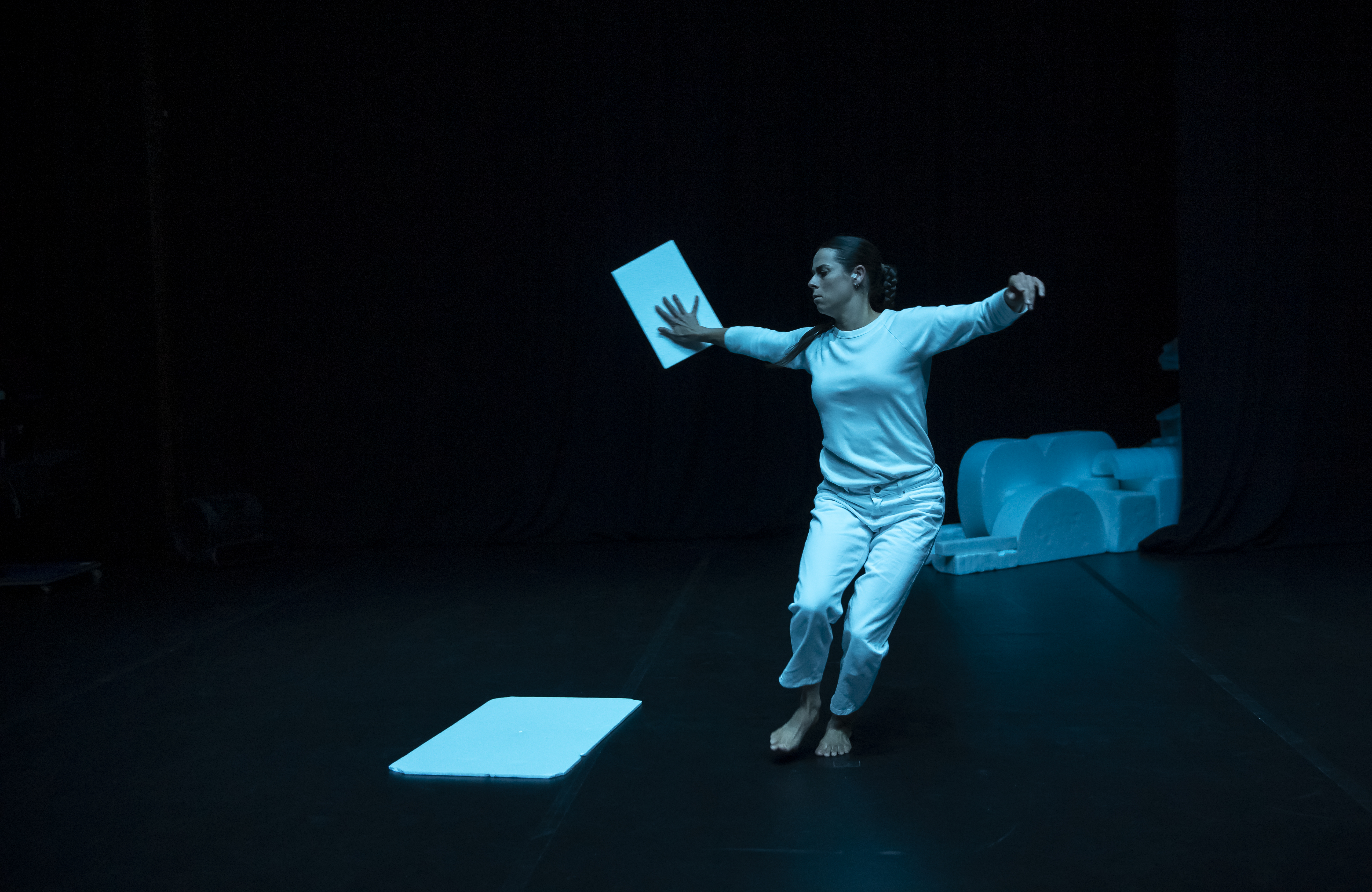
The problem was when thoughts were given voice at length in facile statements delivered as if this issue needed to be explained to a person as yet unacquainted with the subject. If Coulson had been more comfortable with moving and speaking simultaneously the text may have had more potency but the struggle could be heard.
I couldn’t really say what the title FM Air means but it’s fair enough that the name is enigmatic. So was Jo Lloyd’s work, the last of INDance’s four programs, which was veiled – literally – for much of the time. It was also deeply engrossing. FM Air began with a trio of dancers, including Lloyd, locked together via the medium of a translucent cloud of fabric (Andrew Treloar’s design). They therefore had to move around the space as one, although they appeared unaware of this restriction. Each person – the other two were Louie Wisby and Thomas Woodman – did their own thing except when the group stood still for quite some time.
That was a lovely touch. The thing is, of course, that the body is never, ever completely still. There is an awareness of breath, the slight quiver of a muscle as a position is held. An expectation on the viewer’s part that at some point movement will again begin. There was a lot of inner tension.
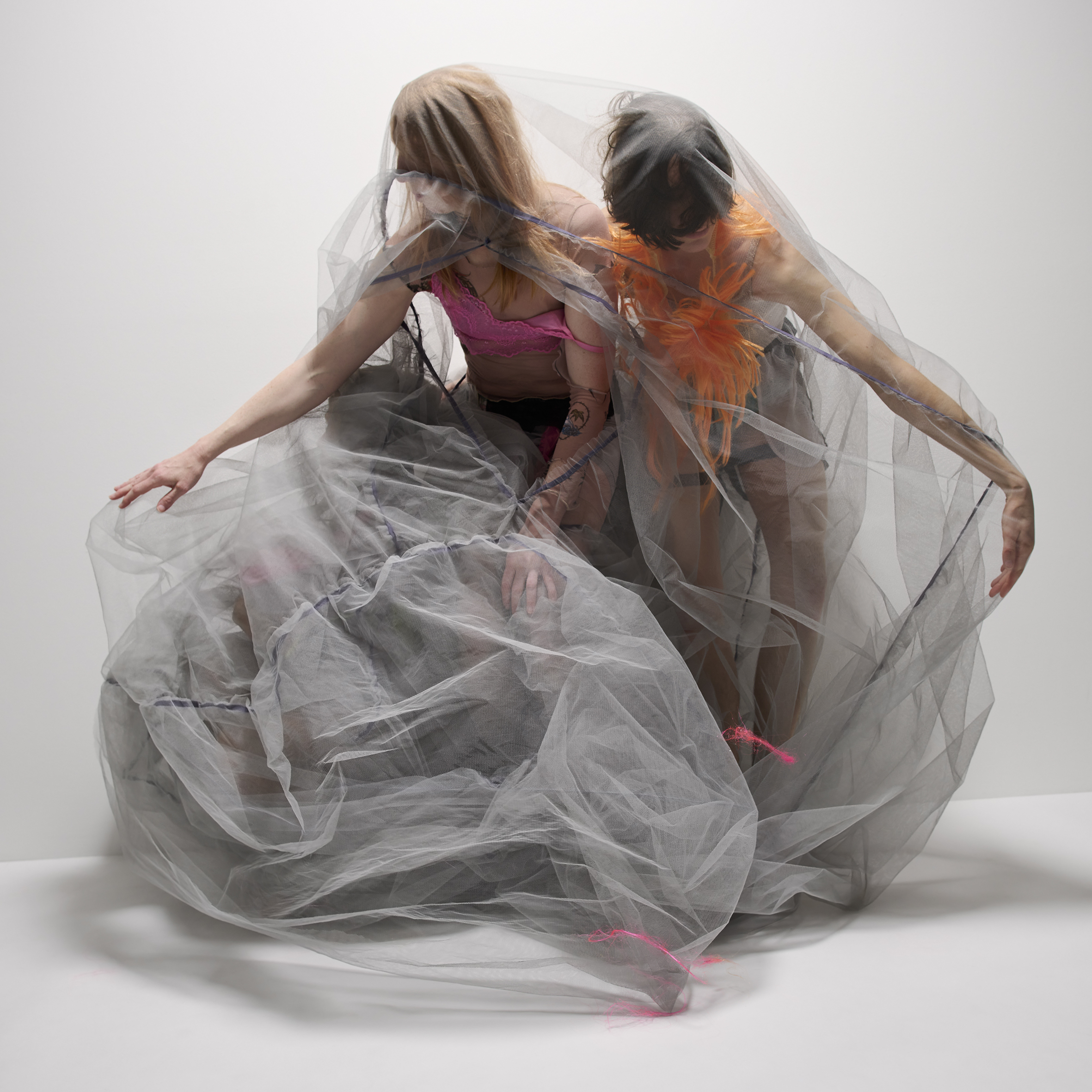
Discarding their cocoon, the three occasionally acknowledged the presence of the others via touch although not emotion. They mostly continued in their own worlds with odd, childlike, ungainly movements that nevertheless looked endearing and human.
Near the end they seemed, to this viewer, to be engaged in something very like a dance of death, clinging to one another, grabbing and releasing. Then followed a series of long poses on the floor, copied from one another but not done simultaneously.
Performed in an empty, black-curtained space, FM Air existed entirely in the realm of atmospherics and the mysteries of behaviour. Take Wisby’s costume, for instance, which was kind of medieval-baby doll in appearance for some reason. The fact that it looked fabulous and gave Wisby an aura of fragility and innocence was probably enough.
I would have been happy to see [gameboy] and FM Air again right away. Not a bad result at all.
 deborah jones: FollowSpot