You hear it a lot in foyers. “A short show’s a good show” we cry before heading into the auditorium. It’s shorthand, if you will, for the knowledge that we don’t be detained too long if a terrible performance lasts only 90 minutes or so without interval.
It’s kind of a joke but not a joke. It’s a plea for an experience that will elevate the spirit while suspending time.
And sometimes that mantra is absolutely on the money. Sometimes a short show is a miracle of compression and concision. It has all the ingredients it needs and none of the padding.
It has the savour of a concentrated, super-rich, tantalising sauce. The amount is perfectly, marvellously just right.
Dance is extremely good at this.
That was the case for the gorgeous Save the Last Dance for Me, part of the Sydney Festival in January. It was a resurrection and reclaiming of an early 20th-century Italian social dance for two men, the polka chinata, and was over in a blissful half-hour, including encore.
Songs of the Bulbul is equally blissful. It comes from a much older and entirely different tradition but shares the piercing humanity of Save the Last Dance. That prickling sensation in the eyes? Could be a tear or two.
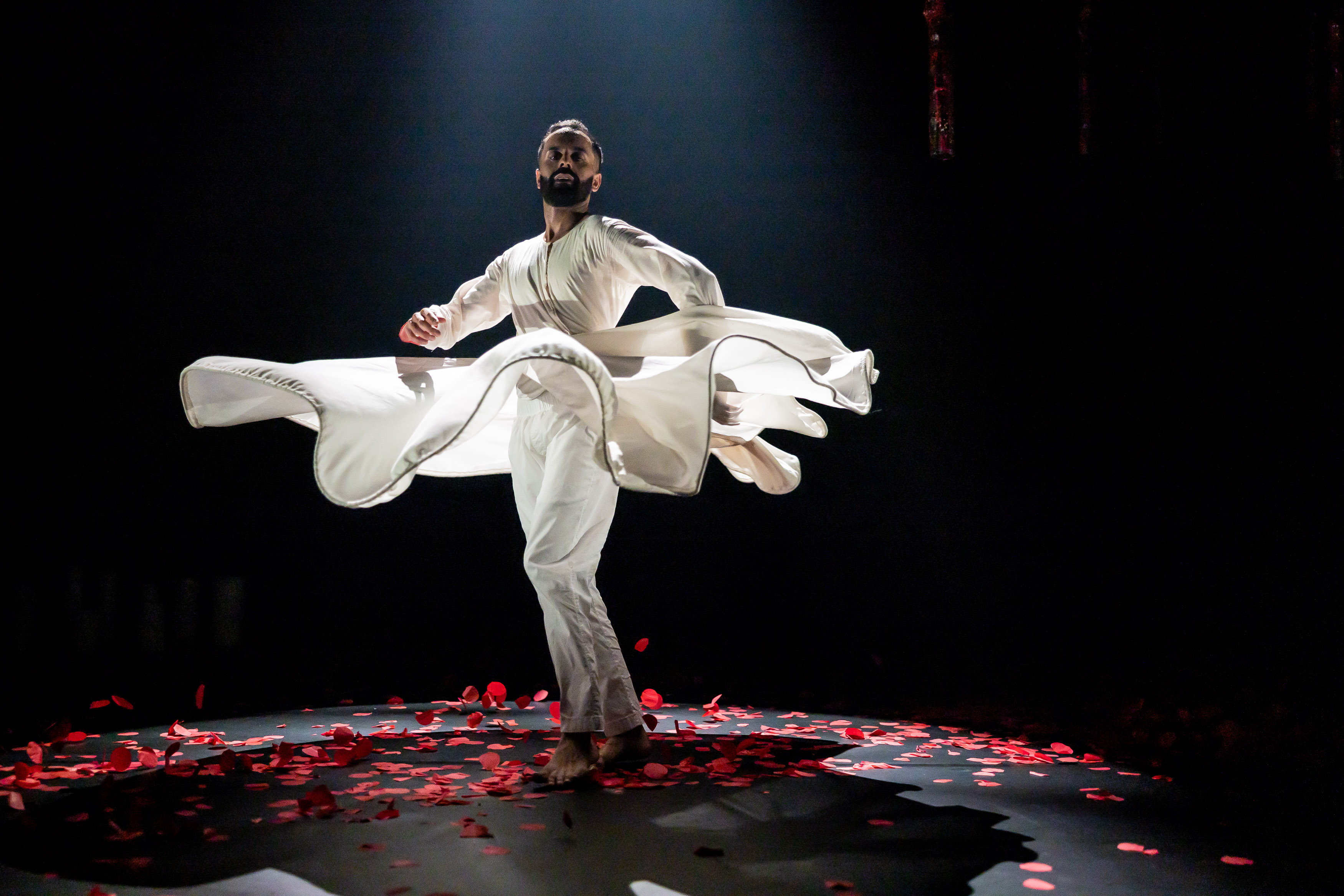
Huge ideas are distilled to 50 minutes of poetic, ardent dance. A nightingale – a bulbul, as it’s called in ancient Sufi and Persian mythology – has been caged and is increasingly denied light. Its response is to sing even more powerfully as it leaves the material world behind.
You could not get further away from the quotidian. Songs of the Bulbul is an exploration of the soul and what peace and enlightenment might feel like after the inner struggle has been let go.
As cascades of blood-red rose petals fall from the heavens, a vestigial forest looms and light becomes ever more elusive, a parable of capture and oppression ends in ecstatic release.
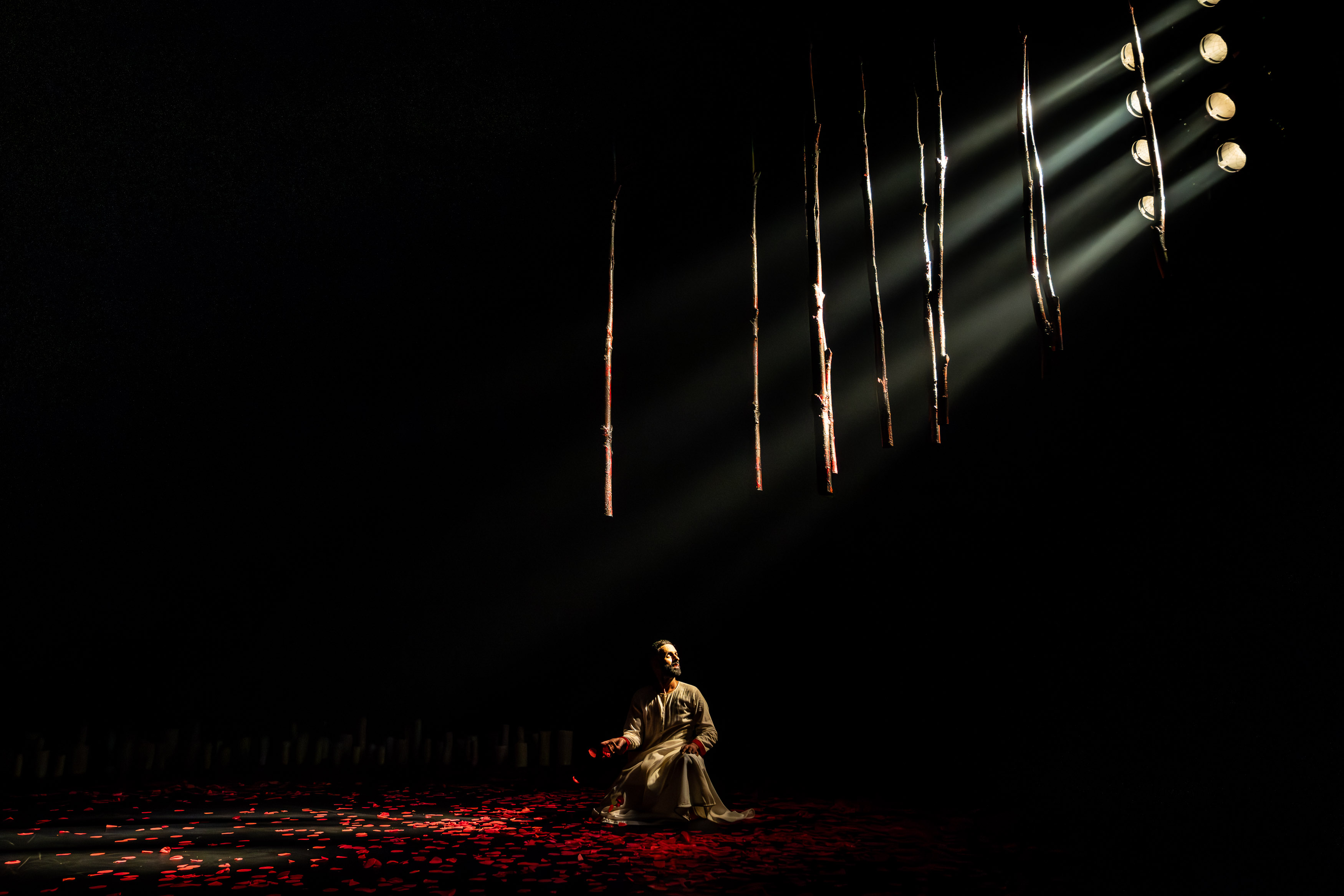
They are ravishing, those petals, but not just for show. Part of the legend is that the nightingale is in loveliest voice when roses bloom. The joining of that beauty with the bird’s fate gives the story even more poignancy.
Aakash Odedra, the solo performer, fills the stage with passionate dance. Vulnerability too. He seems to have a layer less skin than the rest of us as he moves with open-hearted freedom to the highly coloured, highly accessible score by Rushil Ranjan, heard in a recording by the music’s co-commissioner, Manchester Camerata.
Rani Khanam’s choreography is inspired by the classical Indian Kathak tradition for which Birmingham-born Odedra is famed and is thrilling to see. He flies and spins as if borne by the wind, robes swirling about him as if they had a life of their own. There are flickers of avian imagery in his eloquent hands and, above all, emotional transparency.
Odedra is a virtuoso of his art who nevertheless appears almost artless. His search for simplicity, honesty and acceptance makes Songs of the Bulbul deeply touching.
Such things can be confronting in the theatre although the immediate standing ovation at the Sydney performance I attended suggests many are ready to put themselves into Odedra’s hands.
Songs of the Bulbul sends a shaft of light into a dark world. Now Perth Festival audiences can taste the joy for themselves.
Perth Festival, February 13-15.
This review first appeared in The Australian.
 deborah jones: FollowSpot