When announcing her 2023 season for Royal New Zealand Ballet, then-artistic director Patricia Barker described the returning Romeo & Juliet as “a glorious production made for the St James [Theatre] in 2017”. She was referring only to the sets and costumes designed by James Acheson. Barker added: “Andrea Schermoly is creating new choreography that will revive the classic story with even more passion, drama, hope and despair.”
Acheson came to Romeo & Juliet at the invitation of Barker’s predecessor at RNZB, Francesco Ventriglia, who was also the ballet’s choreographer. It was a fine dance version of Shakespeare’s play but for some reason Ventriglia wasn’t invited back to restage his work.
One of Barker’s important achievements was to bring more female choreographers into the fold and it’s a fact that the full-length narrative ballet is a field still dominated by men. That’s possibly why Barker gave South African-born Schermoly this opportunity, which is why it’s the Schermoly choreography, along with Acheson’s design, that’s now being seen in Perth at West Australian Ballet.
Schermoly made a mostly good fist of the assignment but it’s arguable that having to work to someone else’s vision for the ballet isn’t ideal. And I mean no disrespect to Schermoly, but one can’t say her version had to be made; that it had something vitally new to say about Romeo & Juliet that the earlier choreography didn’t. Did asking a choreographer to step into an existing production restrict her too much?
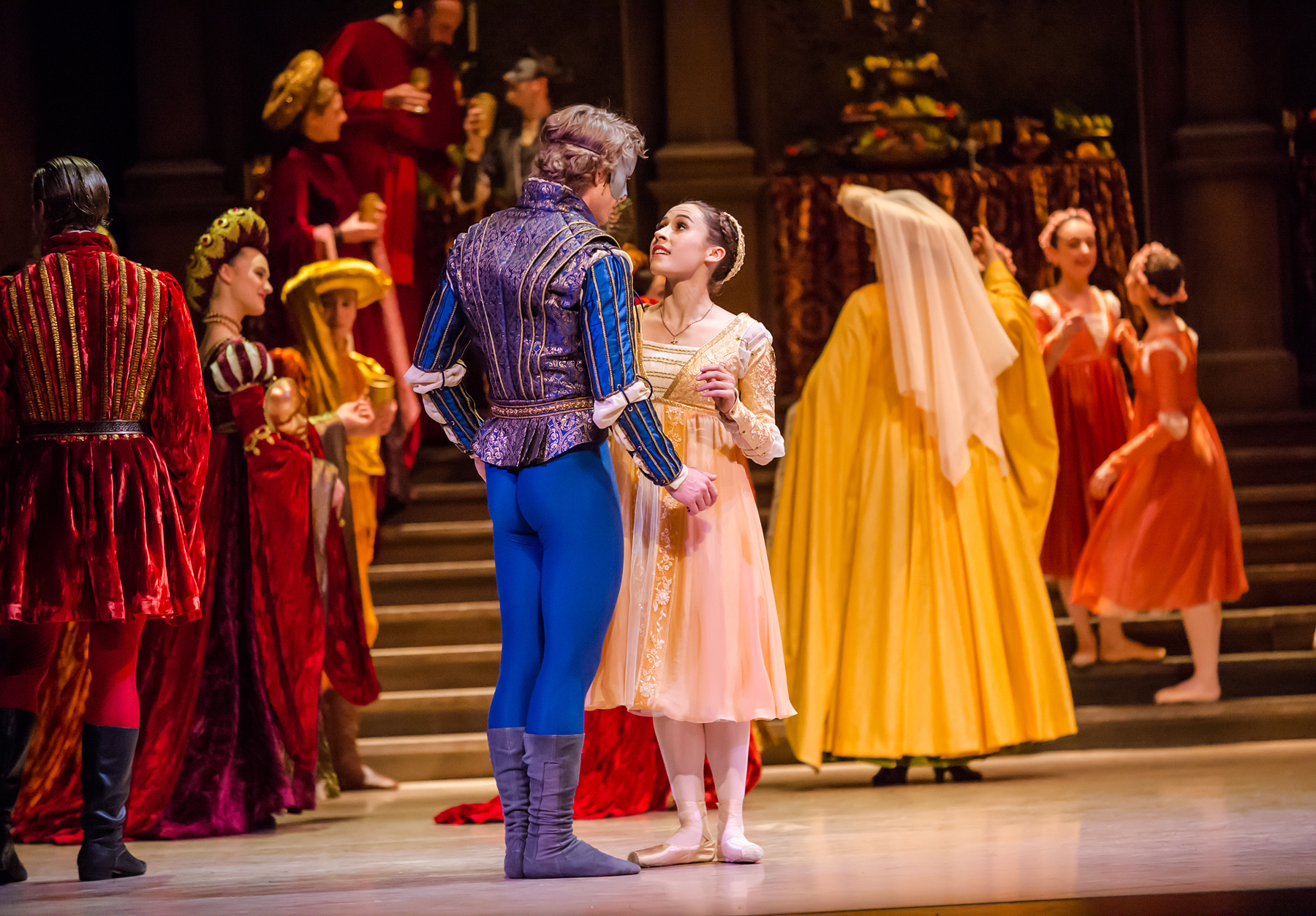
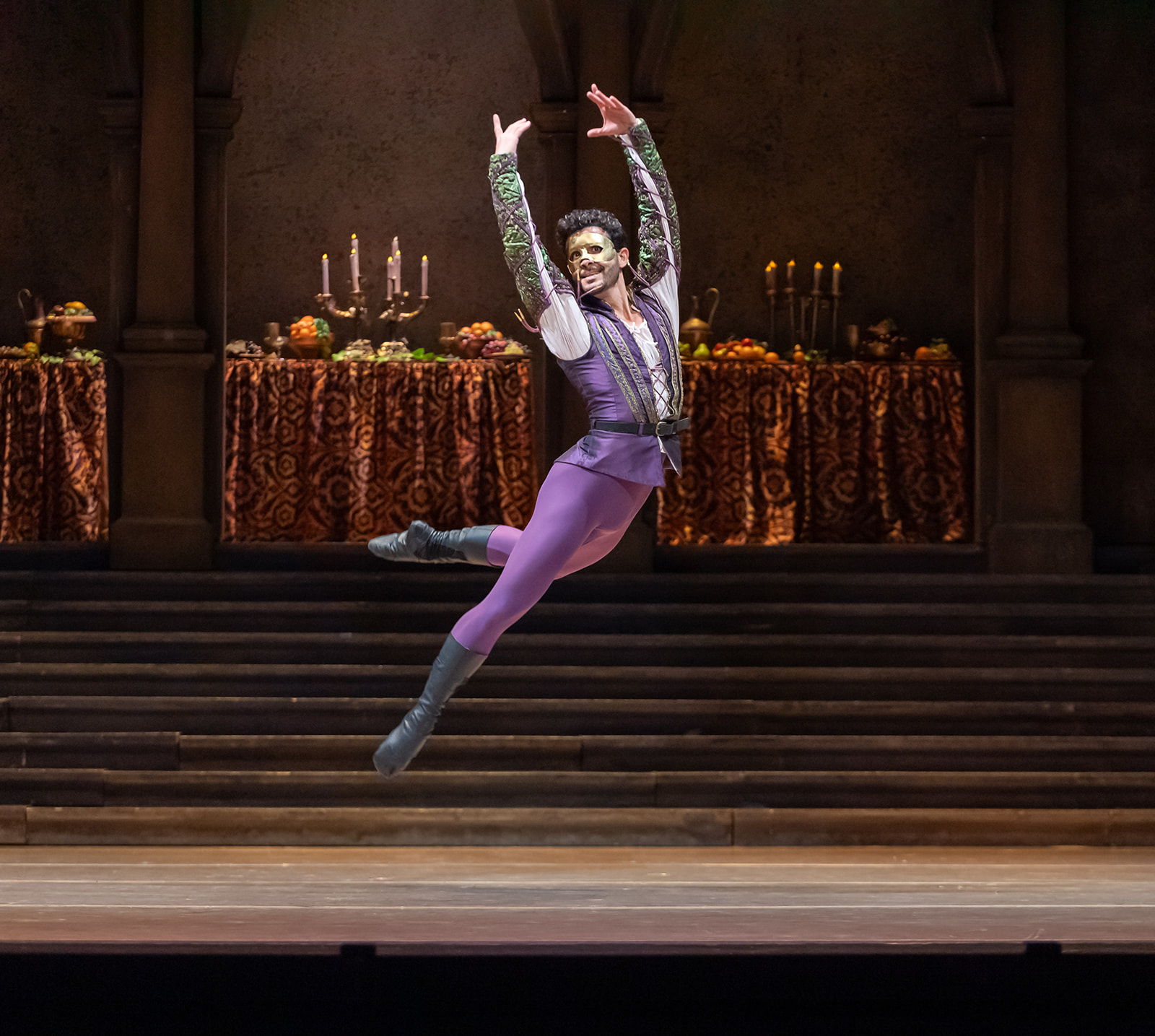
On the plus side the show looks stunning, and why not? It’s the work of a man whose credits include costume-design Oscars for The Last Emperor, Dangerous Liaisons and Restoration. The R&J costumes are sumptuous and Acheson’s set is both exquisite and has ingenious solutions to changes of scene.
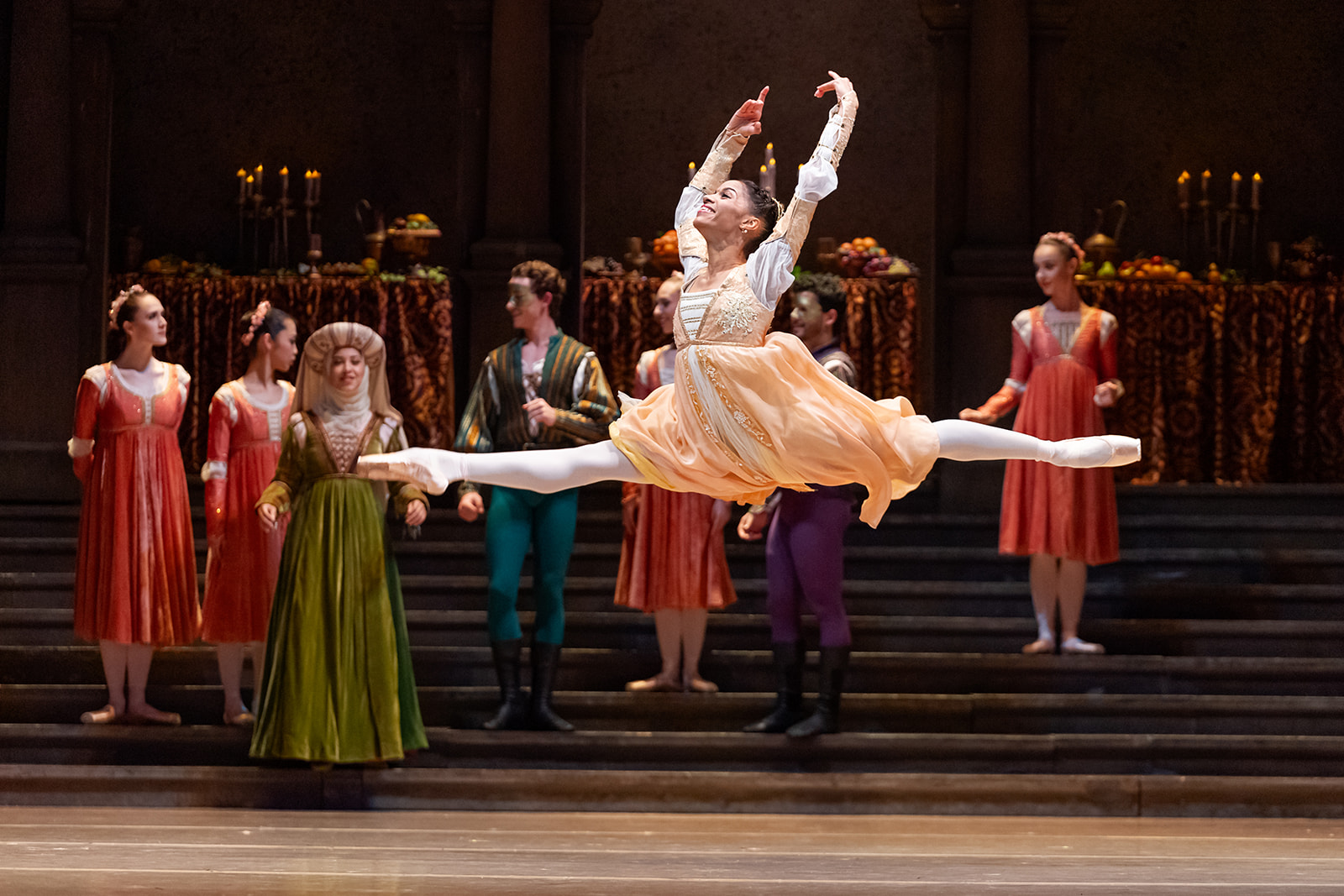
The time and place are Shakespeare’s. Fifteenth-century Verona looks aristocratic and monumental with great arches, a wide central staircase, tall columns and glimpses of Renaissance buildings and art. Scene changes have a dreamlike quality as panels float to create new spaces. There is high (literally) drama when Juliet first appears for the balcony scene, Rapunzel-like, in an opening carved out of a tall, otherwise faceless tower.
The stage gleams with saturated colours for the warring families and Juliet’s wardrobe features adorable floaty pastels. The costume of the night is Lady Capulet’s bejewelled crimson gown.
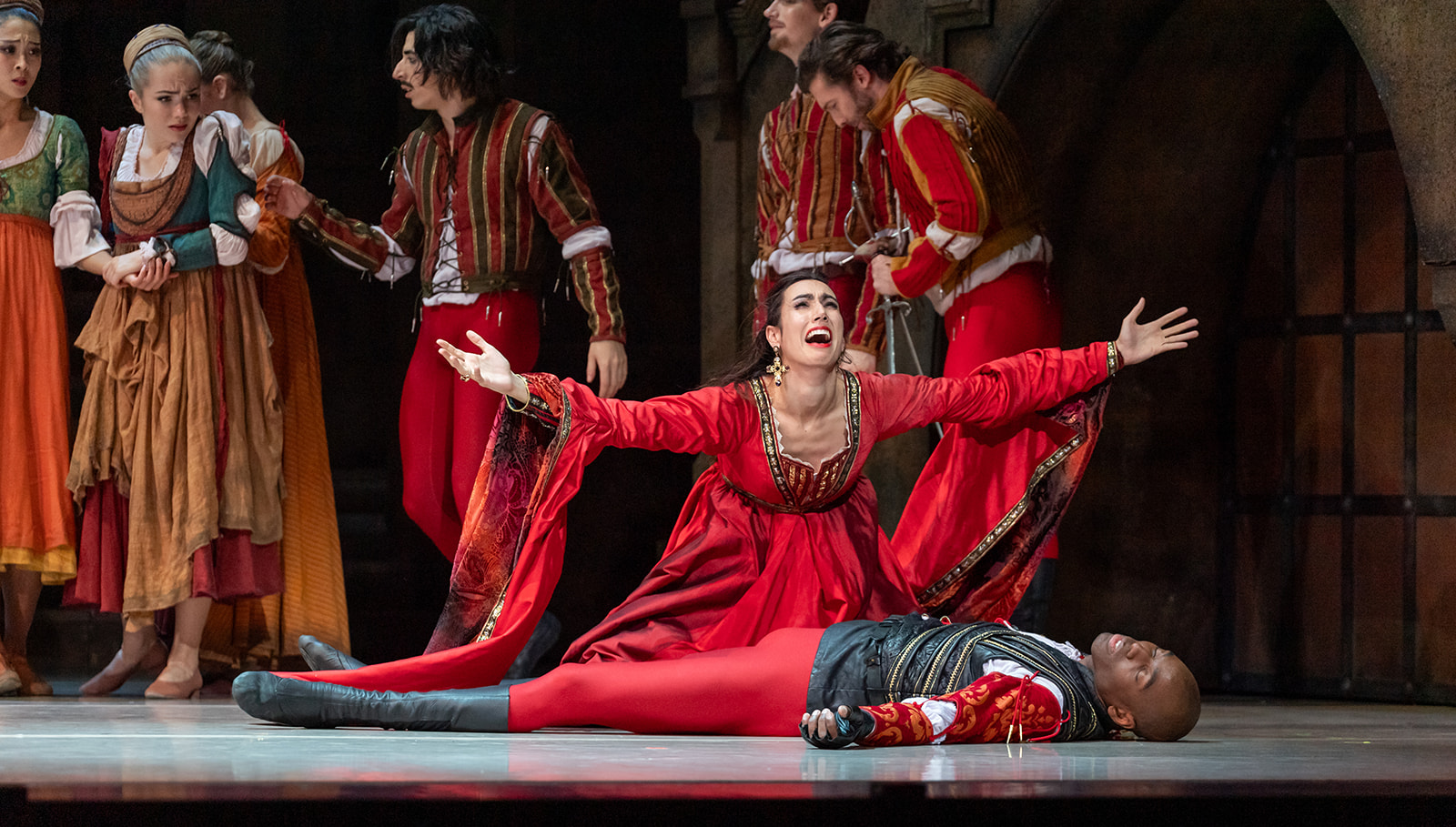
Everyone knows the shape of Romeo & Juliet. A boy and girl fall instantly in love but their well-to-do families hate each other. Fights follow, deaths ensue and our young couple ends up as collateral damage.
There are a zillion ballets on the subject, most of them wisely made to the gold-standard Prokofiev score, as is done here. In a traditional production such as this it’s the details that set it apart. Schermoly has plenty of persuasive ideas. She is alert, for instance, to the part letters play in the drama. Romeo shows Juliet’s letter of proposal, given to him by the Nurse, to Friar Laurence as proof the wedding can take place. Lovely. Later Friar Laurence tries to warn Romeo about the potion Juliet takes to feign death. We see that letter being written and we see it go fatally astray. The tension rachets up.
There’s a pleasing take on Juliet’s Nurse, a lively young woman rather than a fussy, stout old dear. Schermoly also makes abundantly clear that Lady Capulet and her kinsman Tybalt are, ahem, close and weaves Tybalt closely into Capulet family business. Romeo’s second-best friend Benvolio, often a bit forgotten, is more present, as is Romeo’s first crush, Rosaline.
All this makes dramatic sense and Schermoly’s choreography is fluent and effective, greatly so in the lovers’ several pas de deux. The language isn’t strikingly individual but works within its context.
Acheson’s remarkable design helps distract from infelicities that include by-the-numbers sword-fighting for the hot-heads and tedious appearances by Juliet’s friends. (When we first see them one of the friends seems to be insufficiently acquainted with pointe work. Odd.) To be fair, in that last aspect Schermoly isn’t alone. John Cranko didn’t solve the problem of Juliet’s friends either. Schermoly was also unable to solve the problem of the “harlots”, as they as described. They flounced, twerked and flirted energetically like the clichés they are.
More seriously Juliet sometimes outstays her welcome in this long ballet. She certainly isn’t the wilful woman Schermoly has said she wanted to portray. Nor is there “even more passion, drama, hope and despair” as Barker promised. A case in point is that Mercutio’s death registers far less shockingly than it should. His mates seem not to notice he has been mortally wounded; the audience chuckles.
The tremendous music, conducted by WAB’s principal conductor Jessica Gethin and handsomely played by the West Australian Philharmonic Orchestra, nevertheless propelled first and second casts on August 30 and 31 to performances that showed the dancers had thoroughly embraced their characters.
The Romeos and Juliets – Oscar Valdés and Dayana Hardy Acuña, Jurgen Rahimi and Chihiro Nomura – were well matched and danced with attractive silkiness, although Acuña’s shoes were distractingly noisy during the first act. For charisma, though, you couldn’t go past the Mercutios of lad-about-town Julio Blanes (Friday) and merry Gakuro Matsui (Saturday matinee), giving very different performances that were equally valid. Juan Carlos Osma (Friday) was an angry, dangerous Tybalt and Polly Hilton scorching in the gift of a part that is Lady Capulet.
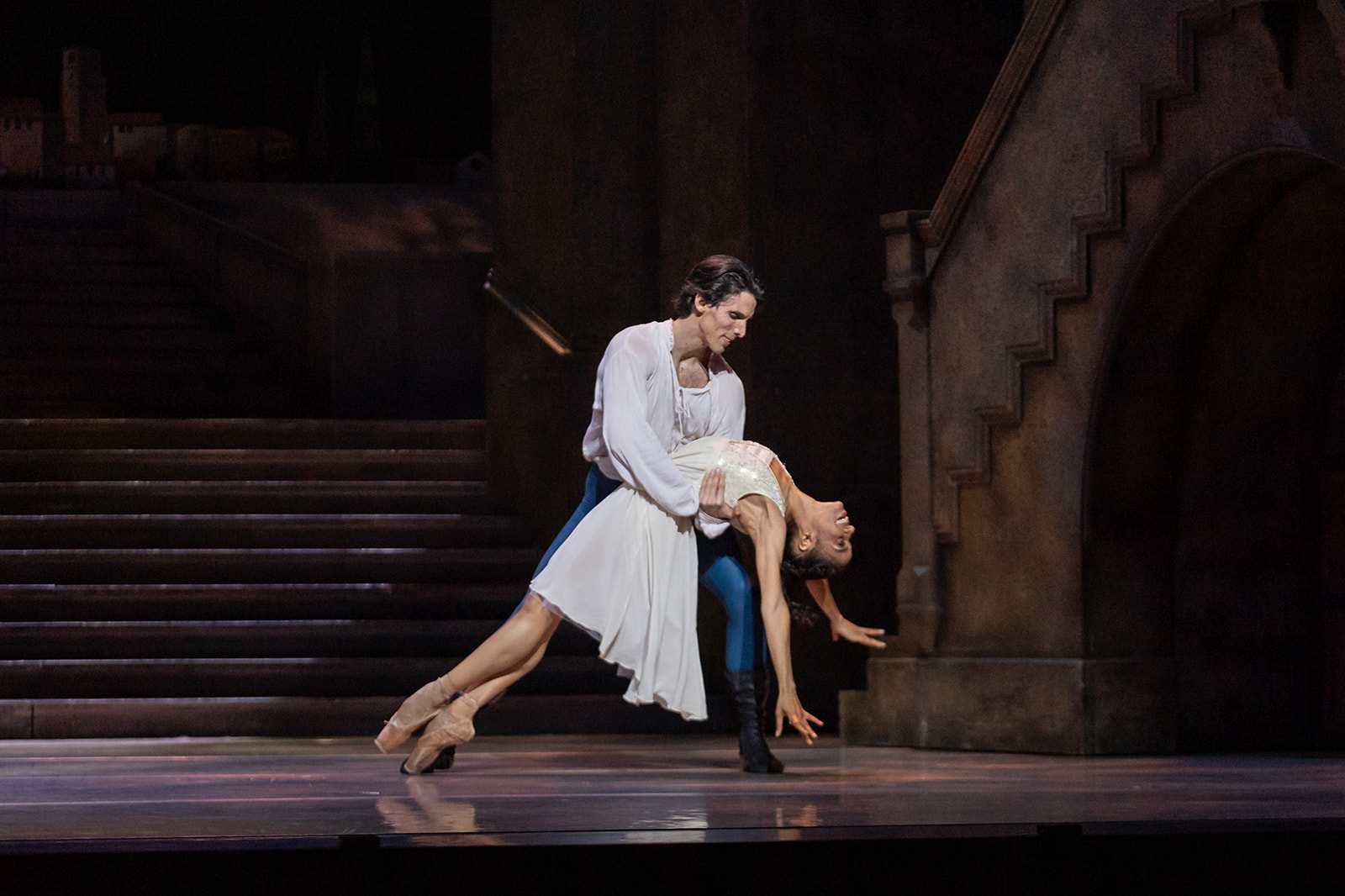
Principal artist Valdés was a dashing, ardent lover and Hardy Acuña delicately but clearly made her preferences known. When she danced with Charles Dashwood’s imposingly tall Paris at her father’s ball he kept looking at her and she avoided his gaze. Rahimi is still in the corps so Romeo is a huge break for him. He took a moment or two to get his bearings at his first performance but his youthful simplicity was tremendously appealing, his dancing airy and his partnering excellent. Nomura was more at home with Juliet’s tragedy than her early flowering of love.
In the pit, the West Australian Philharmonic Orchestra with WAB’s principal conductor Jessica Gethin at the helm came up with the goods. It was thrilling to hear the fantastically dramatic hard slashes of percussion and wails of brass that accompany Lady Capulet’s grief at the death of Tybalt, the rhythmic dip and sway of the Dance of the Knights at Lord Capulet’s masked ball, the romance of the balcony pas de deux and so much more. What a score.
Romeo & Juliet ends on September 14.
This is an expanded version of a review that first appeared in The Australian on September 1.
 deborah jones: FollowSpot