Tchaikovsky was “charmed and captivated” when asked to write the music for The Sleeping Beauty by the director of the Imperial Theatres, Ivan Vsevolozhsky. Audiences have felt the same since the work’s premiere in 1890. The composer and choreographer Marius Petipa worked closely and harmoniously together and created one of the ballet canon’s enduring masterpieces.
The Sleeping Beauty has been much adapted over its 135-year life but its essence has stayed the same, as has the allure of Aurora, the fairytale princess who is the battleground between the forces of good and evil. Aurora is cursed by the scorned fairy Carabosse but saved by the beneficence of the Lilac Fairy. She is put to sleep for 100 years and wakes to be the standard-bearer for order where there was chaos, love where there was hate, comfort and continuity where there was fractiousness.
Is there any ballerina, either at the top or her game or on the way up, who hasn’t hungered for this role?
The Australian Ballet started its three-city, 48-performance run of David McAllister’s 2015 production in Adelaide on July 22. Brisbane is next from August 16 and then a mammoth run of 30 performances starts in Sydney on November 21.
The first three Adelaide performances were notable for the strikingly different qualities of the Auroras. There were role debuts in the first and third shows from principal artist Jill Ogai and senior artist Yuumi Yamada. In the second, principal artist Robyn Hendricks was returning to the role, even more lustrous than before.

Hendricks was serenity, poise, lyricism and timelessness personified. Ten years ago, when she danced her first Aurora, I wrote that she was “a slightly mysterious young woman in whom you could see the queen she is destined to be. The watchfulness and engagement with her suitors created a whole, interesting, individual character and the elegance and quiet sophistication of her dancing spoke of great things ahead.” She was promoted to senior artist on the basis of her Aurora and is now all she was then and more.
If Hendricks was the epitome of a fairytale princess, Ogai was the human expression of that tale. She has a 1000-watt smile and radiates warmth and joy. She is happily alert too, someone who knows her own mind. Dare I say she makes Aurora sexy? I do dare.
Yamada’s Aurora was a picture of youth and innocence. When she looked around her it was to draw confidence from older, wiser heads. There was fresh, airy sweetness but it’s a performance where there’s room for growth.

The partnership with her Prince Désiré, principal artist Brett Chynoweth, was muted. He partnered Yamada expertly and his solos had fire and finesse but the emotional connection between the two was fragile, unlike their strong and sunny Kitri and Basilio in Don Quixote.
Senior artist Davi Ramos, who danced with Hendricks, and principal artist Marcus Morelli, who was paired with his frequent partner Ogai, made debuts as Prince Désiré. Morelli’s passionate intensity makes him a fine match for Ogai. Brazil-born Ramos is much newer to the company (he joined only last year) and this is the first time I’ve had the chance to see him in a big role. He has enviable classical proportions, fine technique and he partnered strongly. One could nitpick about less-than-silent landings but he and Hendricks looked wonderful together, a storybook couple.
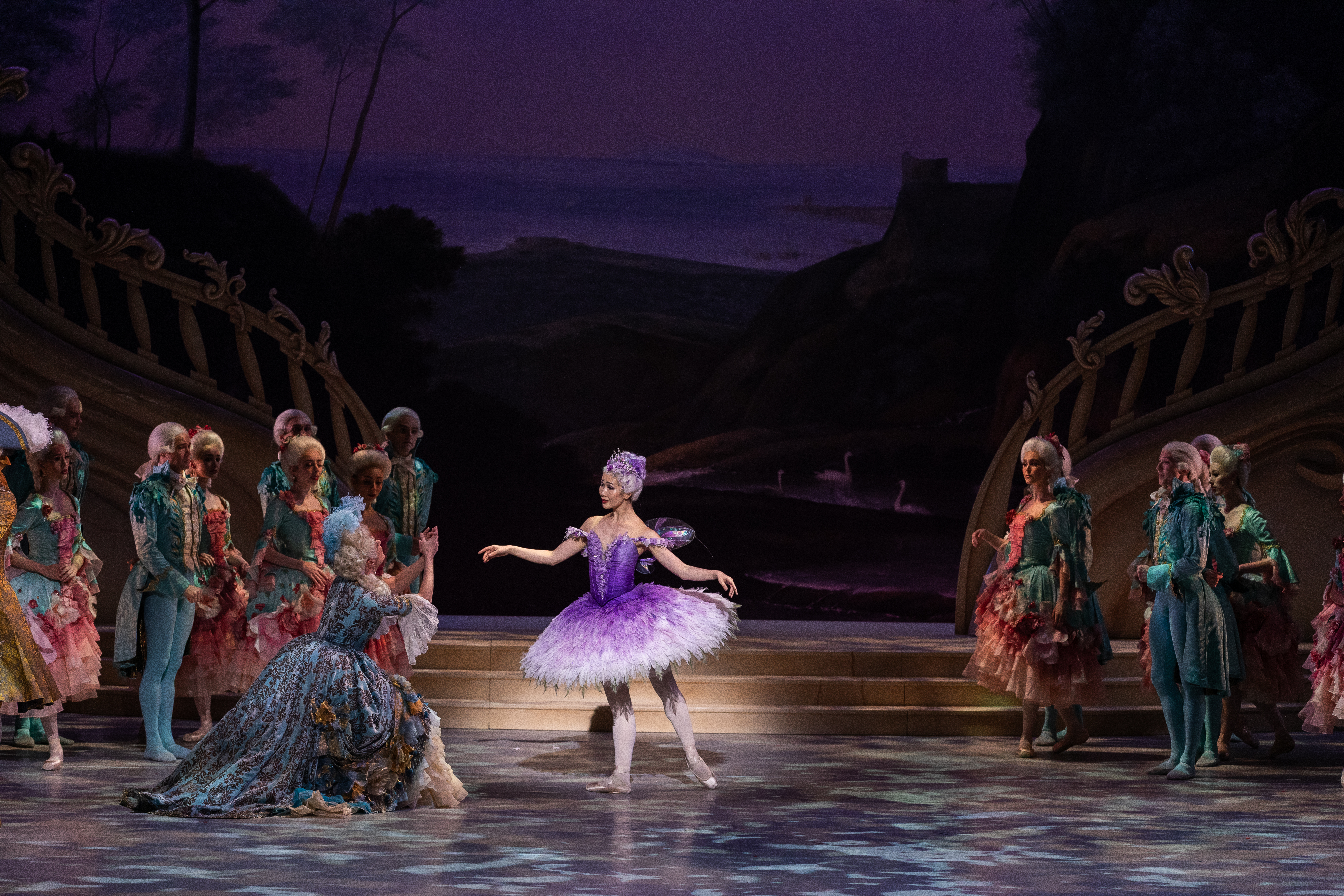
Sumptuous is scarcely the word for McAllister’s production, designed by Gabriela Tylesova in a riot of saturated colours, divine tutus for the fairies who bestow gifts upon the infant Aurora in the Prologue and a cornucopia of ruffles, beads, crystals, feathers, columns and chandeliers.
McAllister based his production on choreography that has been passed down from Petita’s day, making some cuts and adding linking material. He declines to call himself a choreographer, saying his work is “in the style of Petipa and embroidering what the existing choreography is … I’m a curator, I guess, of Petipa’s choreographic input”.

The Prologue fairies’ variations are intact. So too are the Act III grand pas deux and Aurora’s Act I Rose Adagio, that famous and potentially perilous test of pristine technique, phenomenal stamina, tremendous will and courage. The Vision scene in Act II is delightful but other valuable things in this middle act have been truncated or omitted to bring this long ballet in under three hours.
Not everyone will be made happy by the brief taste of the traditional fairytale character appearances in Act III (Cinderella, Little Red Riding Hood, Puss in Boots and so on) but needs must.
McAllister has tinkered a little for the 2025 revival. Carabosse is now clearly the same age as the other fairies, is more closely integrated with them and like them she dances on pointe. It works from a dramatic point of view and gives a company member a meaty role.
That rethinking of Carabosse is welcome but could have been accompanied by a reworking of the reason for her exclusion from Aurora’s christening, for which one needs to read the program. The ballet’s opening is weak.
Not everyone on stage looked entirely match fit for this pinnacle of classicism but there was attractive strength in the fairy ranks, particularly from Samara Merrick as the flittering, feather-light Fairy Canari. Katherine Sonnekus was a vibrant, fierce Carabosse with oodles of glamour. The delicacy and quiet authority of Rina Nemoto’s Lilac Fairy washed away a few technical infelicities. At the matinee Isobelle Dashwood’s Lilac was less poetic than Nemoto’s but Dashwood cut an imposing figure, her long, long limbs unfurling majestically.
It was wonderful to hear the exceptional Tchaikovsky score again, safe in the expert hands of the Adelaide Symphony Orchestra, ASO concertmaster Kate Suthers and conductors Jonathan Lo (evenings) and TAB assistant conductor Joel Bass (matinee).
At the end there is something special for all those littlies in the audience starting out in ballet. Aurora doesn’t end up mad or dead or both. She gets to choose her husband rather than accept the dynastic match initially laid before her. Even better, it’s made clear she will be queen in her own right. You go girl.
And you go that small child who, at the matinee performance shouted a huge (and well-deserved) “bravo” to the Bluebird and Florine of Drew Hedditch and Aya Watanabe. A balletomane is born.
 deborah jones: FollowSpot
It is a gorgeous production.
I do know “everyone” largely disliked it, however I remain a little sad I’ll never see the finale of the Stanton Welch production again: wedding party processes up and off [our] stage right, stage empty, then Carabosse and entourage appear down [our] stage left, look around and chase after the wedding party…think again, my pretties!
I’m also a little sad McAllister and team chose to excise some of the wedding divertissements – “needs must” on running time but losing some great show-off opportunities.
I agree Stanton’s ending had interest but prefer McAllister’s magisterial handing over of power to Aurora. It goes with the music. I can do without the wedding diverts if something has to go. I think the excision of the Panorama – which Ratmansky also did – is a much greater loss dramatically speaking.