Sex, violence, fabulous frocks, industrial-strength design and a banging score: what’s not to like about Alice Topp’s Macbeth?
Topp has wanted to make this ballet for a long time and at last one can see where she’s been heading with that super-intense, tightly woven, frankly erotic partnering she likes so much and does so fearlessly.
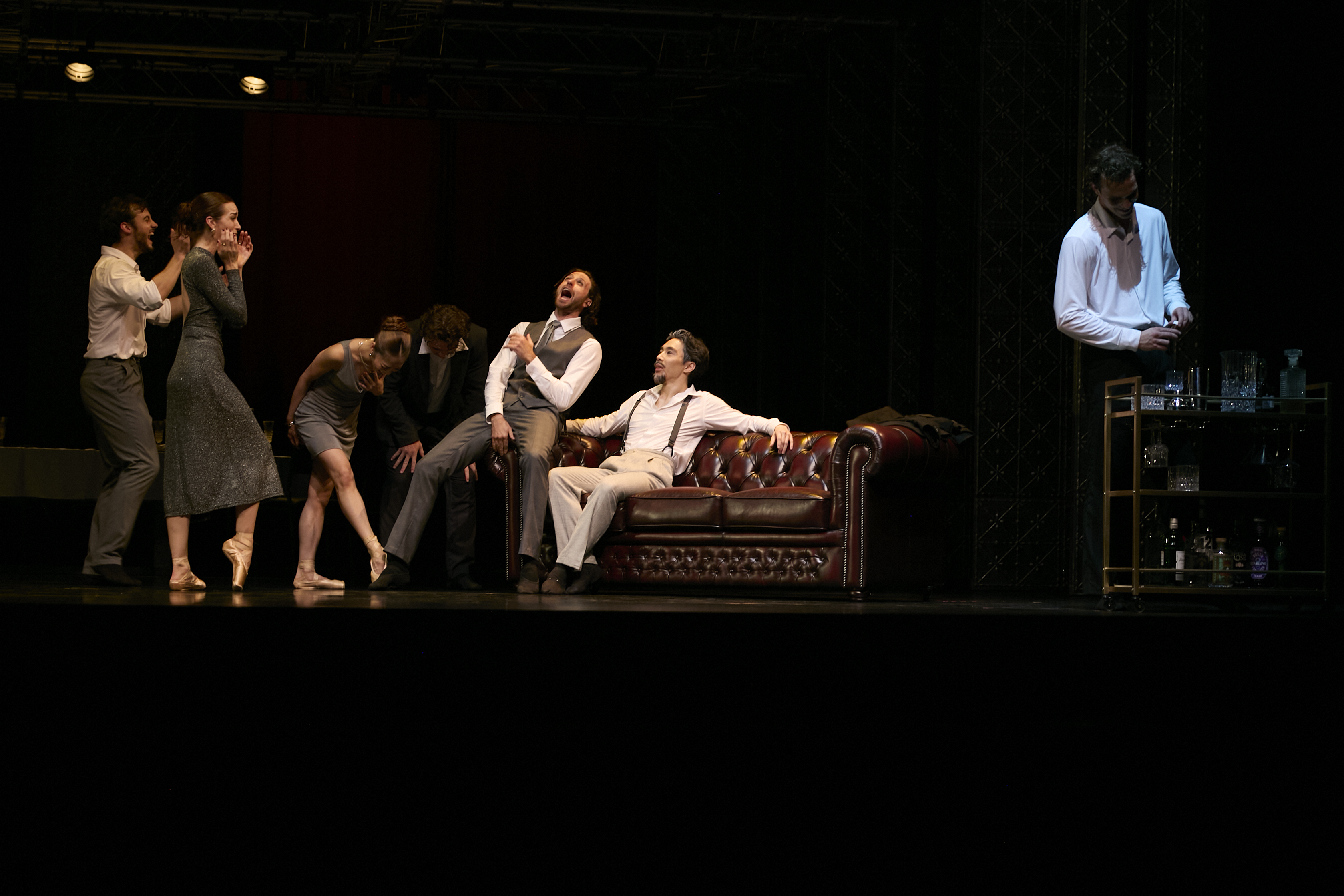
In the one-act ballets dominating her CV the sexy stuff can be admired at a cool distance for its complex construction. Put into the context of Shakespeare’s turbo-charged tragedy the urgency takes on meaning.
Topp, helped by dramaturg Ruth Little, takes the essence of Macbeth – the blind pursuit of power – and catapults it into the right now. It’s an evergreen theme, no? To these eyes the ballet is a boardroom struggle; Topp sees it as politics. Same difference really.
The terrific thing about this story is that Lady Macbeth wants to shimmy up the greasy pole as much as, if not more so, than her husband. The role doesn’t need distorting to support contemporary ideas about who has dibs on ambition.
The first sight of Lady Macbeth is of her rising from her bath, glistening in soft, golden light while exuding hard resolve. (Jon Buswell, who has worked with Topp many times, was responsible for the knockout set and lighting, all monochrome with startling red accents.) At the performance I saw the impossibly glamorous Polly Hilton was a formidable Lady M, one of five West Australian Ballet was able to field for this season of 13 performances.
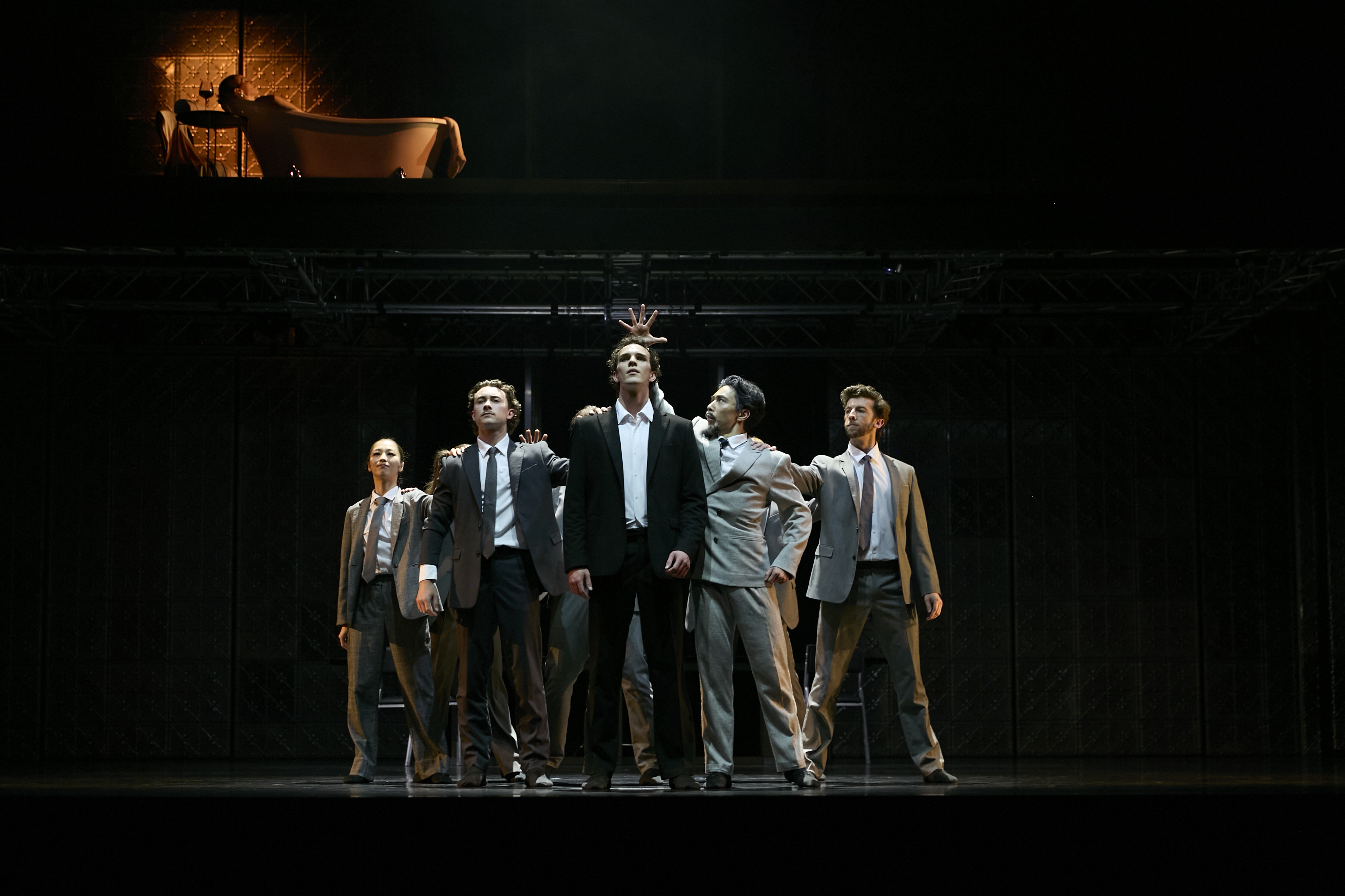
That speaks of the depth of talent in the company and WAB’s willingness to assign plum roles throughout the company. Hilton is a solo artist, the rank beneath principal artist, but another Lady Macbeth, Indiana Scott, is in the lowest rank of artist. The opening night Macbeth, Charles Dashwood, was promoted from leading artist to solo artist after his performance. (All photographs here are of the first cast.)
After her striking entrance – the bath is seen on a platform high above the stage – Lady M slips into a silky little something, the first of a catwalk’s worth of slinky garments by Aleisa Jelbart. She then gets to work on her husband with the first but not the last of Topp’s knotty, unsparing pas deux. Ludovico Di Ubaldo was her man, impressively accessing Macbeth’s frantic insecurities along with his big-man front in this exceptionally testing evening.
The overall arc is simplicity itself. Act I sees the Macbeths on the ascendant, Act II charts their downfall. Macbeth is Shakespeare’s shortest tragedy and Topp sticks with the program, keeping the action to a tight 100 minutes or so of fiercely athletic dance.
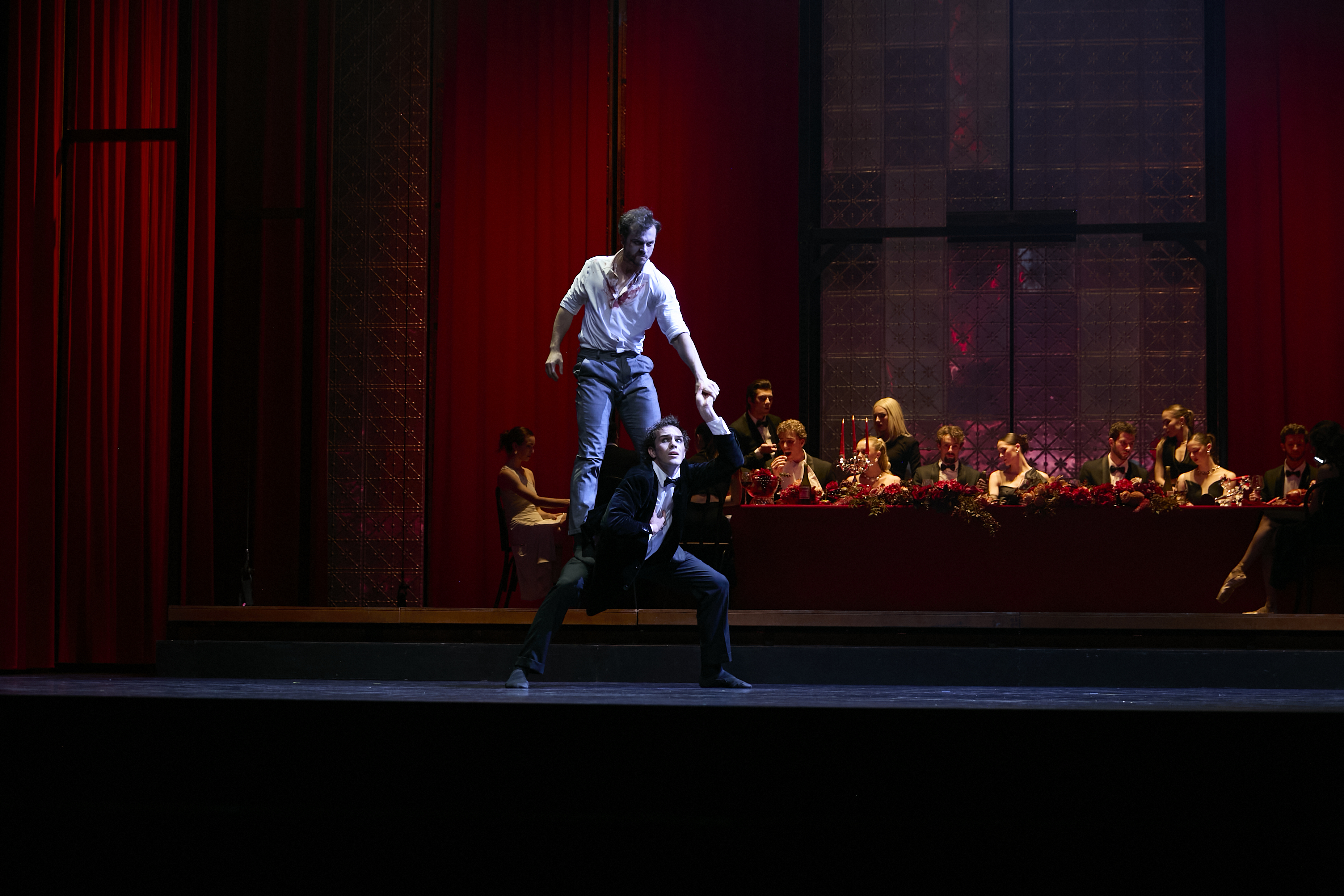
The heat of the fray can make it hard to tell some secondary characters apart but there’s a marvellous party scene where Duncan is murdered (the Macbeths ascendant) and another one memorably gate-crashed by Banquo’s ghost (Macbeths on the slippery slope) after Banquo’s murder in a pool hall (inspired). In one of Topp’s many smart choreographic details Banquo (the excellent Brent Carson in this cast) was for a moment or two nothing less than the monkey on Macbeth’s back.
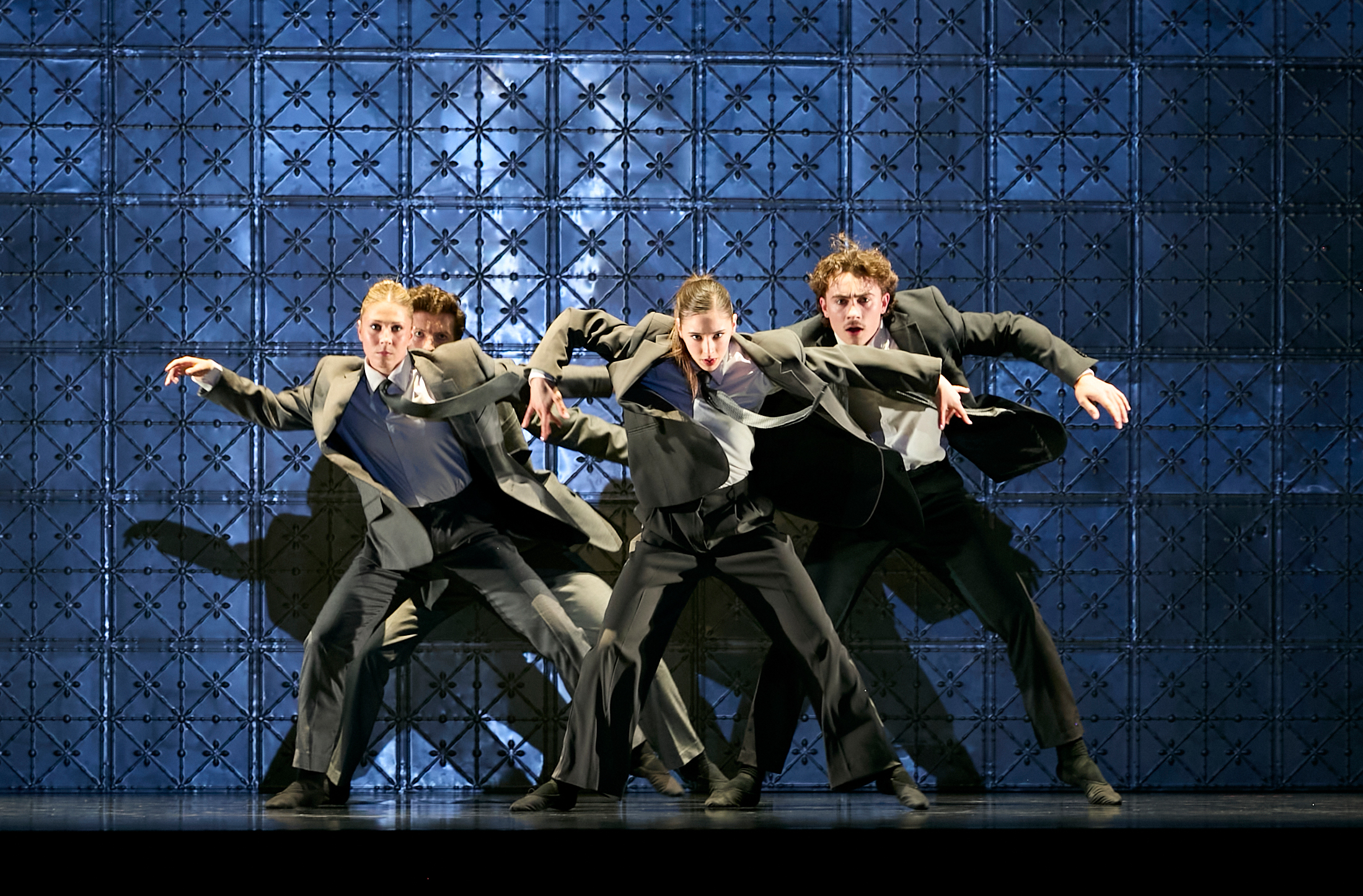
Slightly less inspired is the transposition of the three Witches to phone-wielding Influencers. It’s a bit of a head-scratcher – surely they are advisers gone rogue or infiltrators – but whatever. Near the end they have some seriously and appropriately weird dance that makes the point moot.
Crucially, the ballet’s speed matches the mad impetus of Macbeth’s need. He doesn’t stop to think. He just wants. Topp’s repetition of a key image is judiciously and effectively used. Splayed fingers near Macbeth’s head suggest both an elusive crown and emotional crisis. Buswell’s exceptionally powerful set is an unstable world, altering and moving to suit the drama’s needs. Misty lighting and quotations hang in the air then float away in a haze, evoking the clamminess of a vast medieval hall. The ballet looks absolutely marvellous.
Driving all this along relentlessly is Christopher Gordon’s commissioned score. A small ensemble of string players from West Australian Symphony Orchestra is in the pit, belting it out alongside thrilling recorded performance with conductor Joel Bass there to hold things together. Gordon’s jazzy, funky, sultry mix of elements – including but not limited to cloudy vocalise, piano, electric guitars, percussion of various persuasions, sax and sublime cello – begs to be heard again and again.
At the end of Macbeth men are seen on high, stamping out a strong beat with long sticks. Birnam Wood has indeed come to Dunsinane. That image absolutely stands on its own two feet but is inevitably reminiscent of an aspect of Akram Khan’s bold reinterpretation of Giselle (2016), on which Ruth Little was also dramaturg. Giselle featured – in a very different away – the repeated image of sticks banged in defiance.
One remembers, too, that Khan’s ballet has been revived several times over the past decade, as recently as early this year. It’s not a given that new or radically rethought full-length ballets will make it into the repertoire. Khan’s Giselle has done so and I think Topp’s Macbeth could also be that holy grail for WAB and co-producer Royal New Zealand Ballet.
Macbeth ends in Perth on September 19, 2026.
A version of this review first appeared in The Australian.


fabulous review. So exciting to read. Loved it!
Thank you! You are extremely kind x