I’d see this show again in a heartbeat. If they’d announced a performance of Triptych was to start immediately after the one I saw in Sydney I’d have been elbowing people out of the way to be first in line.
True, the whole thing is only 60 minutes long and time passes so swiftly you’d swear you’d been in your seat for only half an hour but there’s a lot to get the head around.
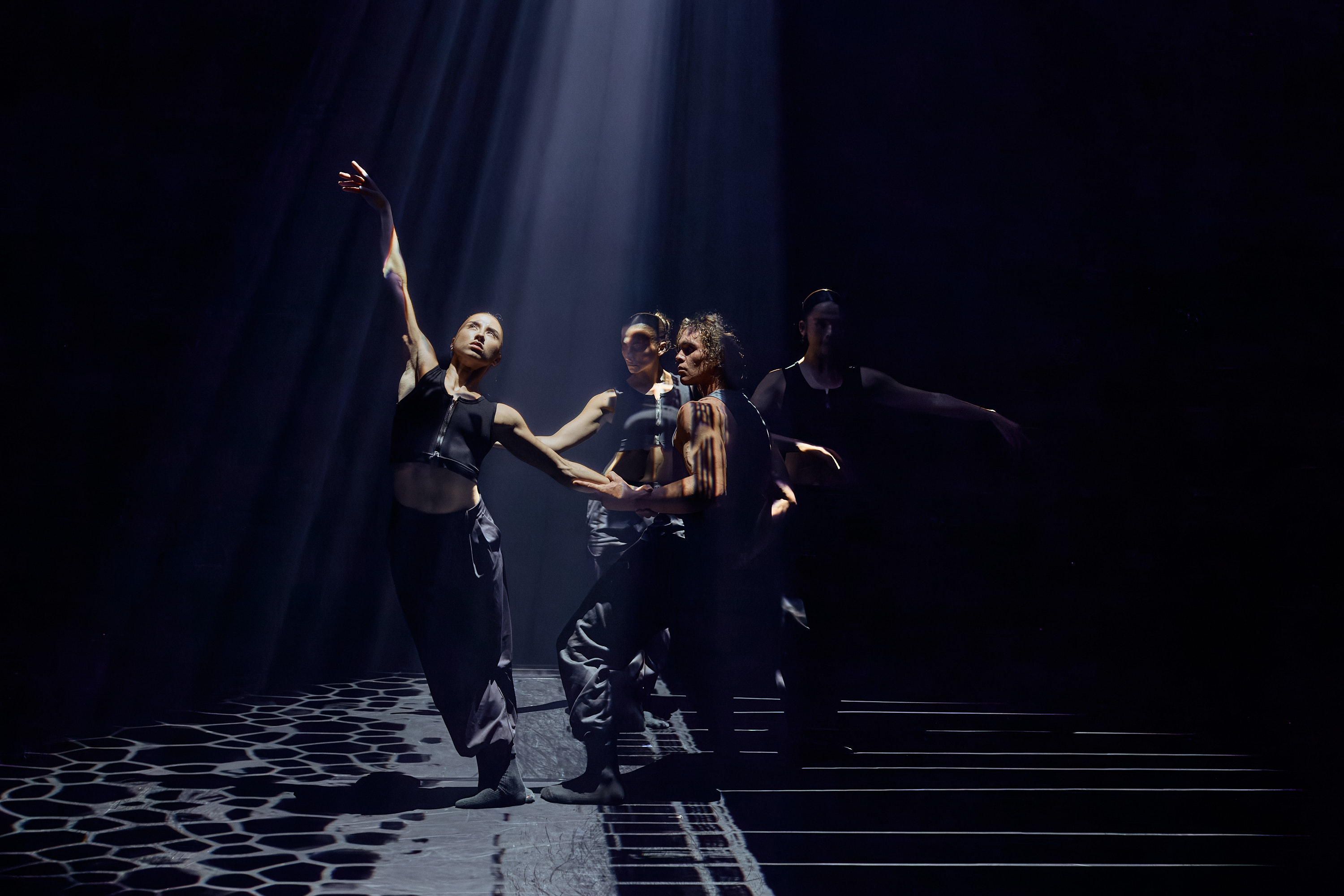
Triptych is quite the trip, as you might expect from a choreographer whose biography includes the fact that Lewis Major has a “background in sheep shearing and a foreground in contemporary dance theatre”. (This is 100 per cent true. Major was born in regional South Australia and brought up on a farm.)
That background and foreground have been distilled into a fusion of movement, light, space and music that reaches for the soul and the stars. Those early days in the Australian country have left an invisible but tangible mark on Triptych. It is at once enigmatic and interior while looking as if it’s taking place on a particularly glamorous arm of the Milky Way. It is as much visual arts experience as dance.
Triptych was made in 2024 and has quickly become Major’s signature piece. It has already travelled widely and continues to do so. Brief Sydney and Melbourne seasons (the show ends in Melbourne today) are being followed by dates in Ecuador, the UK, Germany, Denmark and Norway on this go-around. Undoubtedly there are other tours to come.
As the name suggests Triptych has three parts. Well, it’s four really, as one part is split in two … oh, never mind. It’s not important. What matters is the intensity and variety of the experience.
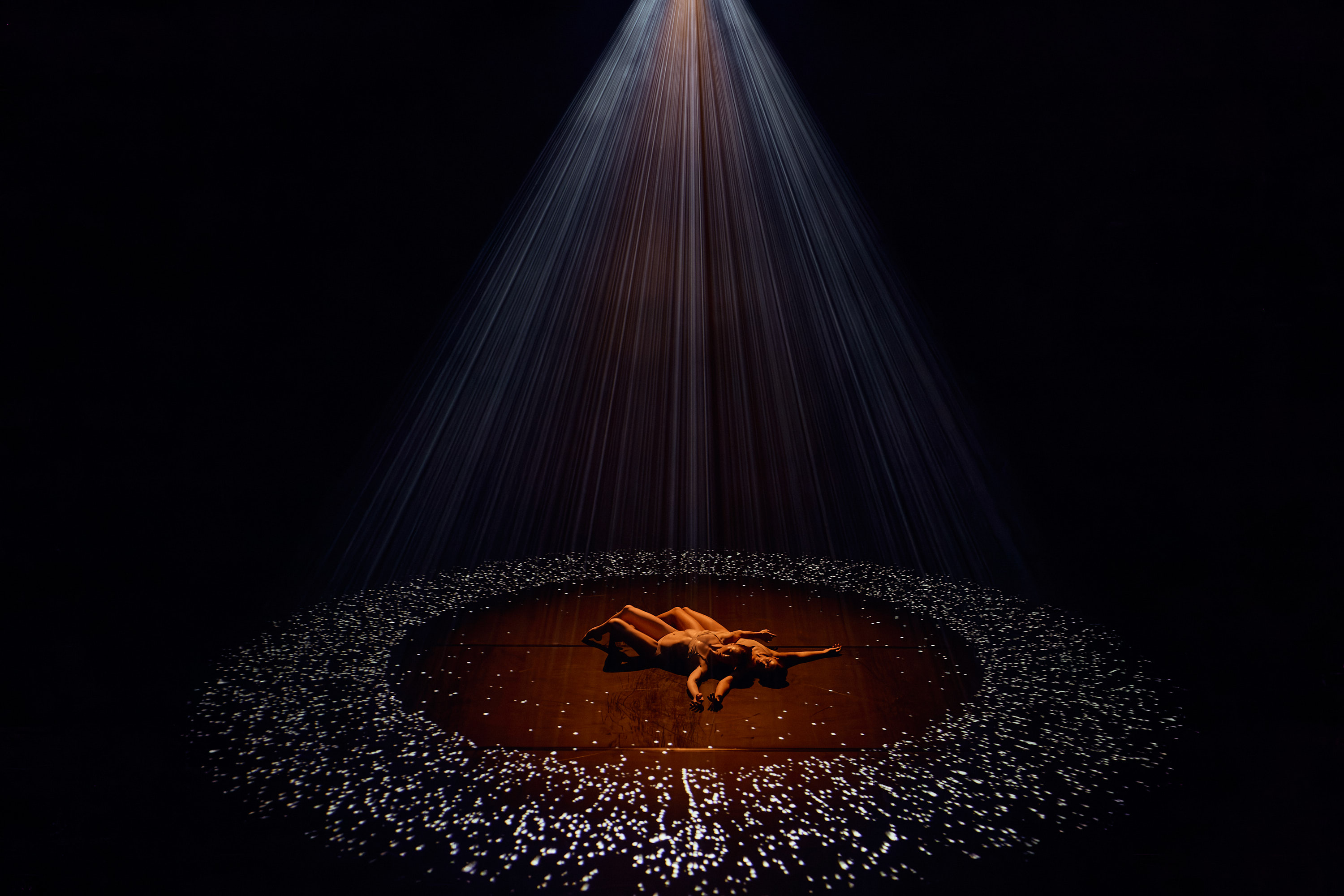
Triptych is like a revolving prism, catching the light and sending it out in many shapes and colours (Fausto Brusamolino is the mastermind behind the design with additional lighting by Frankie Clarke).
The longest section, Unfolding, is for a small group and awesome lighting – the adjective is appropriate – that deceives the eye and fools the brain.
The senses are tested with light as wispy as a veil, dappled as the surface of a stream or solid as a swiftly rotating beam on which dancers seem to balance. It conjures a buffeting electrical storm and, memorably, at one point bathes two women in a shower of colour and sparkle that brings to mind a painting by Klimt.
Elsewhere dancers are placed just so like moving sculptures or bathed in the mistiest of lights as if wraiths, hypnotic and entrancing.
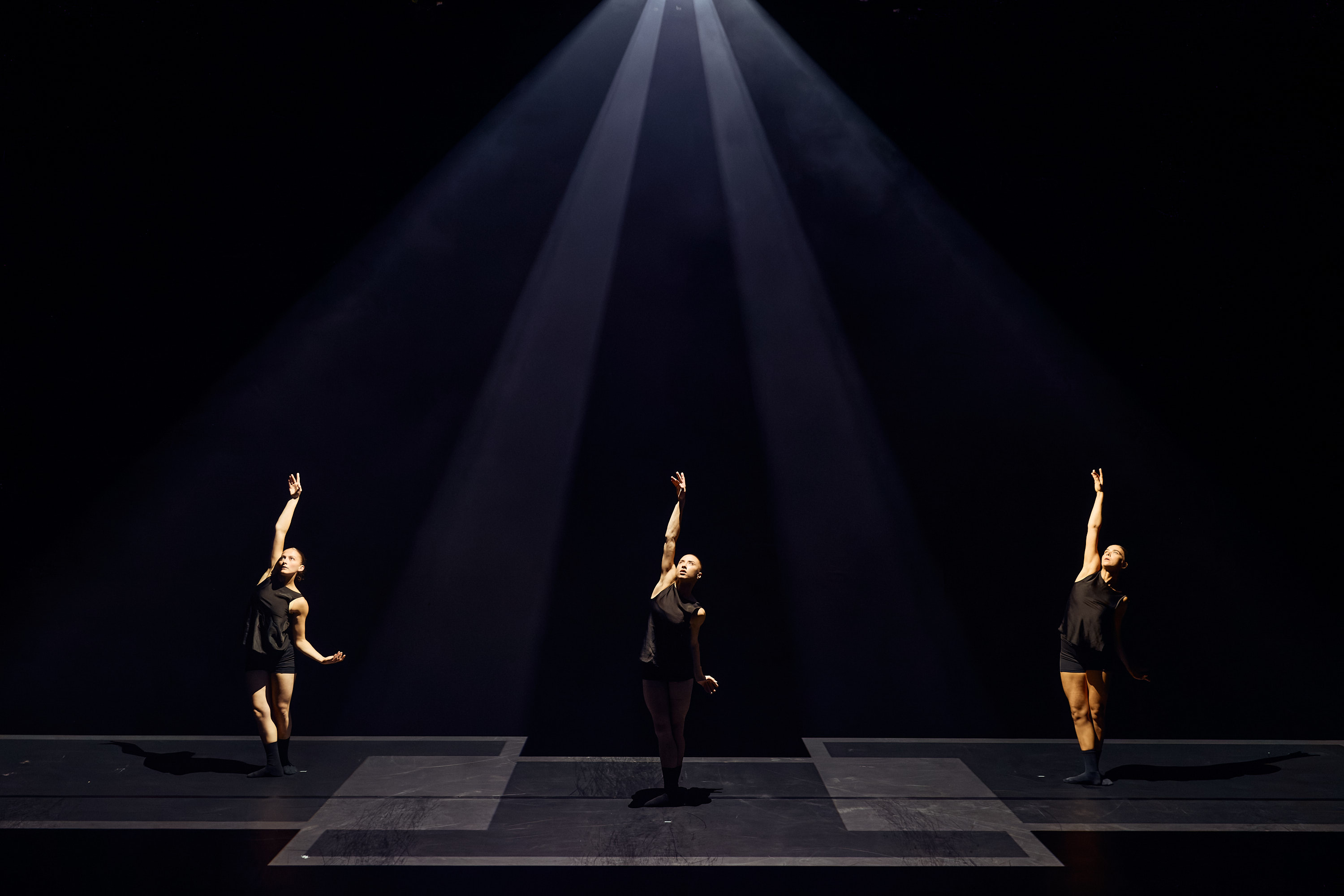
Triptych opens with a formal, gestural trio that could be interpreted as a love letter to the classical art of port de bras (the carriage of the arms). Brusamolino’s lighting sequesters Tahlia Russell, Elsi Auricht-Faulks and Felicity Chadwick in separate squares and directs the eye to the luscious flow of arms, the way the body follows the impulse and the splendour of muscles gleaming as light touches their curves.
Music by James Peter Brown is the heartbeat.
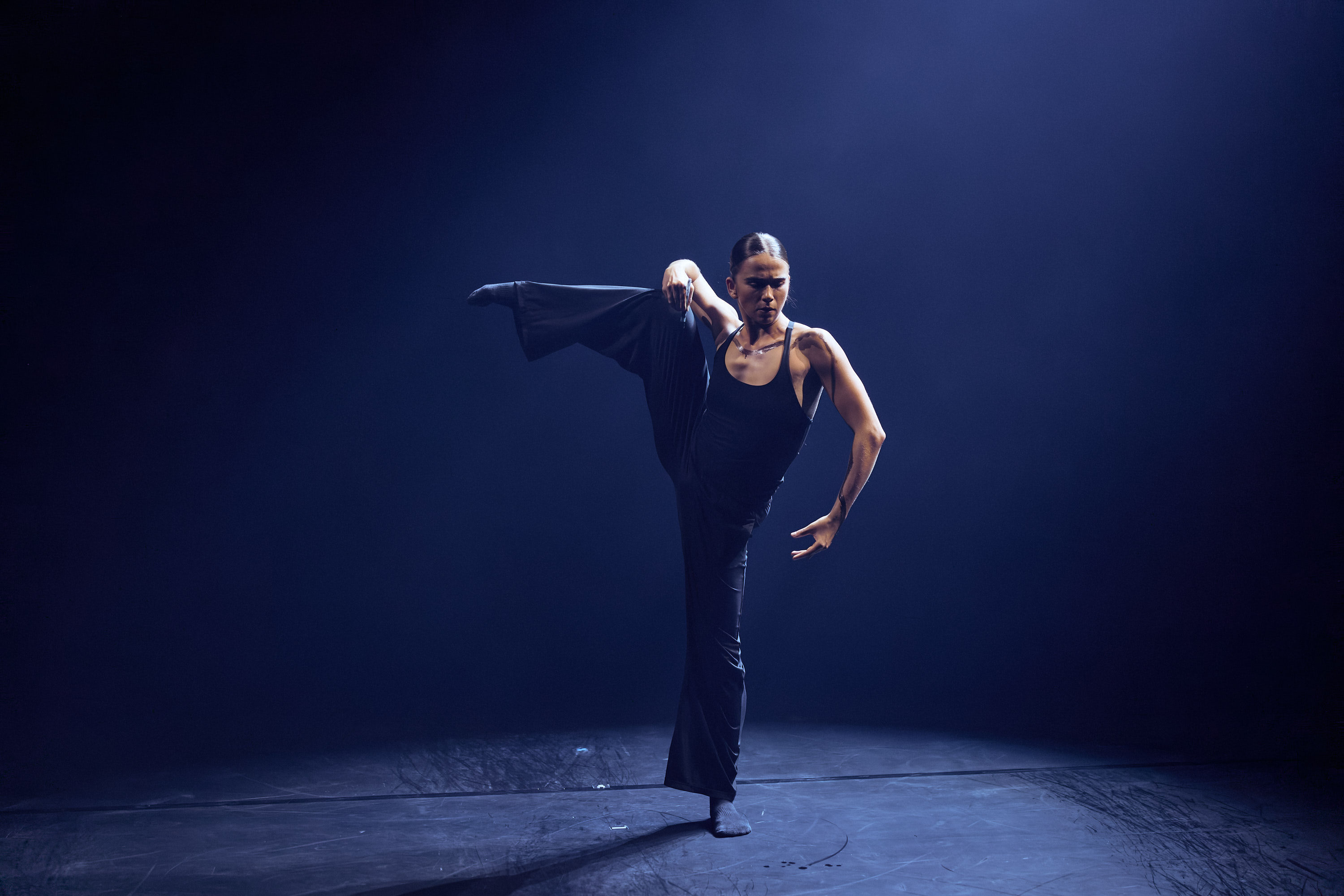
The following solo and duo (Chadwick, then Alexander Abbot and Auricht-Faulks) are less abstract. Living, breathing bodies are transported to extremes of strength and vulnerability by A Filetta’s plaintive Corsican song, itself rooted in the deeply, tenderly human.
I need to confess I saw Triptych only a year ago, at the Sydney Fringe Festival, in a slightly different form with several different dancers. As I wrote then, Triptych also contains fleeting suggestions, to these eyes at least, of people whose work and body are one and the same – dancers, of course, but also gymnasts, body-builders, showgirls. The synapses make a connection and then it’s gone. Gorgeous.
Major ends Triptyph with an extraordinary solo, here danced by Auricht-Faulks. Again the perspective changes dramatically. Audaciously too, in a quiet way.
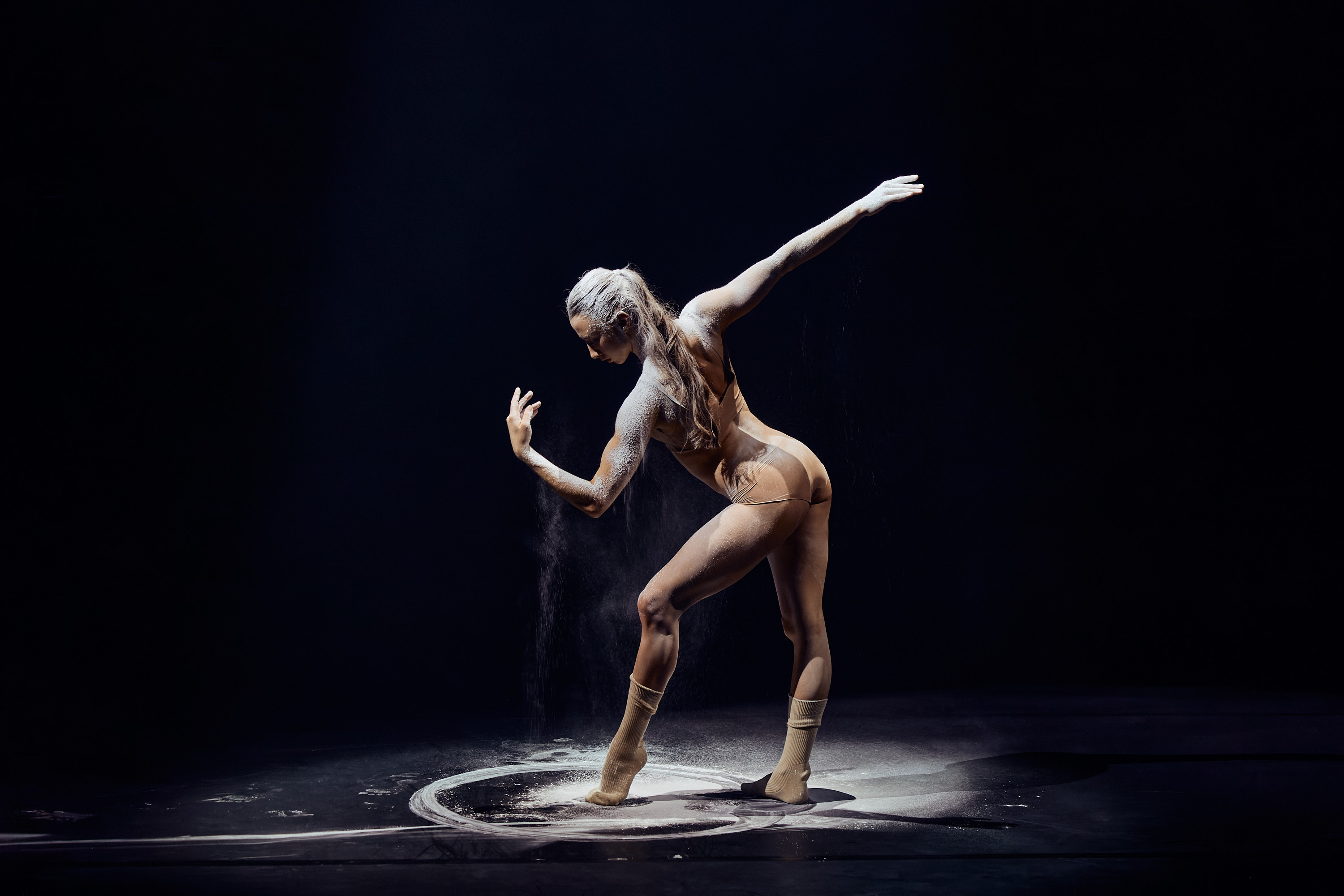
So far the dancers have been dressed in black. Now a pale, lightly clad goddess takes the spotlight, seemingly more for herself than for any audience. We have had the darkness; now for the numinous. She poses and turns with slow deliberation, sometimes a hair’s breadth from exotic dance while floating above the merely corporeal. Powder falls from her hair and body and a cloud forms around her like a visible memory. The choice of music – Debussy’s Claire de lune, arranged by pianist Dane Yates – encourages thoughts of the divine.
What does it mean? I couldn’t say, other than it’s unforgettable. At the end Auricht-Faulks returns to the beginning and a pose of unknowable solitude. Perhaps that’s it: the exploration is everything. Last year, when I saw Rebecca Bassett-Graham dance this solo, I had a greater impression of otherworldliness; possibly an afterlife. It wasn’t better. Just different.
It’s often noted that Major was mentored by Canadian-born, UK-based choreographer Russell Maliphant but it would perhaps be better to call Major an acolyte. The reverence in this work lifts it to an even higher plane.
Triptych ends in Melbourne on September 26.
A version of this review appeared previously in The Australian.

