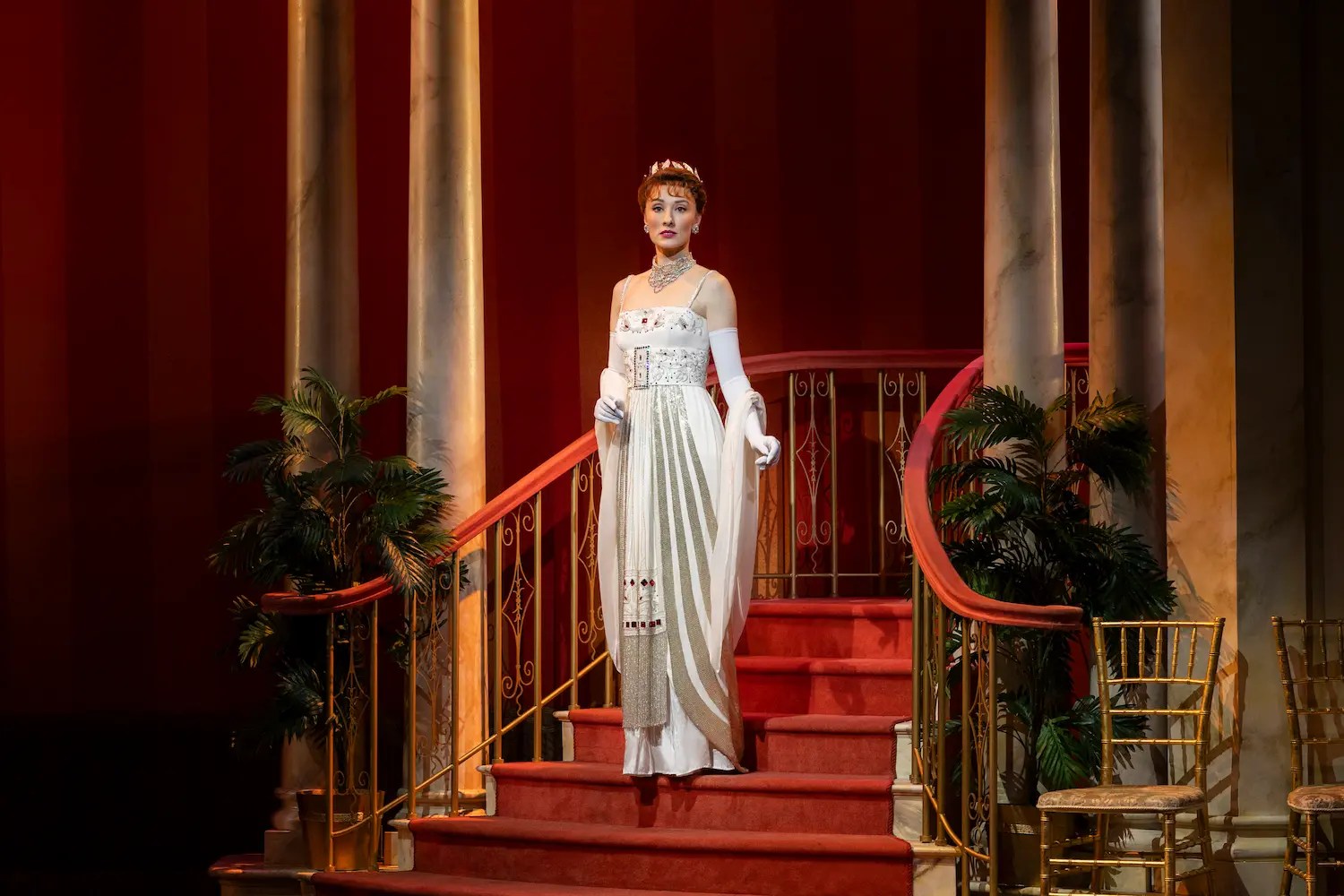
Eliza Doolittle (Claire Lyon) has got on top of where it rains in Spain and the safest topics of conversation (weather and health). She has entranced everyone at an upper-crust ball, looking unutterably poised in white.
She has been the toast of Royal Ascot, scene of arguably the most delicious display of glamour in all musical theatre as languid aristos glide about in black-and-white frocks designed by the incomparable Cecil Beaton while Lyon outshines them in her adorable blush-pink gown.
And yet the brilliant transformation is a chimera. Eliza teeters between the rough Covent Garden flower markets she came from and the privileged society dangled before her. She belongs to neither place and knows it. What will become of Eliza and her cut-glass accent now?
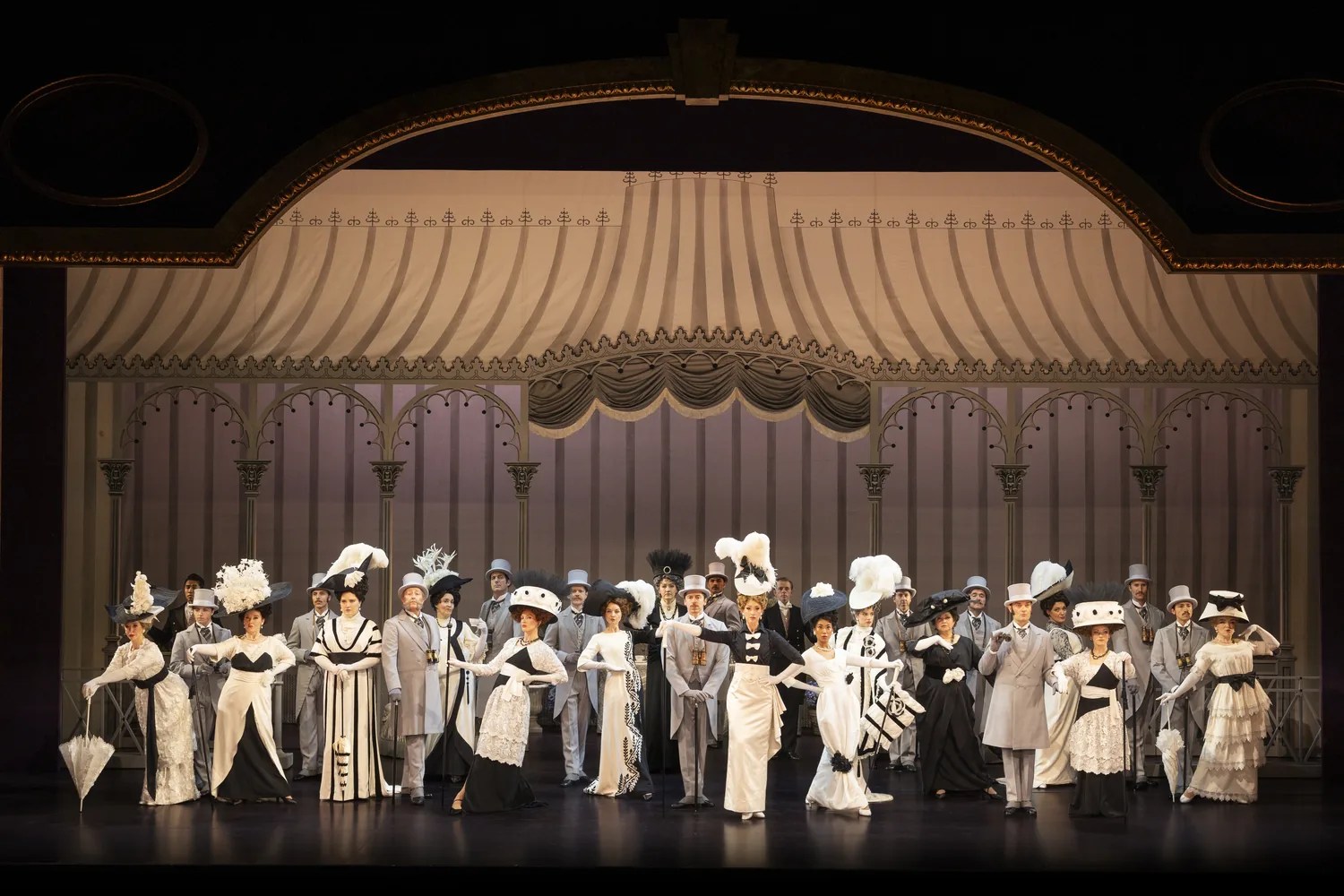
That question is asked again and again and remains unanswered. Instead this scintillating production of Lerner and Loewe’s 1956 masterpiece, brought back by Opera Australia after seasons a decade ago, brings to the fore a second riddle.
What’s to become of phonetics whizz Professor Henry Higgins (Nathaniel Parker), svengali of 27A Wimpole St, now Eliza has pierced his armadillo-like emotional armour?
After her triumph over aspirated and non-aspirated Hs, Lyon sings a giddy I Could Have Danced All Night and that lovely song marks a line in the sand. Eliza becomes more poised, quieter, reflective, sadder.
In response, Parker’s Higgins is thrown off kilter.
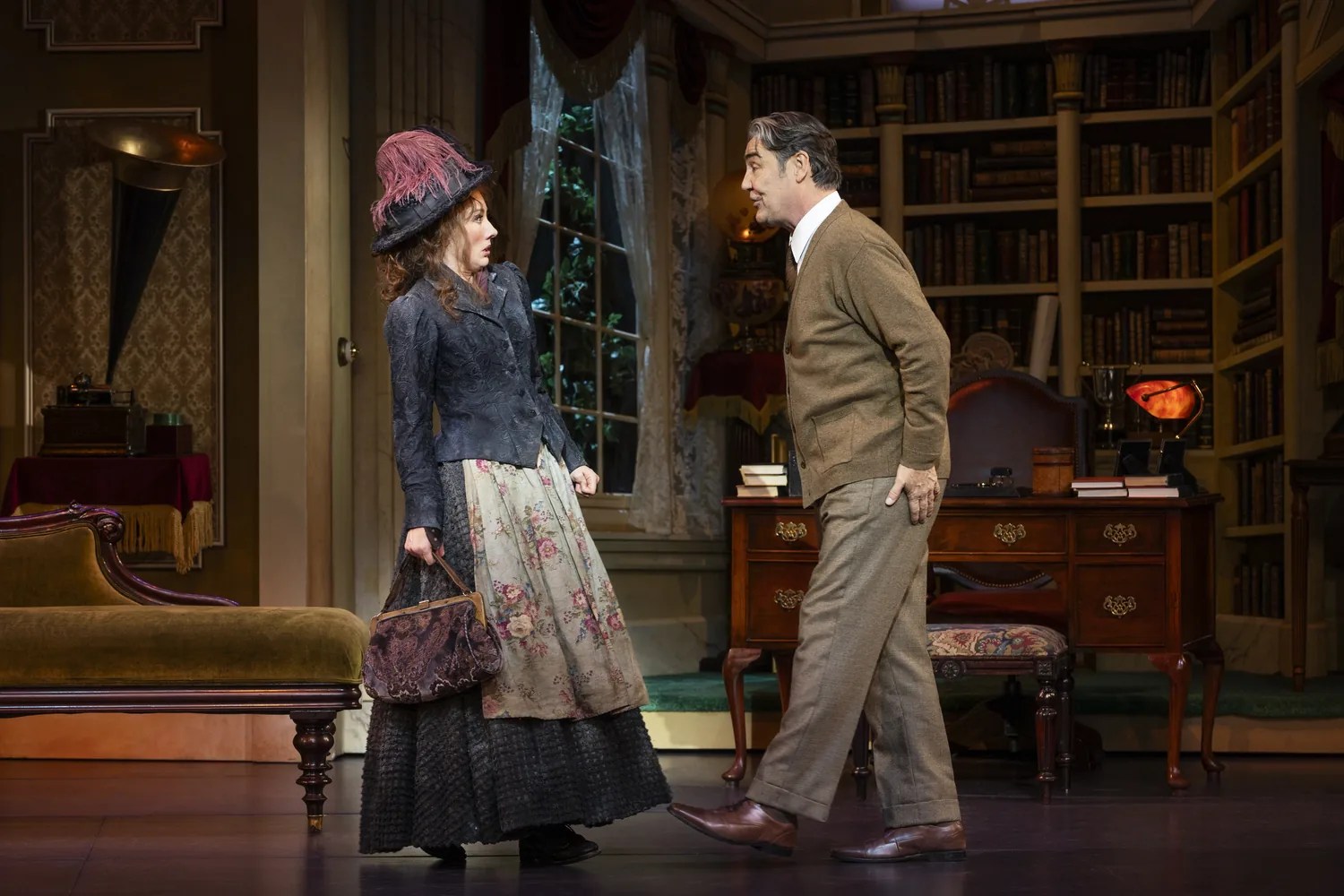
His automatic mode is bluster and invective, the more insulting the better. It’s hard to watch and these days needs to be dealt with. Parker’s visibly unsettled Higgins gives glimpses of vulnerability, then pain, then something close to being broken. The British veteran of stage and screen gives I’ve Grown Accustomed to Her Face an incredibly poignant reading. What an admission of a limited life. It’s a subtle, touching performance in a role that needs those qualities.
As for the enigmatic ending, well, that’s up to each viewer to make of it what they will. Let’s just say I’m not on the side of the determined romantics. Higgins is far, far too old for her. (Karen Johnson Mortimer directs this production, first seen in 2016 with Julie Andrews at the helm. Andrews, it appears, took a close interest in this revival. While OA’s website says the show is “based on” the Andrews production, the Sydney Opera House site describes it as being “guided by” Andrews.)
My Fair Lady has its genesis in George Bernard Shaw’s 1913 play Pygmalion, which he described as “intensely and deliberately didactic”, and the film made in 1938. That won GBS an Oscar for screenwriting but doesn’t mean he was happy with the ending. Which was happy. Sort of. It was the best result Shaw was going to get in Hollywood. As Shaw’s biographer Michael Holroyd reports, three endings were shot and the most romantic one chosen. Maybe, just maybe, Eliza Doolittle and Henry Higgins would get married.
Shaw would have liked Charles Laughton to play Higgins, casting that perhaps wouldn’t have lent itself to orange blossoms and wedding veils. Instead matinee idol Leslie Howard got the role and Shaw, undoubtedly correctly, understood the public would “probably want him to marry Eliza, which I don’t want”. (Shaw thought Eliza should marry her young suitor Freddy and open a flower shop.)
The playwright, at this stage in his 80s, took a pragmatic line. “They devised a scene to give a lovelorn complexion at the end to Mr Leslie Howard: but it is too inconclusive to be worth making a fuss about,” he said.
So that’s where the show lands: not saying Eliza ends up with Higgins and not saying she doesn’t. Inconclusive.
Woven in and around this fraught central relationship is a lively opposition of the high and low lives that nurtured Higgins and Eliza. Lerner and Loewe’s genius was to come up with an enduring popular entertainment that kept Shaw’s invigorating politics of class, sex, philosophy and ideology in play.
On the high side, Robyn Nevin is all sophisticated wit and steel as Mrs Higgins, presiding over tea during Ascot and showing solidarity with Eliza. Tony Llewllyn-Jones (Colonel Pickering) and Anne Wood (Mrs Pearce) offer rock-solid support to the entitled and some understanding of Eliza’s plight while Eliza’s persistent and rather sweet suitor Freddy Eynsford-Hill (Freddy Hillier) hovers about, robustly singing On the Street Where You Live.
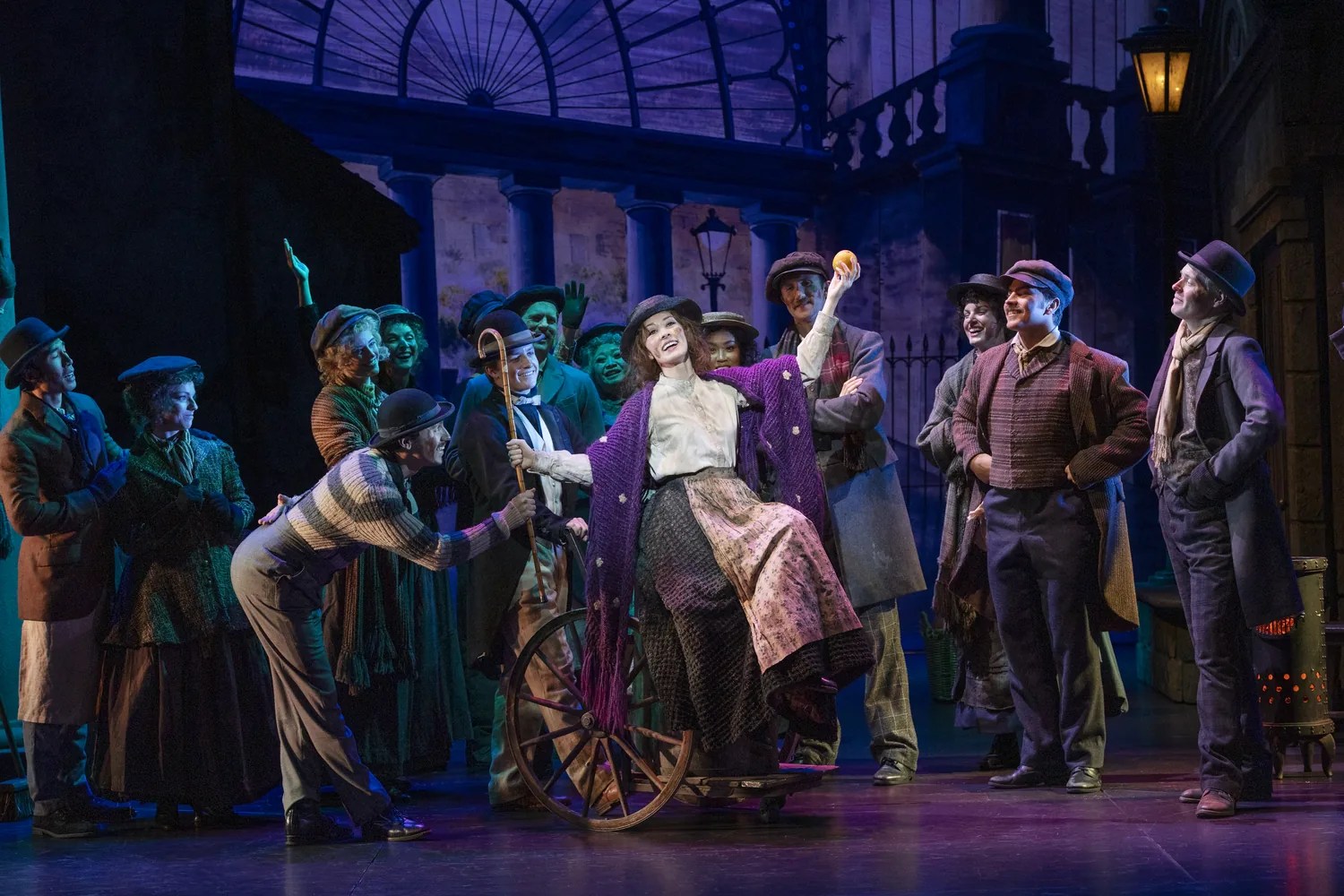
The low side needs no more than the freedom and ease of Reg Livermore. He is sublime. In the amusing parallel plot about the sticky terrain of social mobility Alfred P. Doolittle, Eliza’s dustman father, has to forgo the Dionysian pleasures that please him so much when he comes into a small fortune through no fault of his own and is catapulted into the middle class. Previously he couldn’t afford morals. Now all he can see ahead is soulless conformity.
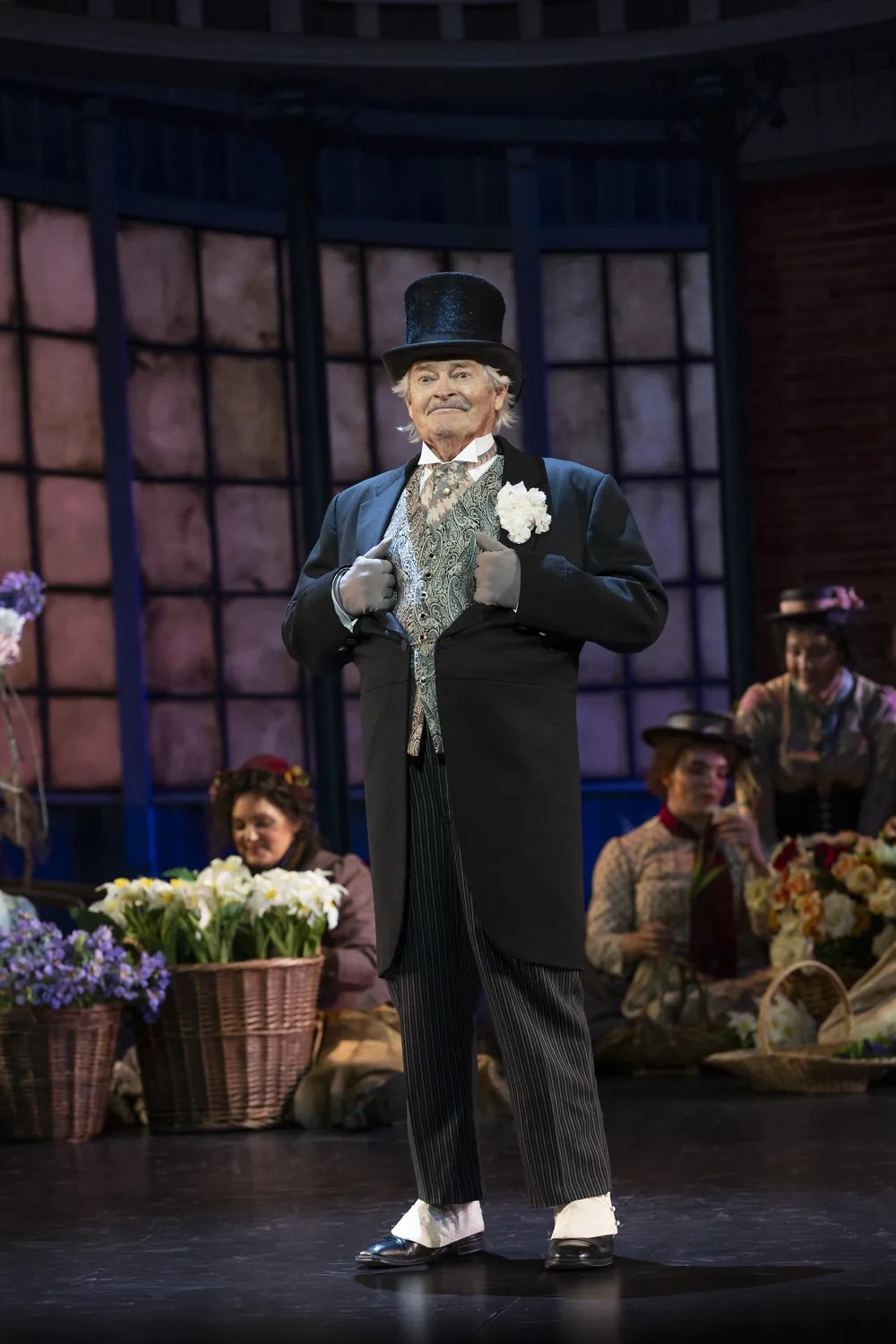
Livermore overflows with the spirit of someone who has nothing to explain and nothing to lose. To see Livermore revel in the big dance numbers With a Little Bit of Luck and Get Me to the Church on Time (Christopher Gattelli’s choreography) is a delight and an astonishment, given he’s now 87.
On opening night musical director David Young conducted the luxurious 32-piece Opera Australia Orchestra with a heavy hand that at times translated into an unfortunate disconnect with singers. That was a shame, but the great bones of this musical can survive the occasional bit of less-than-ideal treatment.
The Broadway premiere of My Fair Lady, by the way, took place in the centenary year of George Bernard Shaw’s birth, although it was an accidental tribute given the project’s long gestation. The exacting old socialist had declined to make the musical rights available so nothing could happen until after he died, which he did in 1950. Various people wanted to adapt it but Lerner and Loewe survived the melee, gifting to us with one of the great classics of the musical theatre.
Sydney performances end on October 31. Melbourne, November 14-January 17.
A version of this review first appeared in The Australian.

