The stars were out and so was the moon. The audience gathered, as always, on the terraces at City Beach’s Quarry Amphitheatre with the traditional picnic baskets and wine to hand. The dancers of West Australian Ballet warmed up on the open-air stage and all was as it usually is.
Except, that is, for the program. Ballet at the Quarry often features a mix of international and local choreographers and well-established and new works. For the 2025 edition WAB’s guest artistic director David McAllister pushed the boat out by programming three substantial world premieres by three well-established Australian choreographers – Loughlan Prior, Tara Gower and Lucas Jervies.
Prior and Jervies have made strong, well-structured neo-classical works that please the eye and were danced on opening night with finesse and authority by the WAB dancers.
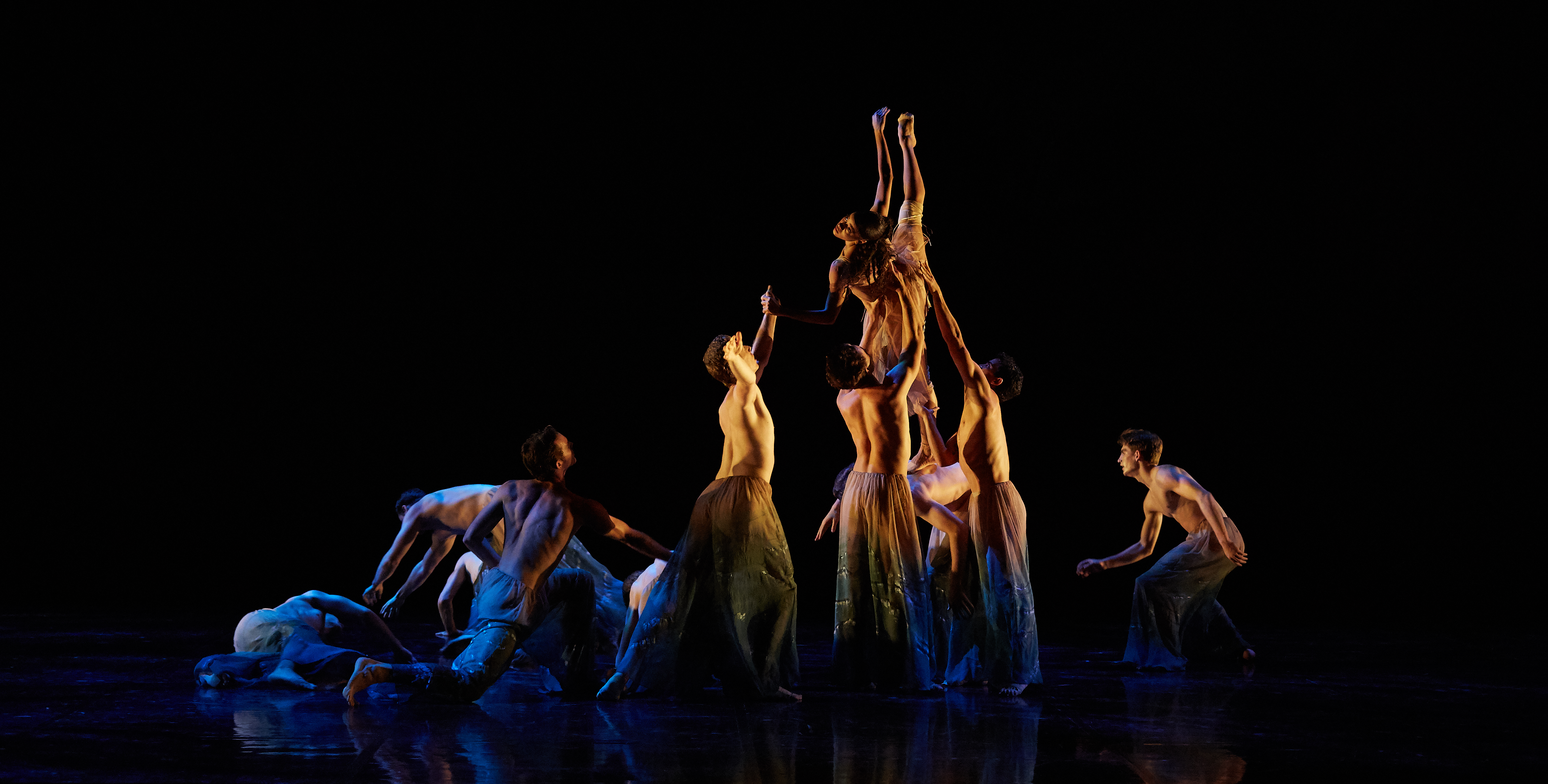
The standout, however, is Gower’s Ripples, a gorgeous, shimmering expression of connection to the natural world. Gower was a member of Bangarra Dance Theatre for 15 years and is now based in her home town of Broome on Yawuru country in the Kimberley. These facts infuse Ripples and give it a sense of timelessness and a calm that is only occasionally ruffled.
Gower’s big achievement, however, is the seamless union in her choreography of First Nations textures and shapes, contemporary energy and formal ballet technique. The co-existence of these forms makes Ripples interesting from a dance perspective and also speaks of something deeper – of the possibility of harmony and understanding.
The score mingles didgeridoo, bird song and Western instrumentation to transcendent effect (music by Stephan Pigram, Mick Manolis and Isaiah Walley-Stack) and Rika Hamaguchi’s divine costumes delicately refer to land and water.
The heart swelled at every turn. The opening featured guest dancers Maddison Fraser and Kiarn Doyle in an eloquent homage to Country; women on pointe looked as mysterious as spirits; men in diaphanous, blue-tinged trousers were manifestations of the sea; and the entire company of 22 looked united in purpose and conviction.
Doyle – he danced with Bangarra until recently – was especially transfixing in his early solo that combined the contemporary and traditional to stunning effect. A ravishing pas de deux for WAB principal artist Dayana Hardy Acũna and newly promoted principal Julio Blanes was one of those rare moments when time seems to stop for intense reflection. Indeed, Ripples as a whole seemed to exist in a world without clocks (it lasts about 20 minutes; a friend thought it had lasted about 10). Wonderful.
Australian-born Prior is a choreographer in residence at Royal New Zealand Ballet where he was previously a dancer and is now making his mark internationally. His terrific Hansel & Gretel is being gratefully picked up by ballet companies understandably keen to have a family-friendly work in their mix.
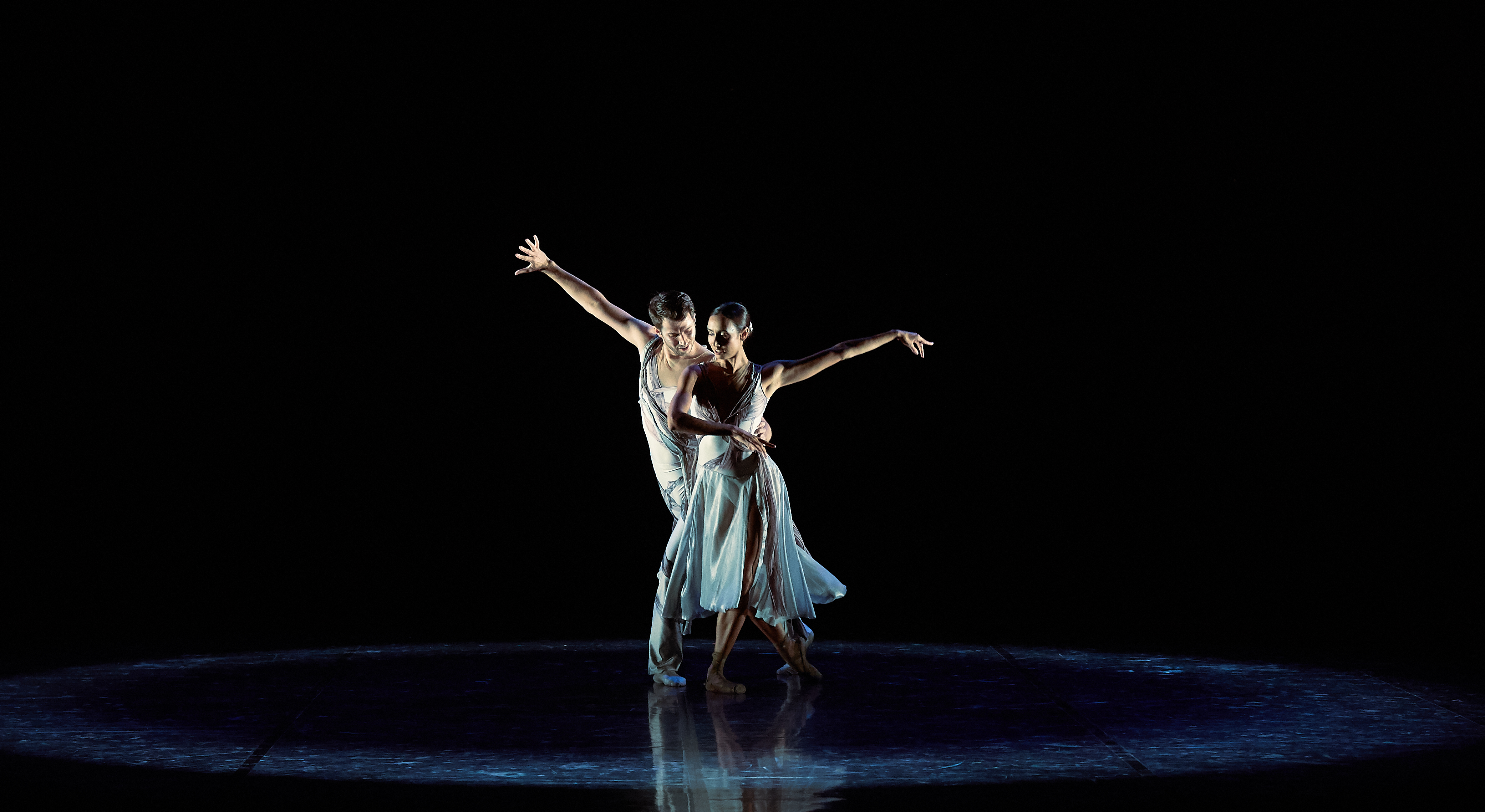
For the Quarry he made The Wild Between Stars, which opened the evening to music by Judd Greenstein and Mark Dancigers. It’s a handsome piece for six women and six men that alludes to the cosmic visually but with somewhat vague intent. The liquid start has a spacey quality and speedy sections can be read as atoms whizzing about. That can hold the interest for only so long. There’s a long, quite steamy pas de deux at the end for principal artists Chihiro Nomura and Juan Carlos Osma that brings a human element into play and a memorable image that places 10 of the dancers at the rear of the stage in frozen poses that summons thoughts of far-off stars in their nightly array.
Prior offers plenty of opportunities for individual dancers to shine (looking at you Polly Hilton and Gakuro Matsui) and The Wild Between Stars looks chic with its circles of light (design by Kristie Smith) that evoke the rings of Saturn and costumes by Emma Kingsbury adorned with free-floating strips of fabric that hint at clouds.

Jervies’s Concerto Anniversary, which closes the evening, is courageously choreographed in homage to Tchaikovsky’s stupendous Piano Concerto No. 1 on the occasion of its 150th anniversary. The widely experienced Jervies has a sure command of neo-classical style and there’s never a moment at which the dancers – an impressive 18 in all – don’t look super sleek and glamorous in costumes designed by Jervies to let the dancing do the talking.
All of which would be fine if this music made sense as a score for ballet but unfortunately it doesn’t. It is simply too overwhelming.
Ballet at the Quarry ends on March 1.
 deborah jones: FollowSpot